"Sartian dervish" [Turkestanic Qalandars]
ca. 1887 | W. Ordèn
On 1 October 1888, the Viennese Josef Troll, a traveller through Asia, arrives in the swarming city of Old Margelan, today Margila in Uzbekistan. The city contains a "host of Mazars (tombs of saints), and a house of the Qalandar, the lodging of the dervishes, those men with their pointed, embroidered caps for which they allegedly had to spend eight years begging, wandering through the bazaars singing on market days and boldly demanding alms, which were scarcely refused to them, since they were indeed diwâne, crazy."A photograph from this period evokes this image of the wandering dervish with his begging bowl demanding charity. The photo depicts a group of these mystics who reject the world, and whose external appearance suggests that they are not concerned with social conventions. A number of them carry a begging bowl – they live from begging. Revealingly, the Sufis are known in Europe by the name of fakir and dervish, Arabic and Persian for "poor". Poverty and lack of possessions are the core features of their way of life. They are pious ascetics who scorn everything temporal and reject existing conventions, rules, and dogmata. Each one of them has dedicated himself to the search for the inner meaning of the holy writings of Islam, and follows the verses of the Koran which can be read as advice for attaining an individual, immediate relationship of man to God. The goal of these individuals is to experience God as the final reality.
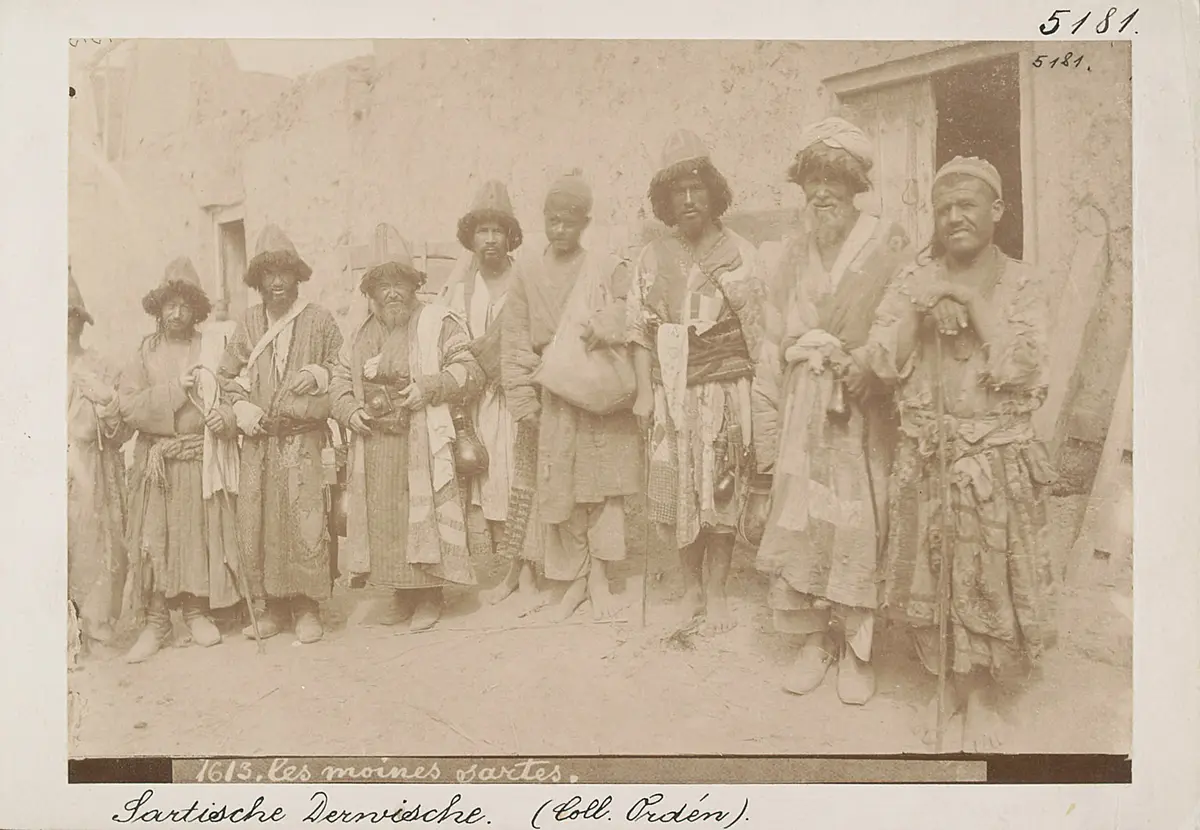
On 1 October 1888, the Viennese Josef Troll, a traveller through Asia, arrives in the swarming city of Old Margelan, today Margila in Uzbekistan. The city contains a "host of Mazars (tombs of saints), and a house of the Qalandar, the lodging of the dervishes, those men with their pointed, embroidered caps for which they allegedly had to spend eight years begging, wandering through the bazaars singing on market days and boldly demanding alms, which were scarcely refused to them, since they were indeed diwâne, crazy."A photograph from this period evokes this image of the wandering dervish with his begging bowl demanding charity. The photo depicts a group of these mystics who reject the world, and whose external appearance suggests that they are not concerned with social conventions. A number of them carry a begging bowl – they live from begging. Revealingly, the Sufis are known in Europe by the name of fakir and dervish, Arabic and Persian for "poor". Poverty and lack of possessions are the core features of their way of life. They are pious ascetics who scorn everything temporal and reject existing conventions, rules, and dogmata. Each one of them has dedicated himself to the search for the inner meaning of the holy writings of Islam, and follows the verses of the Koran which can be read as advice for attaining an individual, immediate relationship of man to God. The goal of these individuals is to experience God as the final reality.
Photographer:
W. Ordèn
Time:
ca. 1887
Object Name
Print
Culture
Uzbekistan
Material/technology:
Albumen print, mounted on card
Signed
1613
Copyright
Weltmuseum Wien, Fotosammlung
Collection area
Photo Collection
Geography
Zentralasien/West-Turkestan/Usbekistan
Browse more Similar items you might be interested in
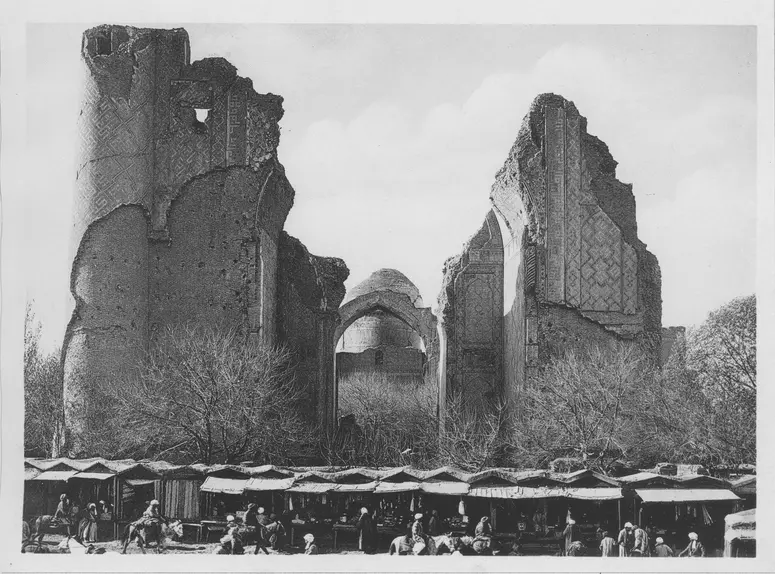
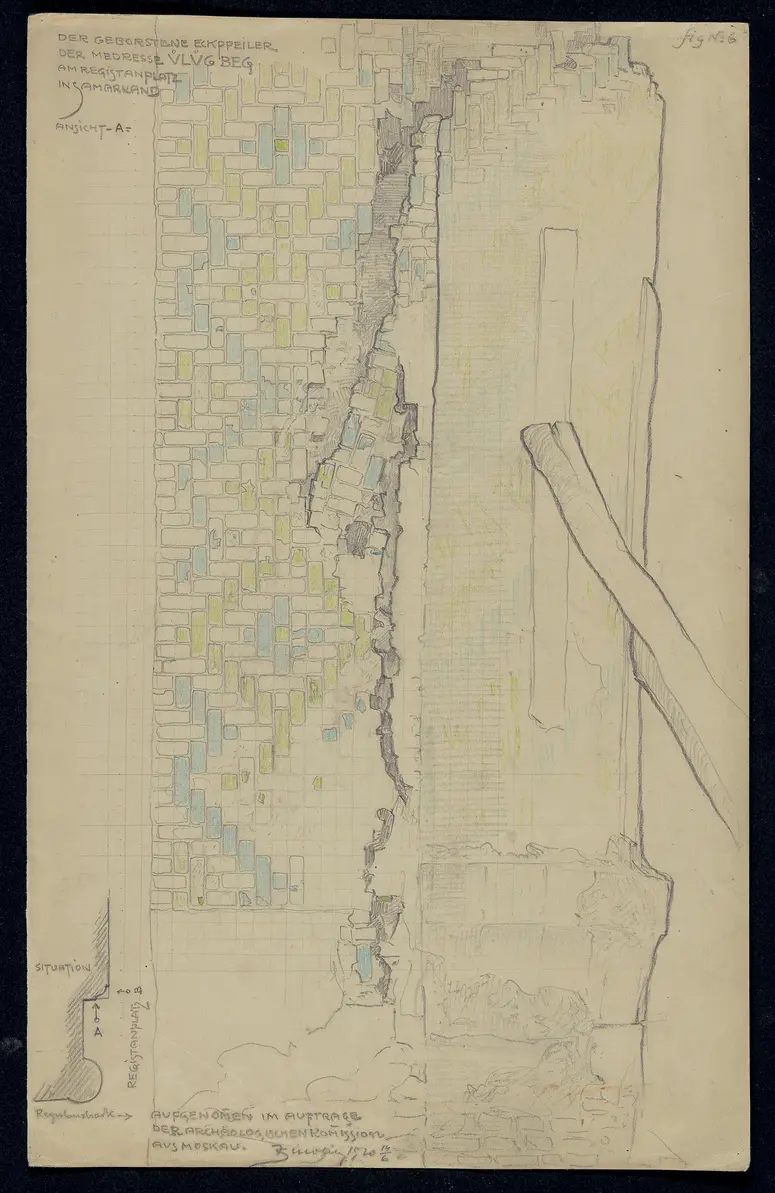
Der geborstene Eckpfeiler der Medresse Ulug Beg am Registanplatz in Samarakand. Anischt -A- Julius Smolik 1929
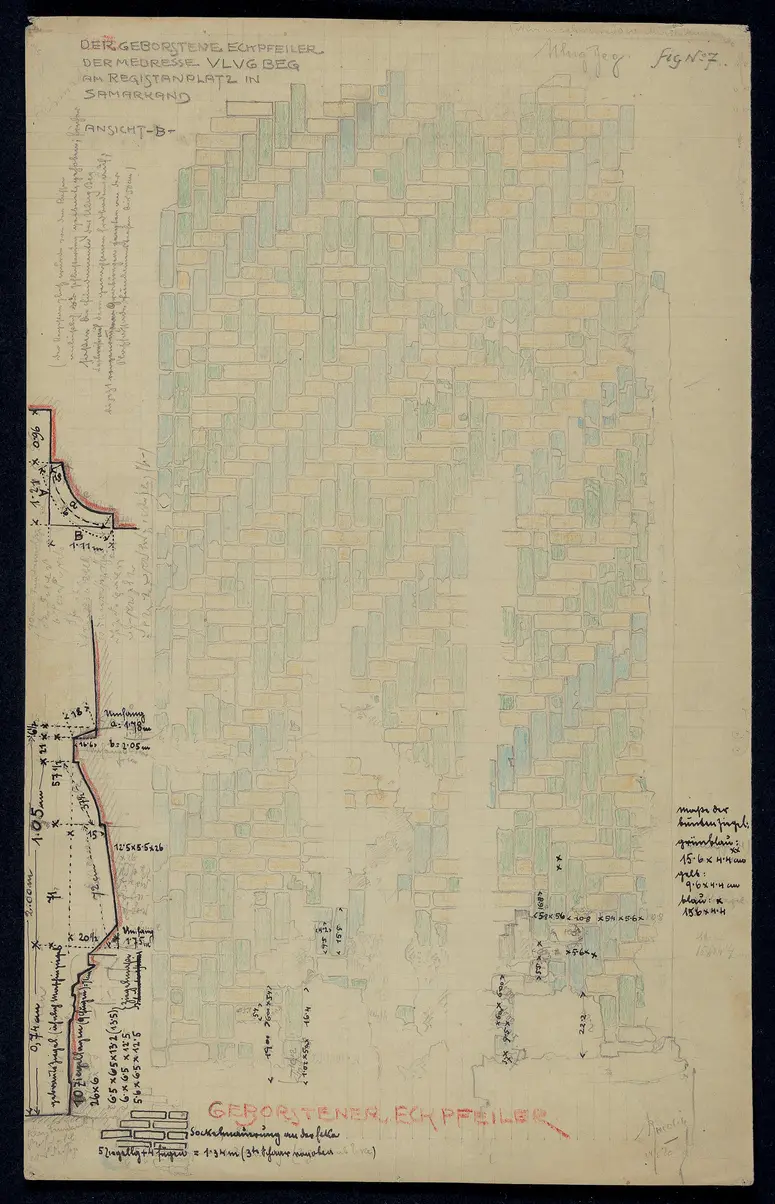
Der geborstene Eckpfeiler der Medresse Ulug Beg am Registanplatz in Samarakand. Anischt -B- Julius Smolik 1929