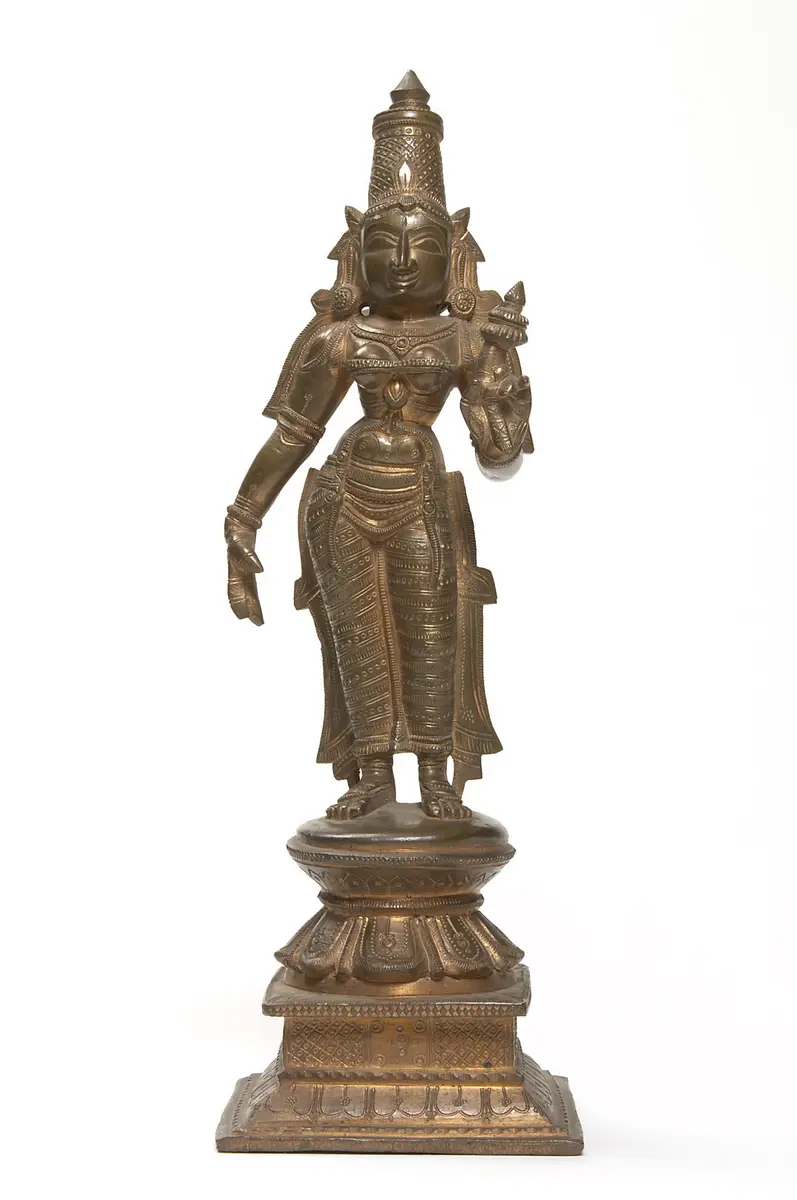
Shridevi
17./18. Jahrhundert | Franz Ferdinand von Österreich-Este
Long before the arrival of the Indo-Aryans, the agrarian society of India worshipped the land as a mother goddess and the earth was regarded as the body of the goddess. While goddesses did not yet have a prominent place in the Vedic texts of the Indo-Aryans, they became increasingly powerful from the 5th/6th century onwards. The sacred text Devi Mahatmya reports that the goddess Devi gave birth to Brahma, Vishnu and Shiva and then took them as consorts.
All the goddesses of India appear as manifestations of the all-encompassing Maha-Devi, the "Great Goddess". She is worshipped as the creator and ruler of the universe, as the creative aspect of the Absolute, as an active and transcendent force, as the primordial ground and root of existence, as existence itself and as the Supreme Reality, as well as the universal mother.
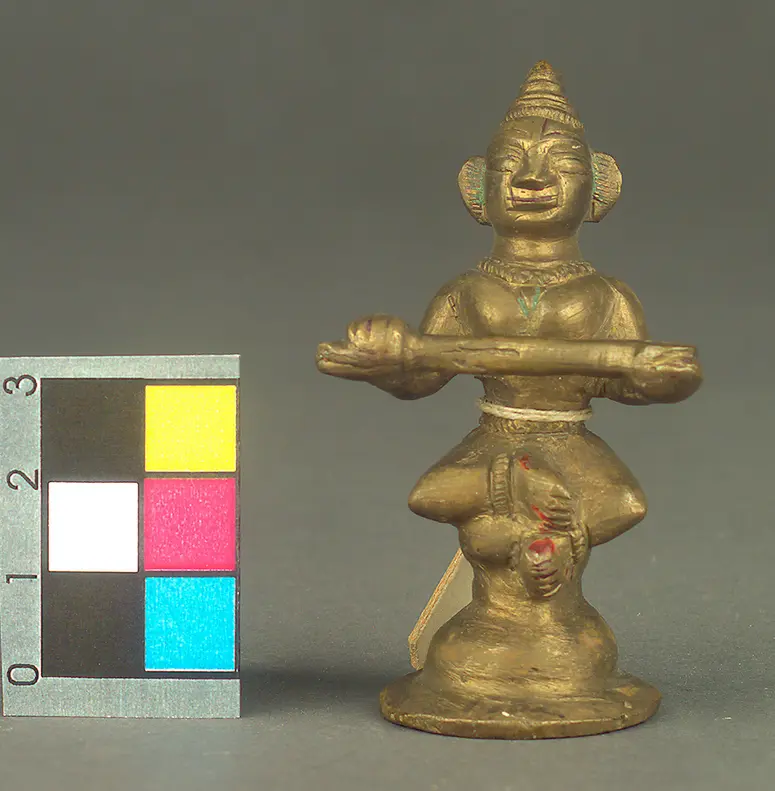
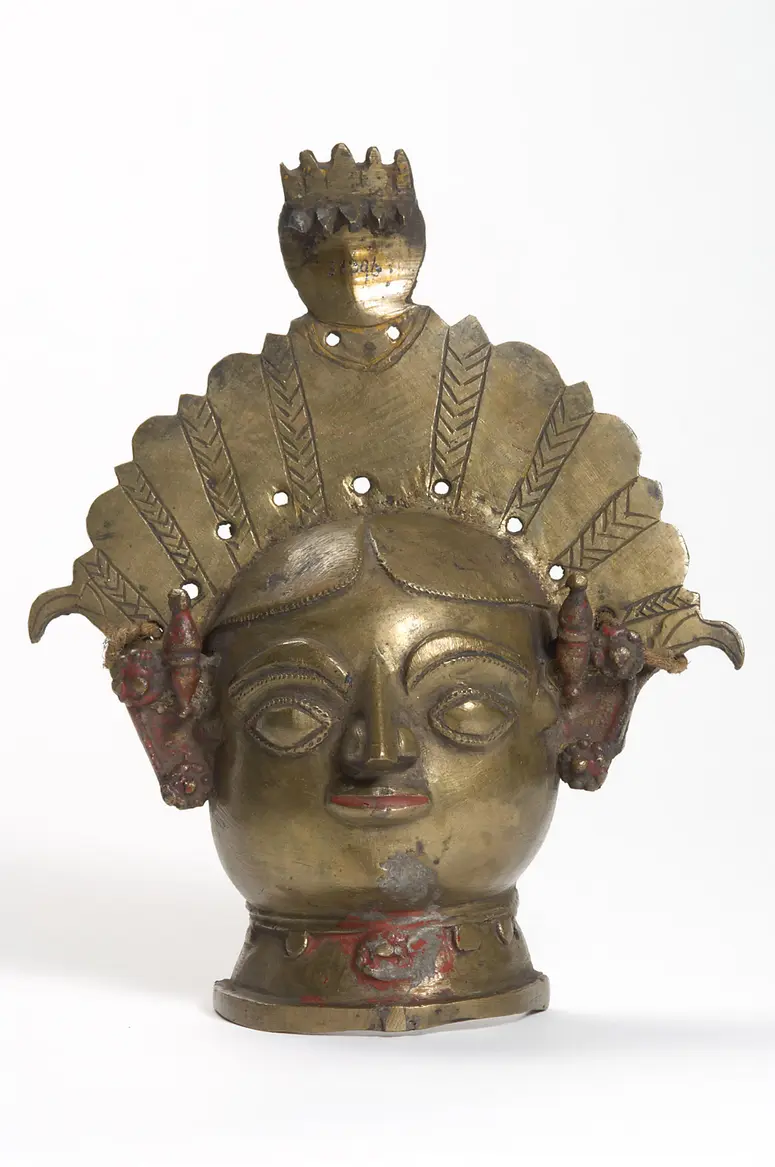
In Shridevi, Lakshmi, the wife of Vishnu, manifests herself as the goddess of happiness and prosperity. She is one of the most popular goddesses in the Hindu pantheon. Shridevi is also called "the beautiful one", an expression of her spiritual and physical desirability.
The female deities are more involved in worldly affairs than the male ones. This closeness to people is what makes them so popular.
Long before the arrival of the Indo-Aryans, the agrarian society of India worshipped the land as a mother goddess and the earth was regarded as the body of the goddess. While goddesses did not yet have a prominent place in the Vedic texts of the Indo-Aryans, they became increasingly powerful from the 5th/6th century onwards. The sacred text Devi Mahatmya reports that the goddess Devi gave birth to Brahma, Vishnu and Shiva and then took them as consorts.
All the goddesses of India appear as manifestations of the all-encompassing Maha-Devi, the "Great Goddess". She is worshipped as the creator and ruler of the universe, as the creative aspect of the Absolute, as an active and transcendent force, as the primordial ground and root of existence, as existence itself and as the Supreme Reality, as well as the universal mother.
In Shridevi, Lakshmi, the wife of Vishnu, manifests herself as the goddess of happiness and prosperity. She is one of the most popular goddesses in the Hindu pantheon. Shridevi is also called "the beautiful one", an expression of her spiritual and physical desirability.
The female deities are more involved in worldly affairs than the male ones. This closeness to people is what makes them so popular.
Collection:
Franz Ferdinand von Österreich-Este (1863 Graz - 1914 Sarajevo) DNB
Time:
17./18. Jahrhundert
Object Name
Shridevi
Culture
Indien
Material/technology:
Bronze
Copyright
Weltmuseum Wien
Collection area
South Asia, Southeast Asia, Himalayas
Geography
Südasien/Subkontinent/Indien
Invs.
103013
Browse more Similar items you might be interested in
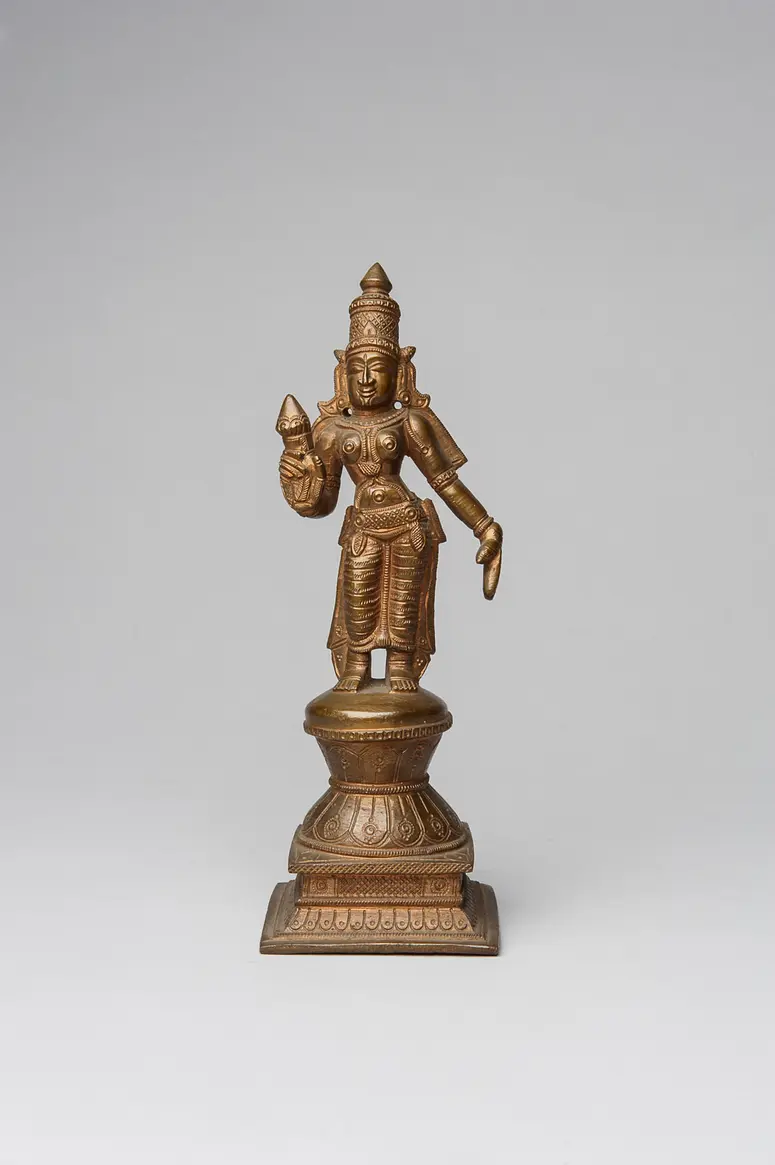
Devi Franz Ferdinand von Österreich-Este 1893 or earlier
Devi Franz Ferdinand von Österreich-Este 1893 or earlier

Annapurna Devi Franz Ferdinand von Österreich-Este 1893 or earlier
Devi Franz Ferdinand von Österreich-Este 1893 or earlier