Thread cross (tib.: mdo, nam mkhah)
mdo, nam mkhah
20. Jahrhundert | René Nebesky-Wojkowitz
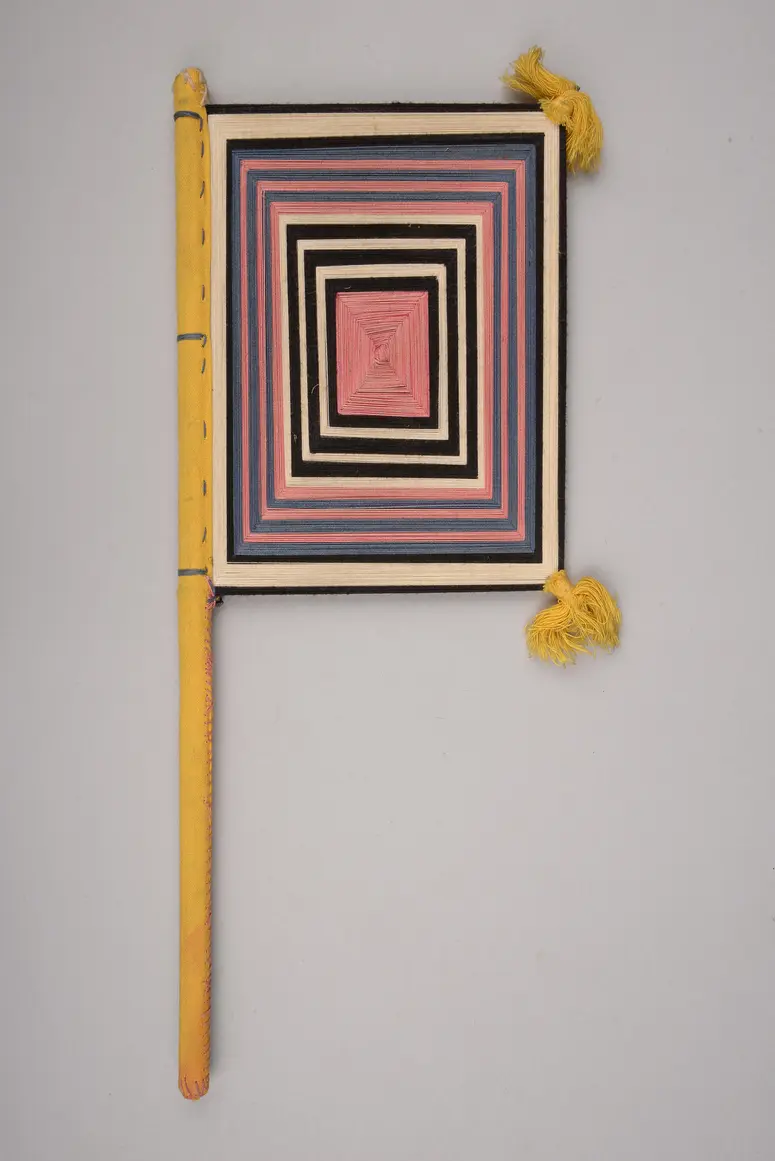
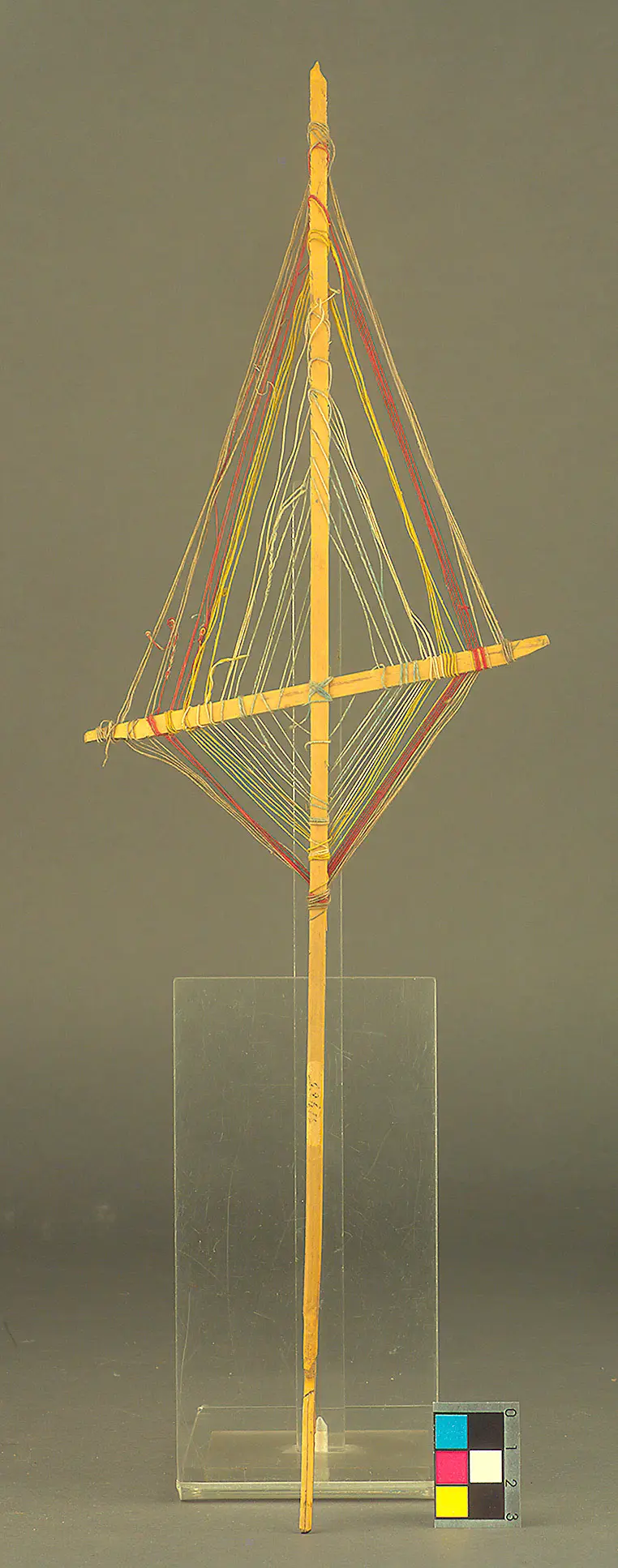
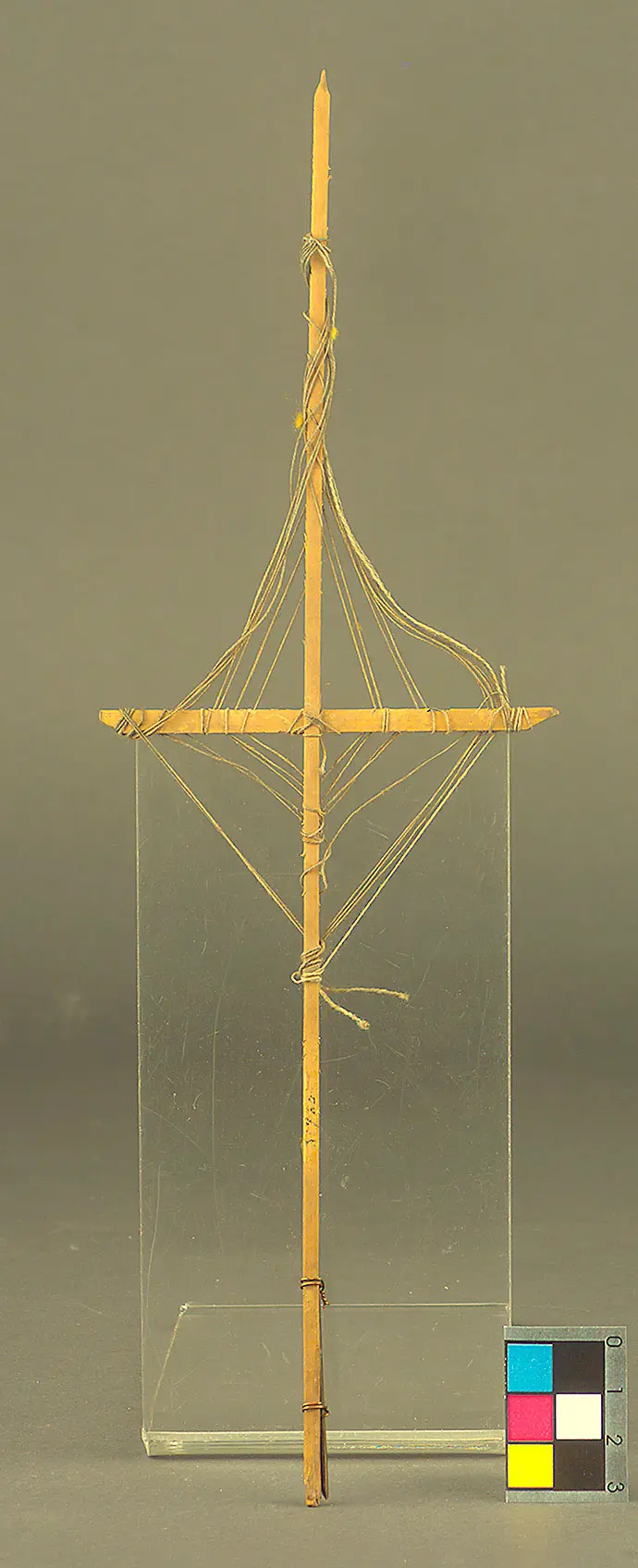
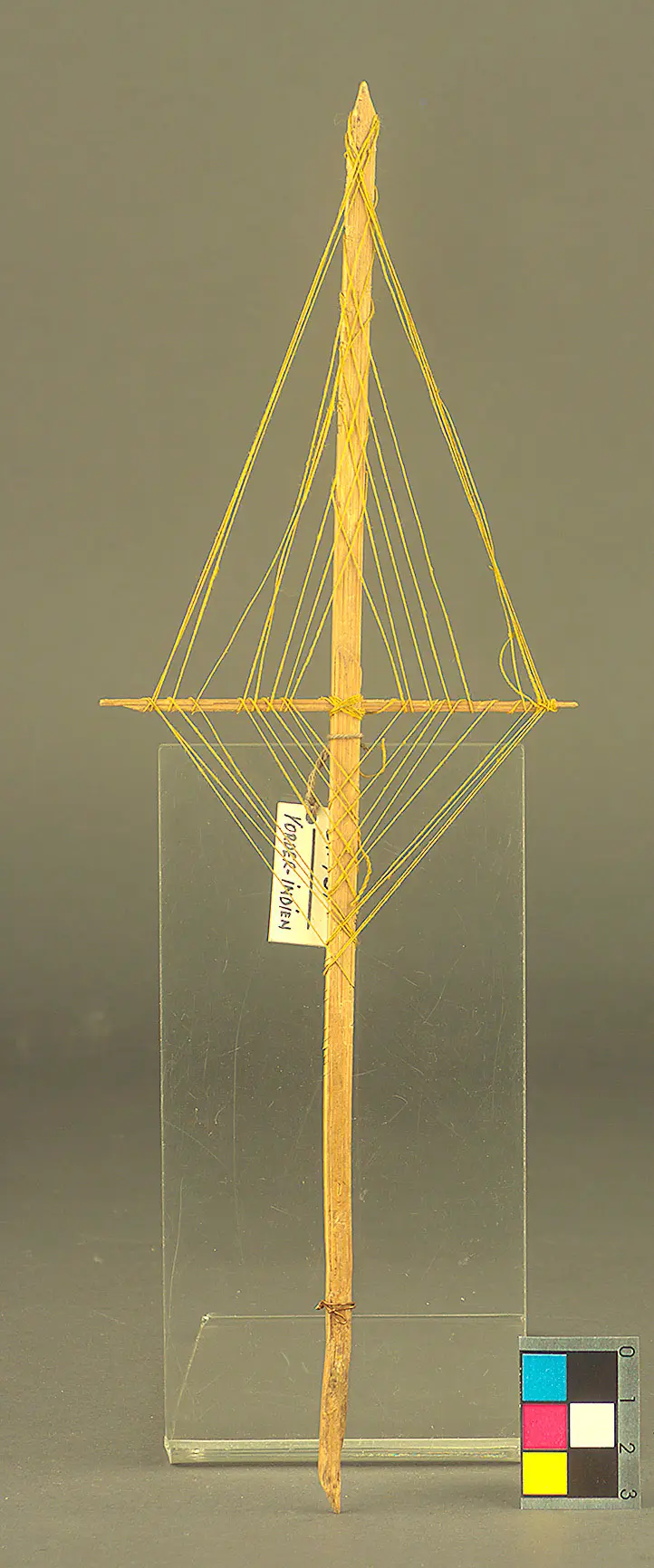
Large crosshairs are erected by schools of Buddhism practiced in the Himalayas in front of places of worship, temple entrances or at religious dances to ward off anti-religious forces or evil spirits. They are called "mdo" in this sense.The 3-tiered foundation represents the "world mountain" (ri rab lhun po). In accordance with shamanistic ideas, the "world tree" grows on this "world mountain", the central axis supporting many small crosshairs. The Tibetan term for this axis, "srog shing", can be translated as "tree of life". In another, seemingly contradictory usage, such structures are called "nam mkhah". As such, they provide a dwelling place for deities in heavenly palaces.
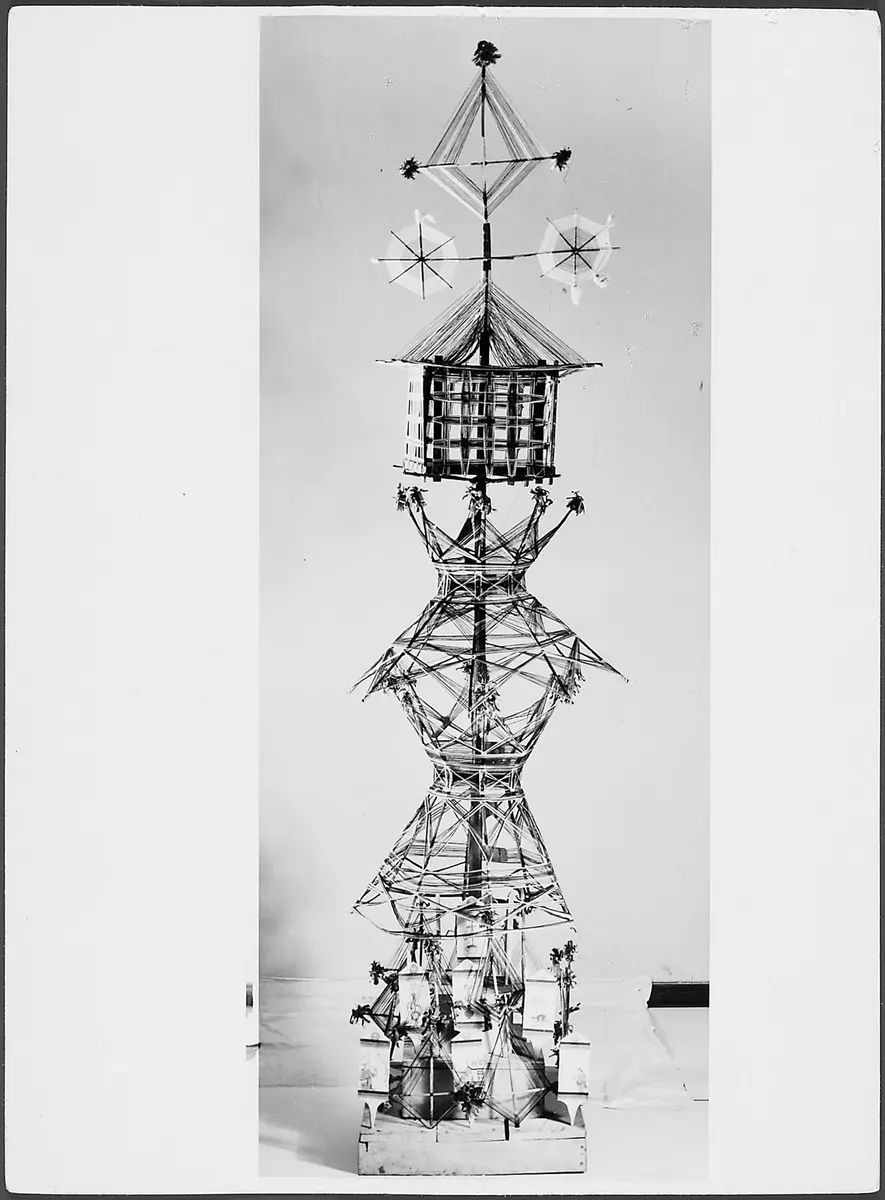
Large crosshairs are erected by schools of Buddhism practiced in the Himalayas in front of places of worship, temple entrances or at religious dances to ward off anti-religious forces or evil spirits. They are called "mdo" in this sense.The 3-tiered foundation represents the "world mountain" (ri rab lhun po). In accordance with shamanistic ideas, the "world tree" grows on this "world mountain", the central axis supporting many small crosshairs. The Tibetan term for this axis, "srog shing", can be translated as "tree of life". In another, seemingly contradictory usage, such structures are called "nam mkhah". As such, they provide a dwelling place for deities in heavenly palaces.
Collector:
René Nebesky-Wojkowitz (1923 Groß-Hoschütz - 1959 Wien) DNB
Time:
20. Jahrhundert
Object Name
Fadenkreuz
Culture
Nepal
Material/technology:
Holz, Wollfäden
Copyright
Weltmuseum Wien
Collection area
South Asia, Southeast Asia, Himalayas
Geography
Südasien/Himalaya/Tibet
Invs.
134460_1_29