Tin
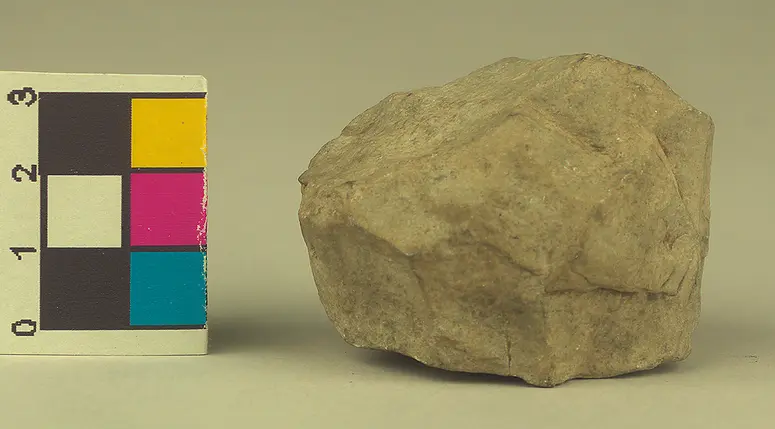
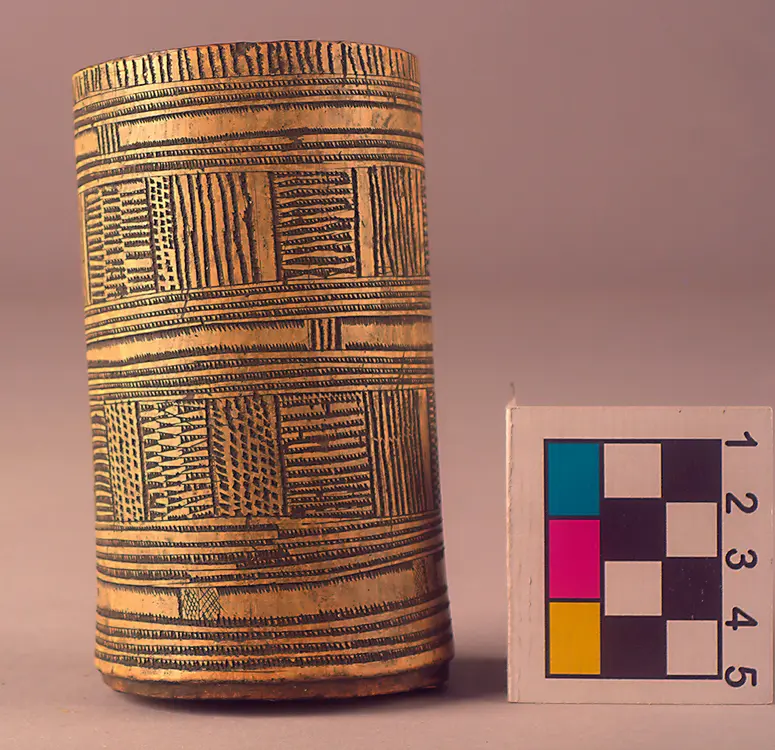
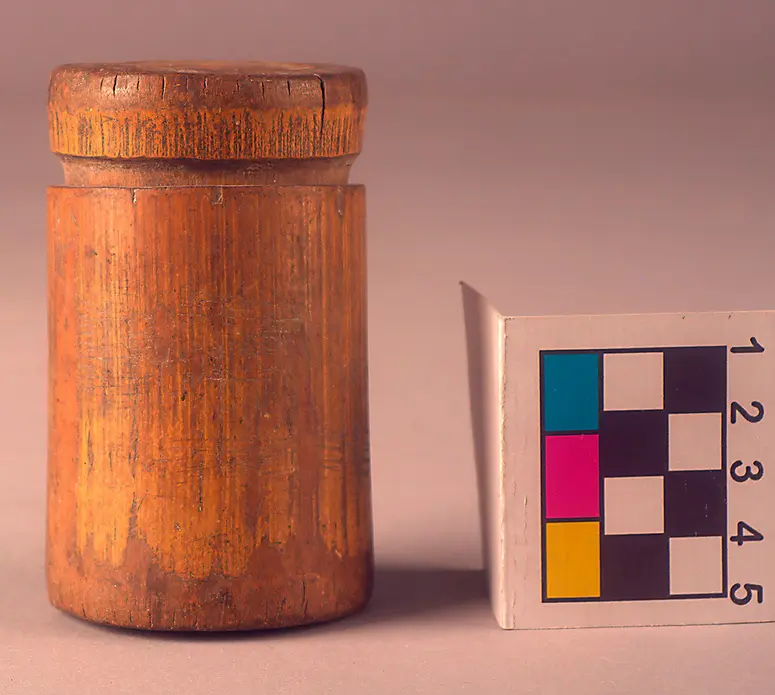
Tin for storing nuts from the areca palm, commonly known as "betel nut." The basis for the paan is a combination of a chopped piece of betel nut, a leaf from the betel pepper vine and some slaked lime. Depending on taste, a few crumbs of tobacco, some cardamom, a clove or two etc. are added. The effect of paan is slightly stimulating, it stimulates salivation and is said to be good for digestion. Many Naga still chew paan as a stimulant today; however, the significance of paan beyond this, which it still has among the non-Christian or more relaxed Christian neighbors of the Naga, is forgotten among them today. Paan plays an important role in rituals on the occasion of weddings and other occasions in the area from the Khasi mountains of north-east India to Vietnam.
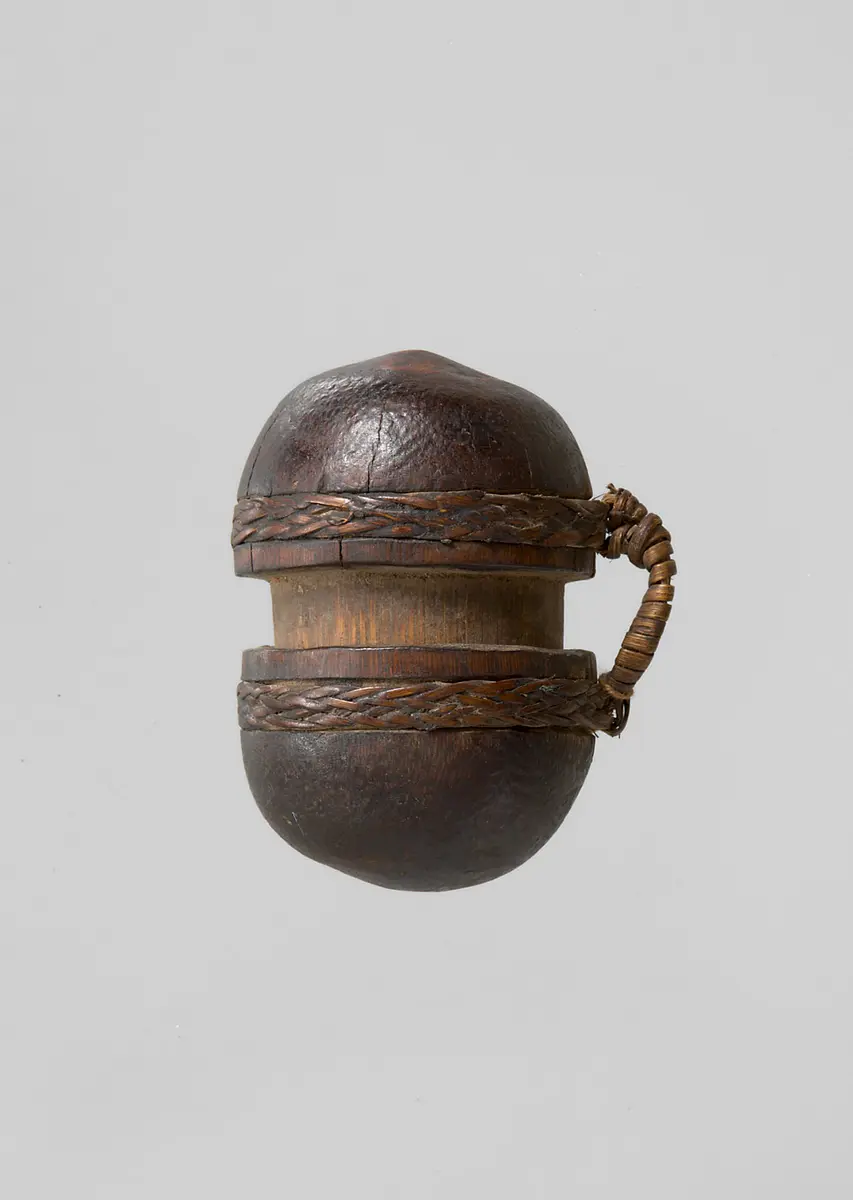
Tin for storing nuts from the areca palm, commonly known as "betel nut." The basis for the paan is a combination of a chopped piece of betel nut, a leaf from the betel pepper vine and some slaked lime. Depending on taste, a few crumbs of tobacco, some cardamom, a clove or two etc. are added. The effect of paan is slightly stimulating, it stimulates salivation and is said to be good for digestion. Many Naga still chew paan as a stimulant today; however, the significance of paan beyond this, which it still has among the non-Christian or more relaxed Christian neighbors of the Naga, is forgotten among them today. Paan plays an important role in rituals on the occasion of weddings and other occasions in the area from the Khasi mountains of north-east India to Vietnam.
Collector:
Christoph von Fürer-Haimendorf (1909 Wien - 1995 London) DNB
Object Name
Paan-Dose
Culture
Nagaland
Copyright
Weltmuseum Wien
Collection area
South Asia, Southeast Asia, Himalayas
Invs.
126612
Browse more Similar items you might be interested in
Pinselablage in Form eines Bronzeziegels mit Münzen Antoinette Wagensperg 206 v.u.Z. - 220 u.Z.