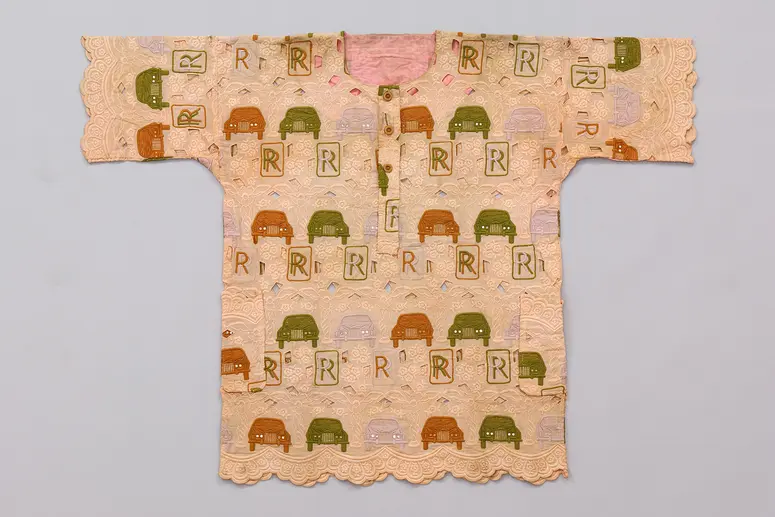
Trousers Sokoto
ca. 1977-1980 | Barbara Plankensteiner
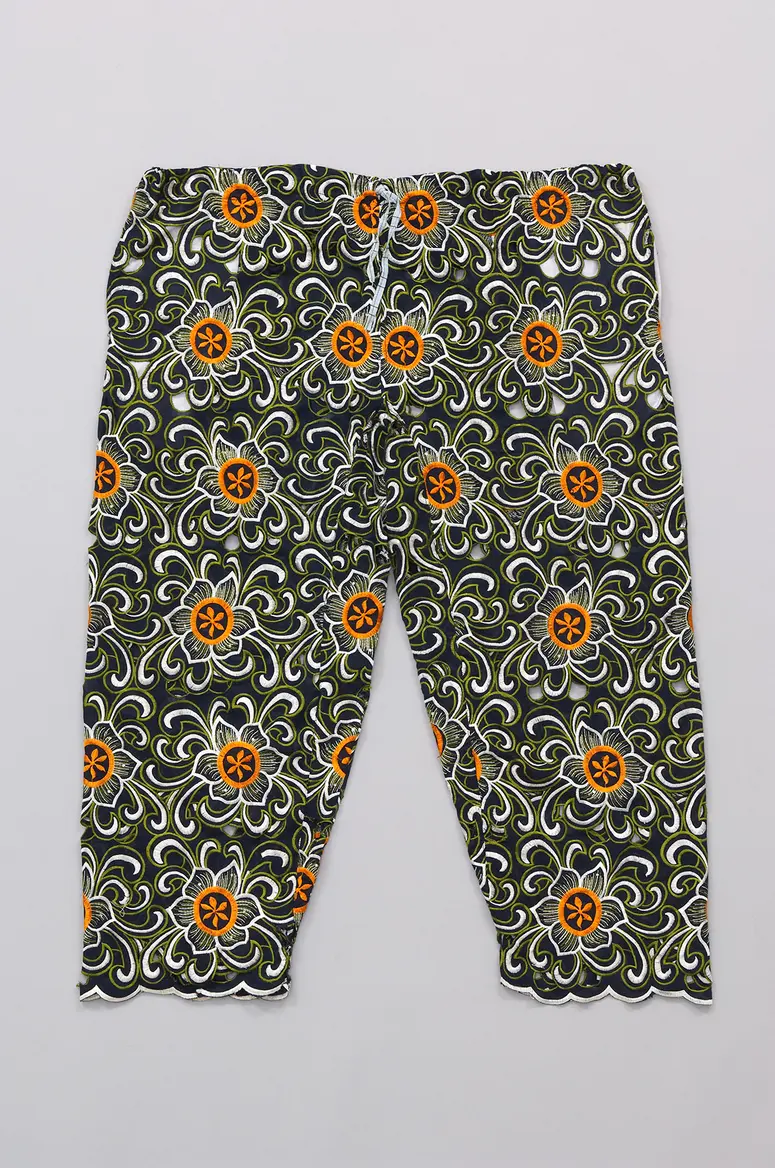
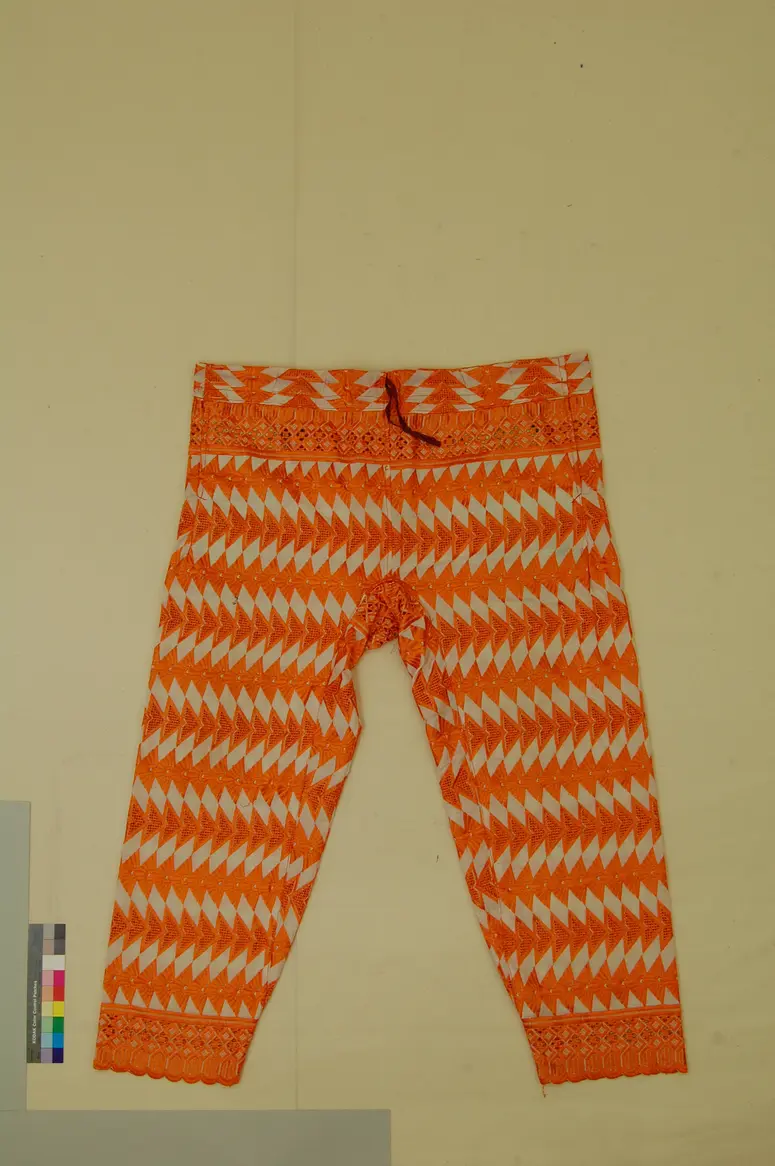
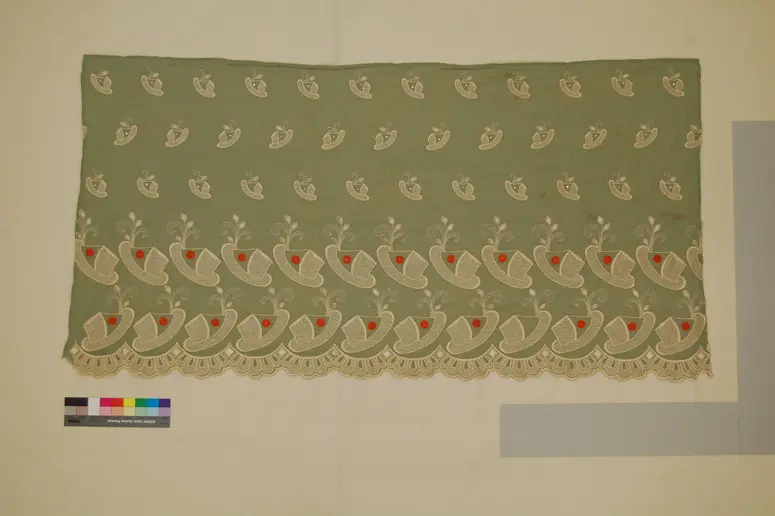
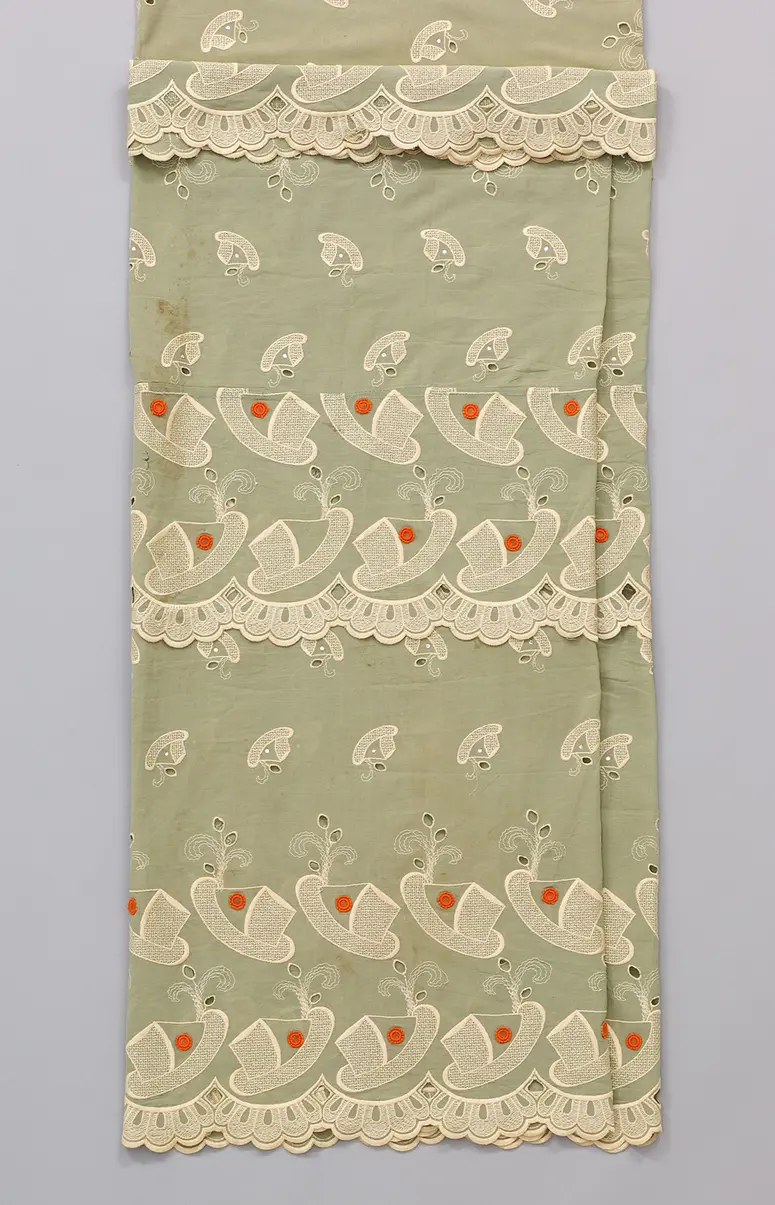
‘Transfigured into a holy object by the nouveau riche, ignored by the elite, and parodied by musicians and literary circles’, writes Peju Layiwola in African Lace (2010) about the phenomenon of imported luxury fabrics made of embroidery lace, which with their large perforated patterns degraded ‘a rich man to a naked man’, as a Yoruba proverb says. Hardly any object makes this more visible than these trousers from a three-piece men’s outfit, which seem to celebrate the upturned high heels as a phallic symbol.

‘Transfigured into a holy object by the nouveau riche, ignored by the elite, and parodied by musicians and literary circles’, writes Peju Layiwola in African Lace (2010) about the phenomenon of imported luxury fabrics made of embroidery lace, which with their large perforated patterns degraded ‘a rich man to a naked man’, as a Yoruba proverb says. Hardly any object makes this more visible than these trousers from a three-piece men’s outfit, which seem to celebrate the upturned high heels as a phallic symbol.
Collector:
Barbara Plankensteiner DNB
Time:
ca. 1977-1980
Entry Date:
2009
Object Name
Trousers Sokoto
Culture
Yoruba
Material/technology:
Cotton voile, plain weave, plastic button, allover embroidery
Copyright
Weltmuseum Wien
Collection area
Sub-Saharan Africa
Invs.
187513_b