Tsam-Tanzfigur
The Weltmuseum Wien has 12 wooden figures in the Hans Leder Collection, which depict figures from the sacred Tsam dance that originated in Tibet. The figures were commissioned by Leder and are probably not an autochthonous Mongolian artefact. The Tsam dance is a religious ceremony or sacred festival in which lamas or monks dress up in elaborate masks and costumes (at a certain time of year) and perform pantomime dances in front of the temples accompanied by music. They represent various Buddhist patron gods, animals, Garuda or heroes.
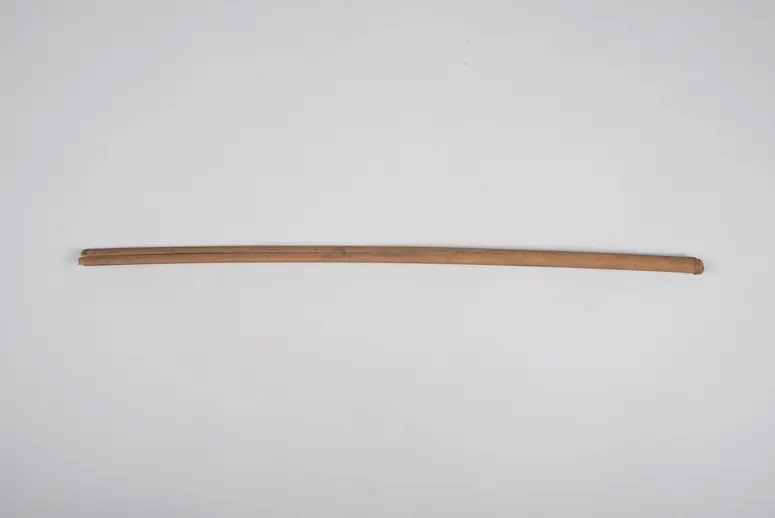
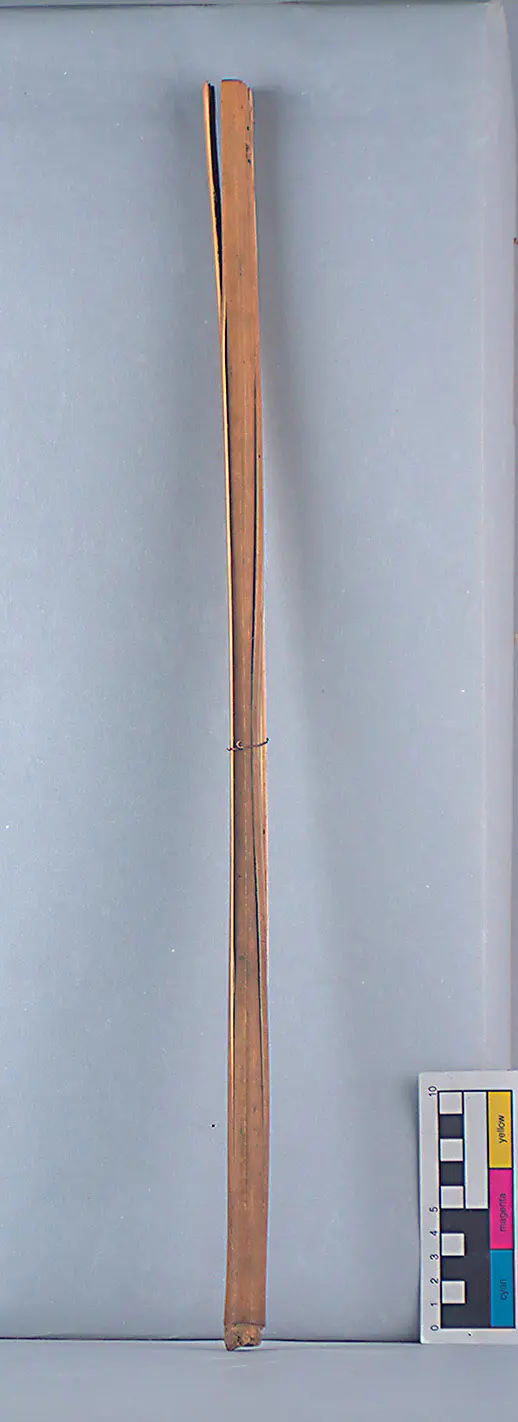
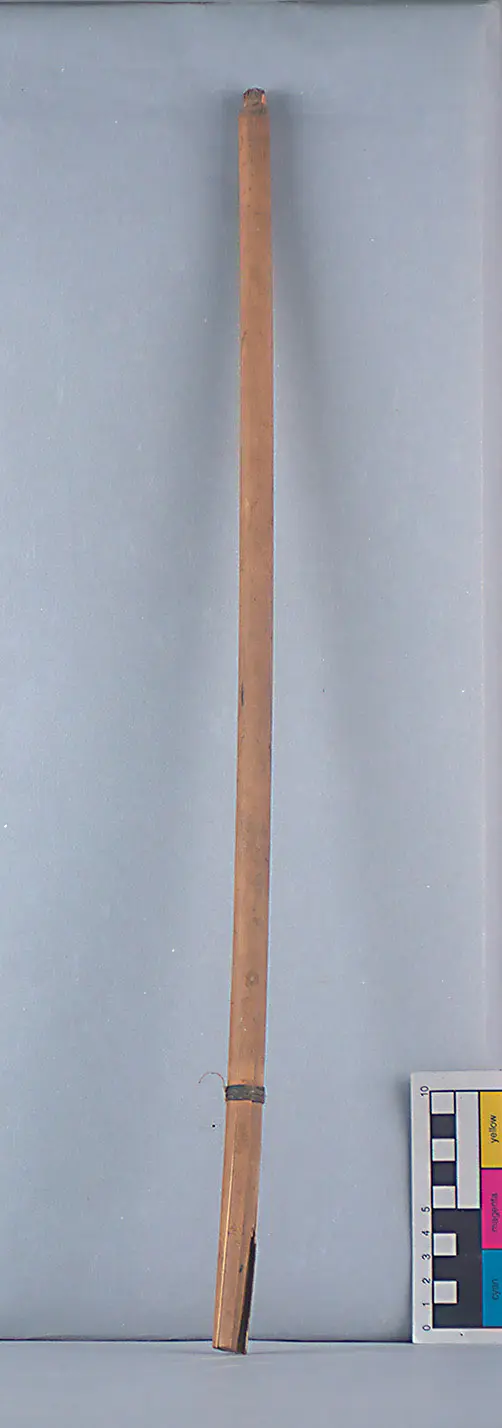
This figure represents an Indian azar wearing a turban and long silk cloak and can therefore be identified as a religious scholar. Normally the figure holds a red staff in his hand, but this is missing here. This figure is one of the comical, cheerful figures and the touch of an azar's staff brings good luck.
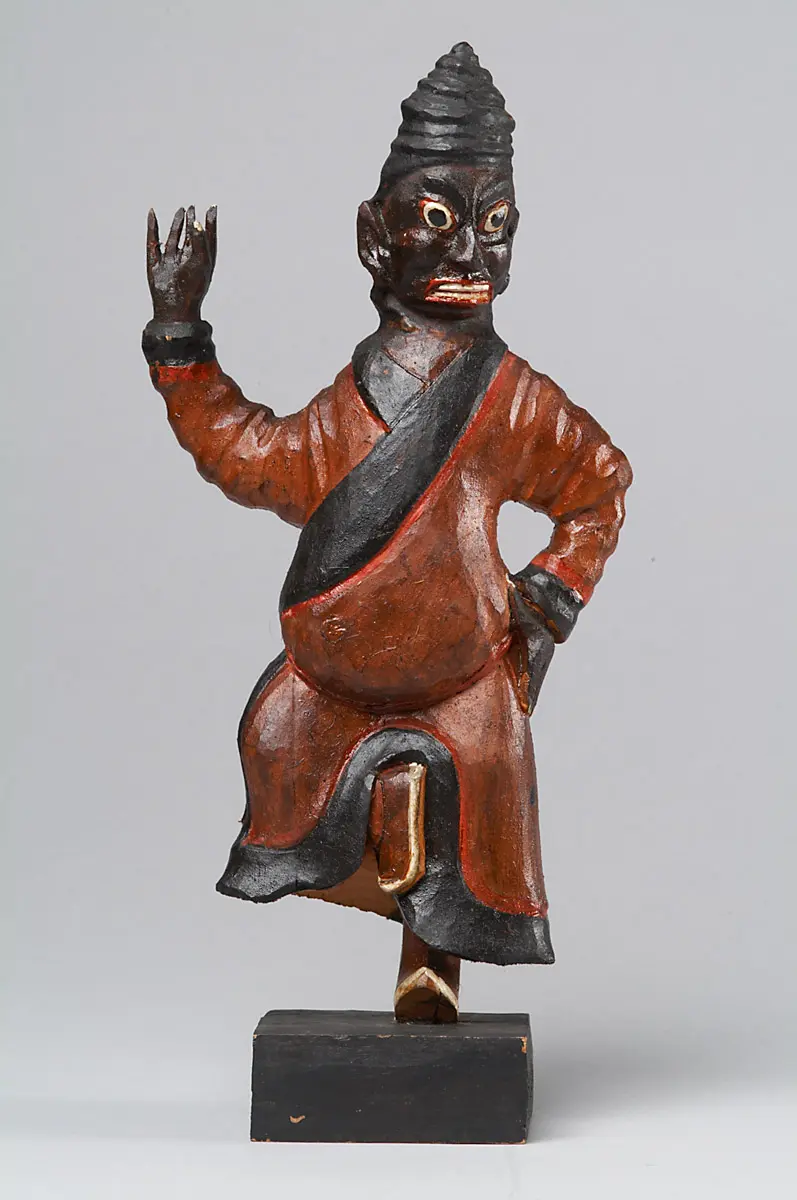
The Weltmuseum Wien has 12 wooden figures in the Hans Leder Collection, which depict figures from the sacred Tsam dance that originated in Tibet. The figures were commissioned by Leder and are probably not an autochthonous Mongolian artefact. The Tsam dance is a religious ceremony or sacred festival in which lamas or monks dress up in elaborate masks and costumes (at a certain time of year) and perform pantomime dances in front of the temples accompanied by music. They represent various Buddhist patron gods, animals, Garuda or heroes.
This figure represents an Indian azar wearing a turban and long silk cloak and can therefore be identified as a religious scholar. Normally the figure holds a red staff in his hand, but this is missing here. This figure is one of the comical, cheerful figures and the touch of an azar's staff brings good luck.
Collector:
Hans Leder DNB
Object Name
Tsam-Tanzfigur
Culture
Mongolei
Material/technology:
Holz, geschnitzt, bemalt
Copyright
Weltmuseum Wien
Collection area
South Asia, Southeast Asia, Himalayas
Geography
Zentralasien/Mongolei
Invs.
74719
Browse more Similar items you might be interested in
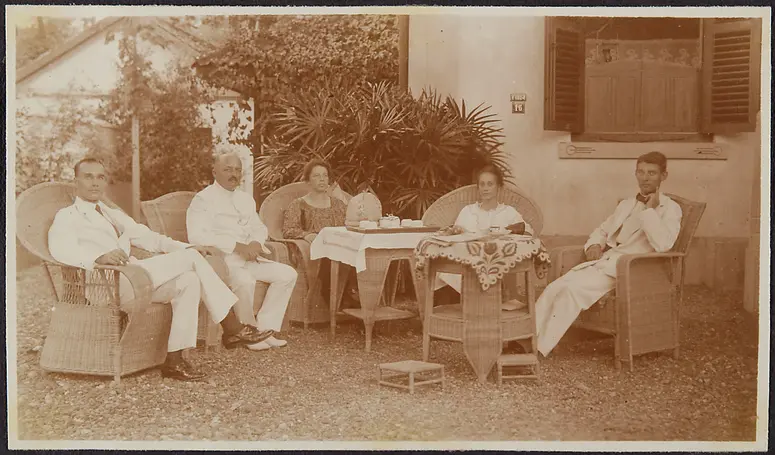
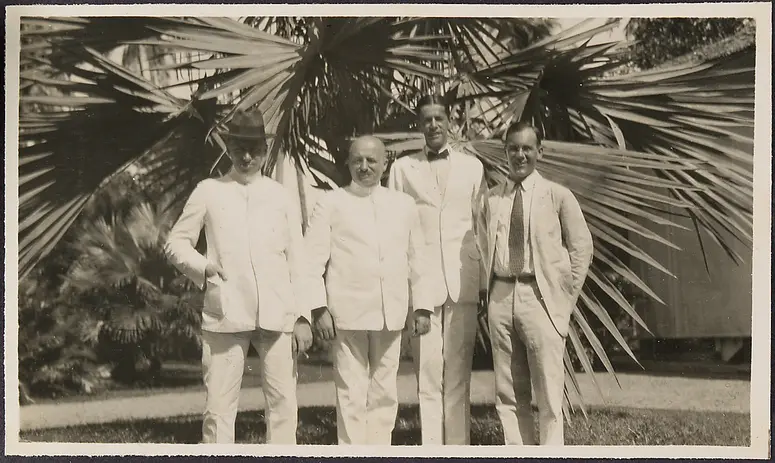
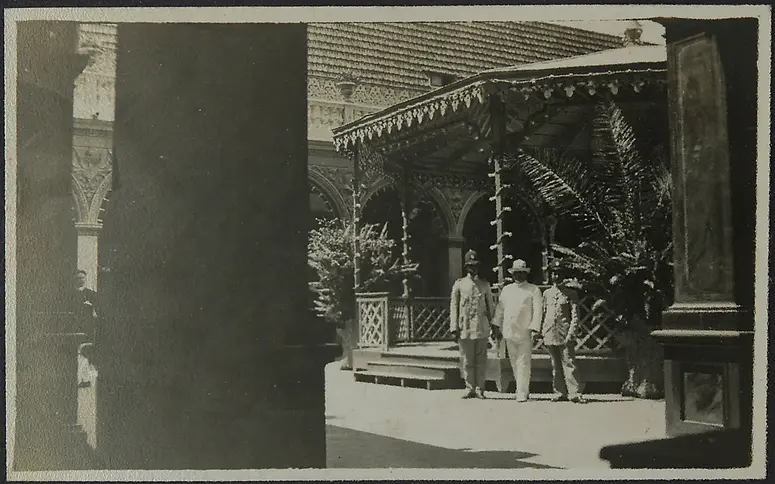
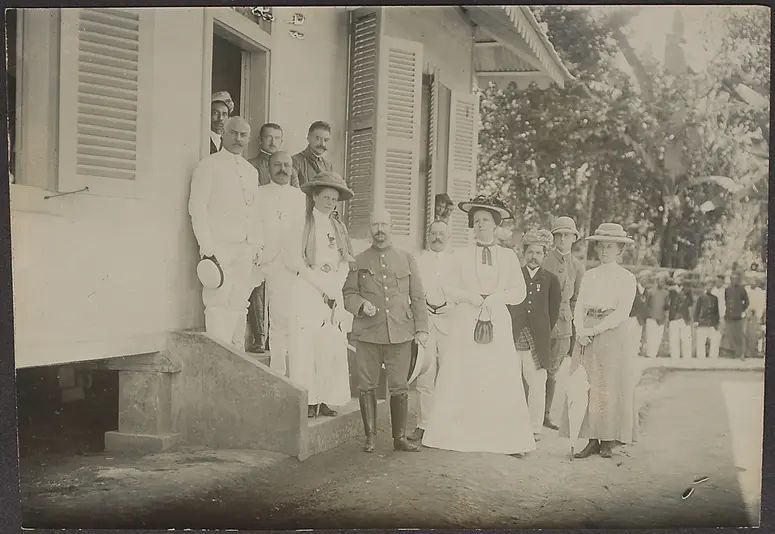
Consul Johann Schild with two civil servants in front of a house Johann Schild ca. 1900
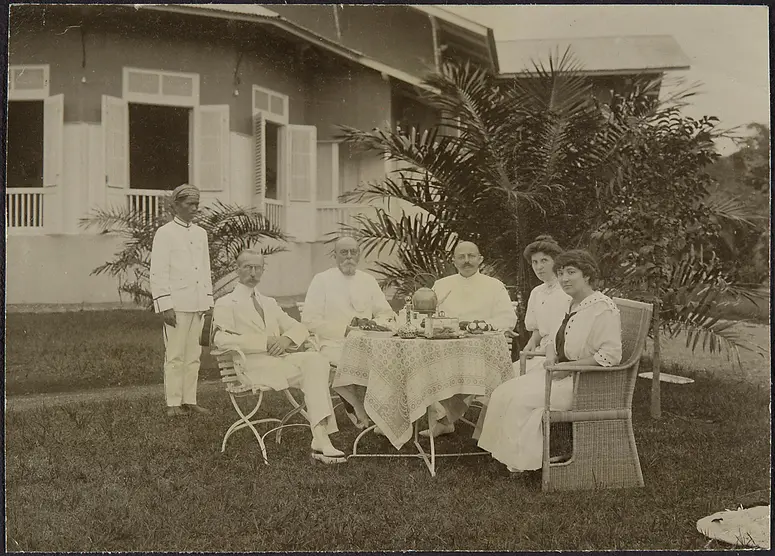
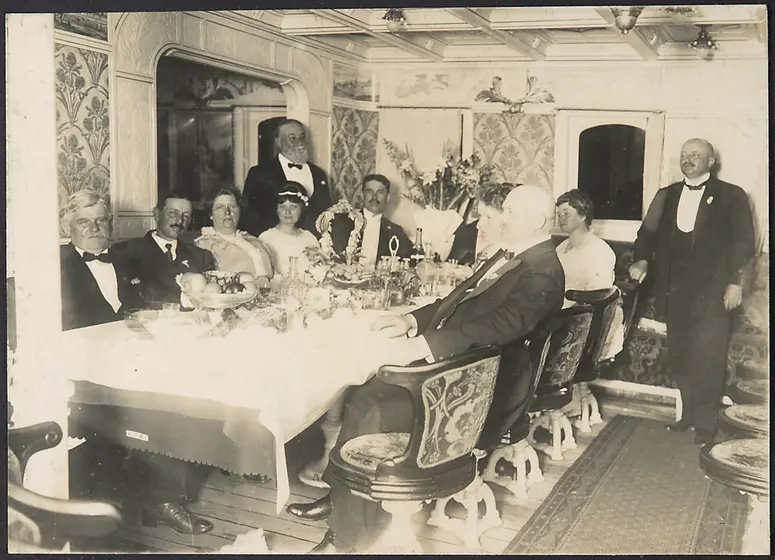
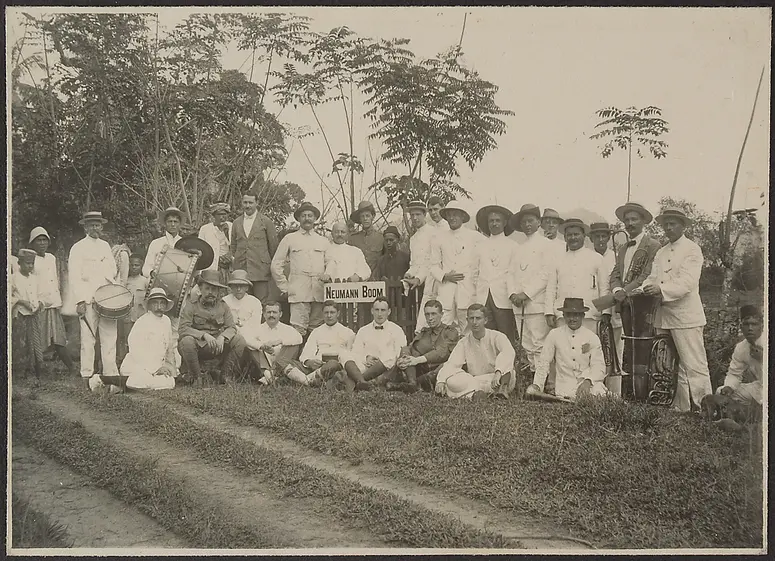
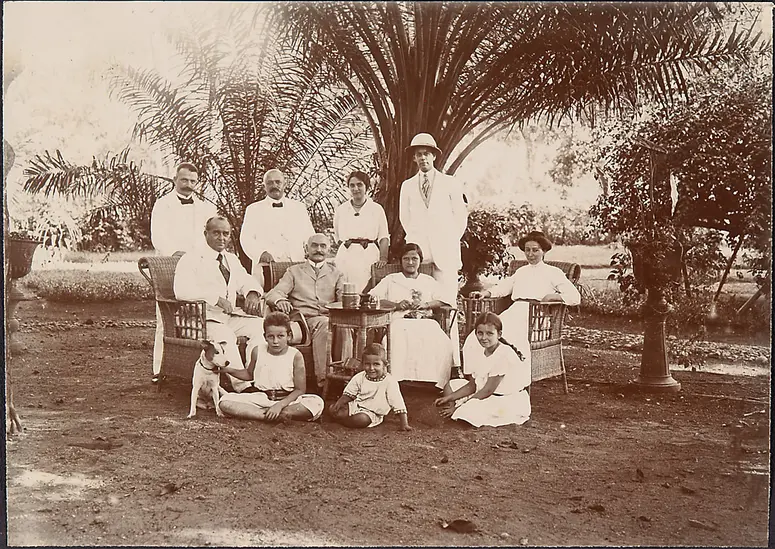
Johann Schild with his guests; some of them are probably musicians from the group Neumann Boom Johann Schild ca. 1900