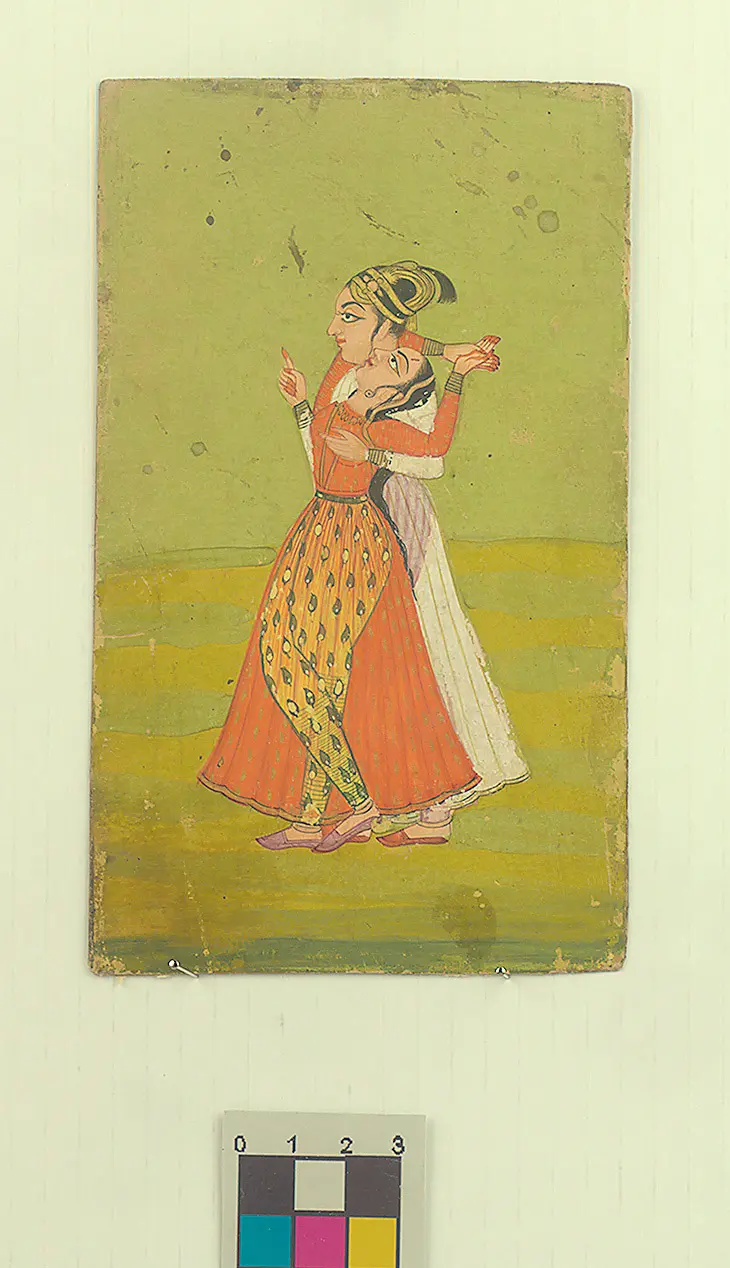
Two lovers
2. Hälfte 17. Jh. | Franz Ferdinand von Österreich-Este
The sheet from Malwa illustrates a verse from the poetry collection Amarushataka, the "Hundred Poems of King Amaru". This cycle of love poems is praised by the poet Anandavardhanas (820 890 CE) as follows: "A single verse by the poet Amaru carries more of the flavor of love than can be found in entire volumes". For him, each of his poems brings the mood of erotic and romantic love (shringara) to life in the reader.
This folio illustrates a poem from the second part of the cycle, which deals with love in separation (vipralambha). The lover is separated from his beloved in her pavilion by a white wall, a boundary between sensual desire and social norm. The colors also underscore this boundary, as he stands in front of sensual red while she sits in front of a sedating blue. How does the artist transcend this divisive barrier? The tree provides the answer. It is he who leans towards his beloved.
This image also shows the intimate relationship between love, be it human or divine, and nature. The nature of the tree shows its sympathy for the couple, the emotion of the bending tree becomes the emotion of the lovers. It is the tree that allows people to retain their decency and yet helps the romantic mood of closeness to break through. Finally, the branches with the red leaves cross the boundary from standardized behaviour to the fulfilment of natural desire for the lover - they break through the strict topiary.
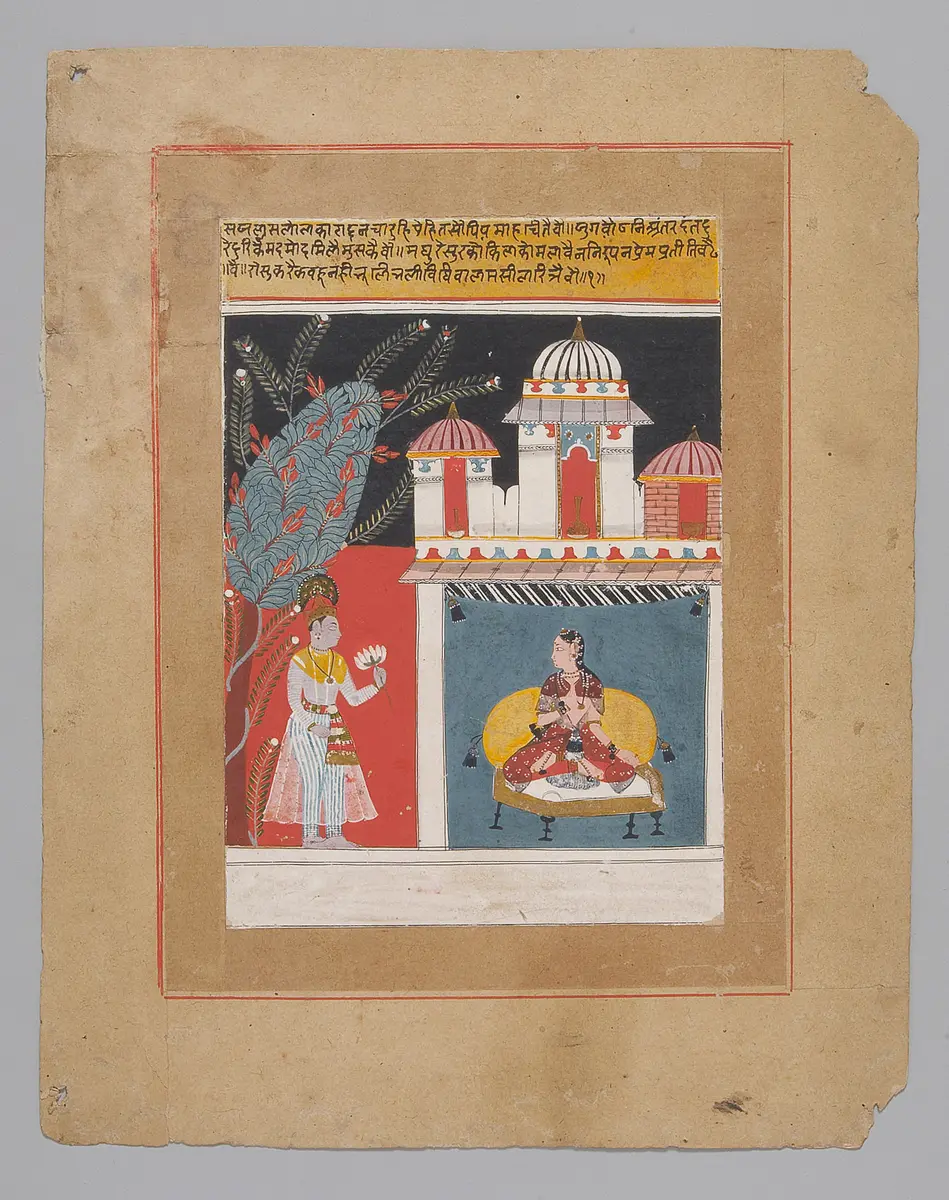
The sheet from Malwa illustrates a verse from the poetry collection Amarushataka, the "Hundred Poems of King Amaru". This cycle of love poems is praised by the poet Anandavardhanas (820 890 CE) as follows: "A single verse by the poet Amaru carries more of the flavor of love than can be found in entire volumes". For him, each of his poems brings the mood of erotic and romantic love (shringara) to life in the reader.
This folio illustrates a poem from the second part of the cycle, which deals with love in separation (vipralambha). The lover is separated from his beloved in her pavilion by a white wall, a boundary between sensual desire and social norm. The colors also underscore this boundary, as he stands in front of sensual red while she sits in front of a sedating blue. How does the artist transcend this divisive barrier? The tree provides the answer. It is he who leans towards his beloved.
This image also shows the intimate relationship between love, be it human or divine, and nature. The nature of the tree shows its sympathy for the couple, the emotion of the bending tree becomes the emotion of the lovers. It is the tree that allows people to retain their decency and yet helps the romantic mood of closeness to break through. Finally, the branches with the red leaves cross the boundary from standardized behaviour to the fulfilment of natural desire for the lover - they break through the strict topiary.
Collection:
Franz Ferdinand von Österreich-Este (1863 Graz - 1914 Sarajevo) DNB
Time:
2. Hälfte 17. Jh.
Object Name
Zwei Liebende
Culture
Indien / Malwa
Material/technology:
Karton
Copyright
Weltmuseum Wien
Collection area
South Asia, Southeast Asia, Himalayas
Geography
Südasien/Subkontinent/Indien
Invs.
102410
Browse more Similar items you might be interested in
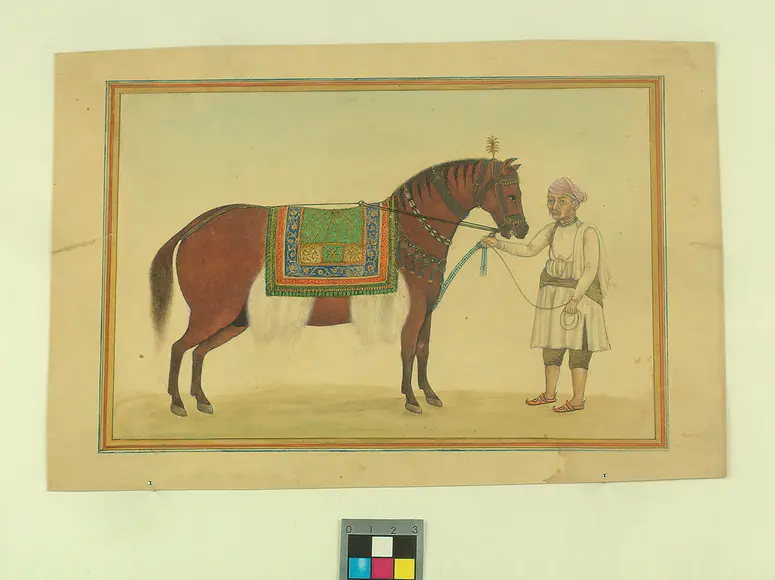
Miniaturmalerei Pferd mit Reitknecht Franz Ferdinand von Österreich-Este 18. Jahrhundert