Jump to navigation Jump to content Jump to contact Jump to search Jump to search Jump to footer
Adults

International Guests

Language development is important to us. Therefore, we also offer a comprehensive public programme as well as bookable programmes for groups, adults, and schools.

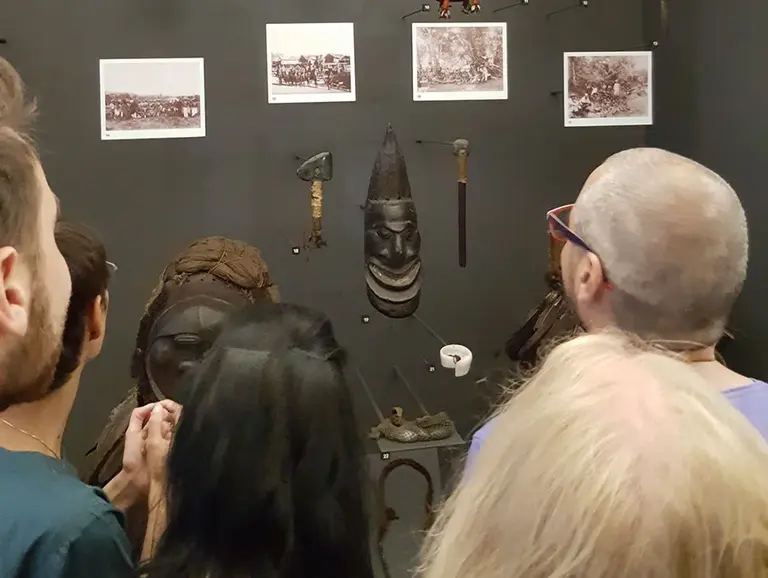
A group of people observes a display of traditional artifacts on a dark wall. The collection includes various hand-crafted objects and two historical photographs, highlighting cultural heritage. The viewers, mostly from behind, are engaged in the exhibition.

Multilingual guided tours

EN

All our guided tours can also be booked in English, Spanish or French. The language in which a public tour is given can be agreed on the spot depending on availability. For further information please contact us at kulturvermittlung@weltmuseumwien.at

FR

Toutes nos visites guidées peuvent également être réservées en langue française, anglaise ou espagnole. La langue appliquée d’une visite publique peut être convenue sur place en fonction des besoins et des disponibilités. Pour plus d’informations, veuillez contacter kulturvermittlung@weltmuseumwien.at

ES

Todas nuestras visitas guiadas pueden reservarse también en español, inglés o francés. El idioma aplicado de una visita pública puede acordarse in situ en función de las necesidades actuales y la disponibilidad. Para más información, póngase en contacto con kulturvermittlung@weltmuseumwien.at

IT

Tutte le nostre visite guidate possono essere prenotate anche in inglese, spagnolo o francese. La lingua in cui viene effettuata una visita pubblica può essere concordata sul posto in base alla disponibilità. Per ulteriori informazioni, contattateci all'indirizzo kulturvermittlung@weltmuseumwien.at
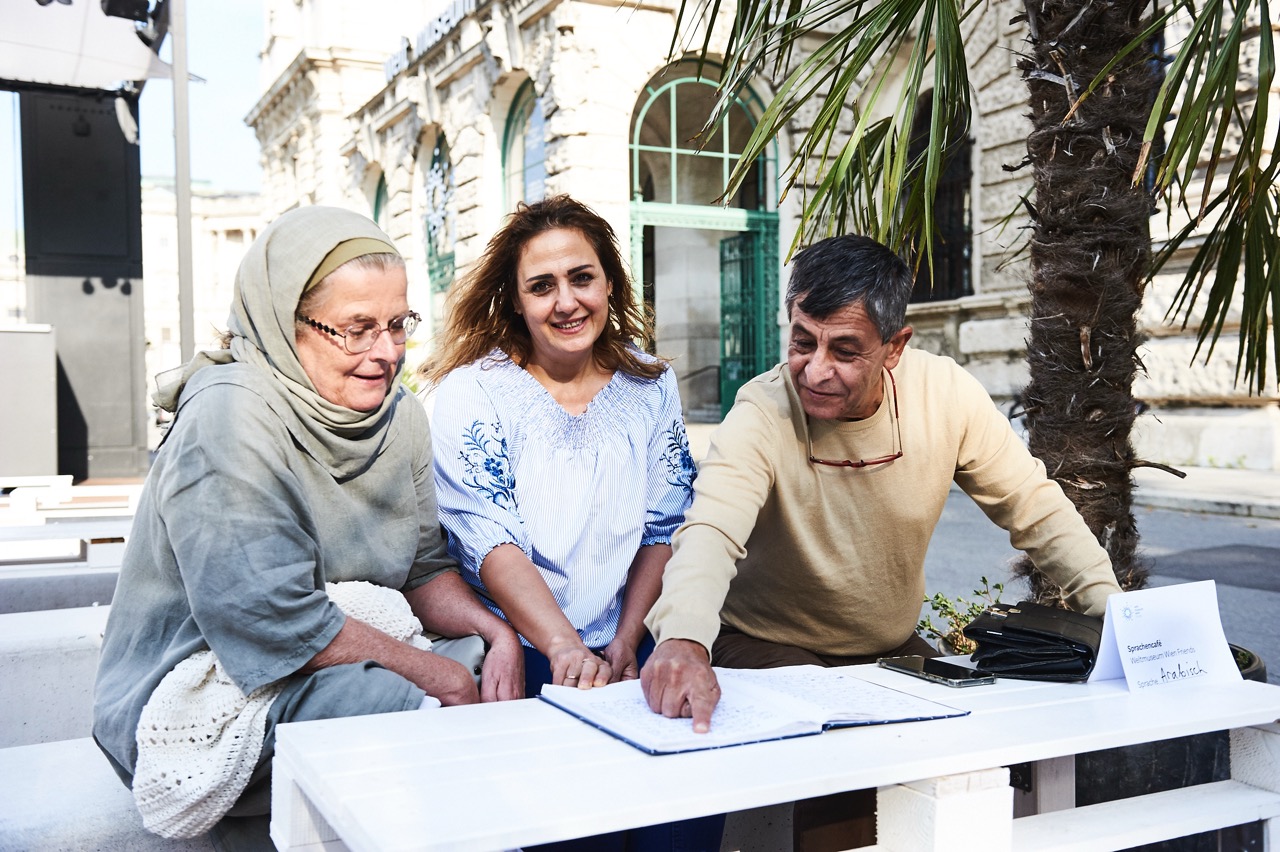
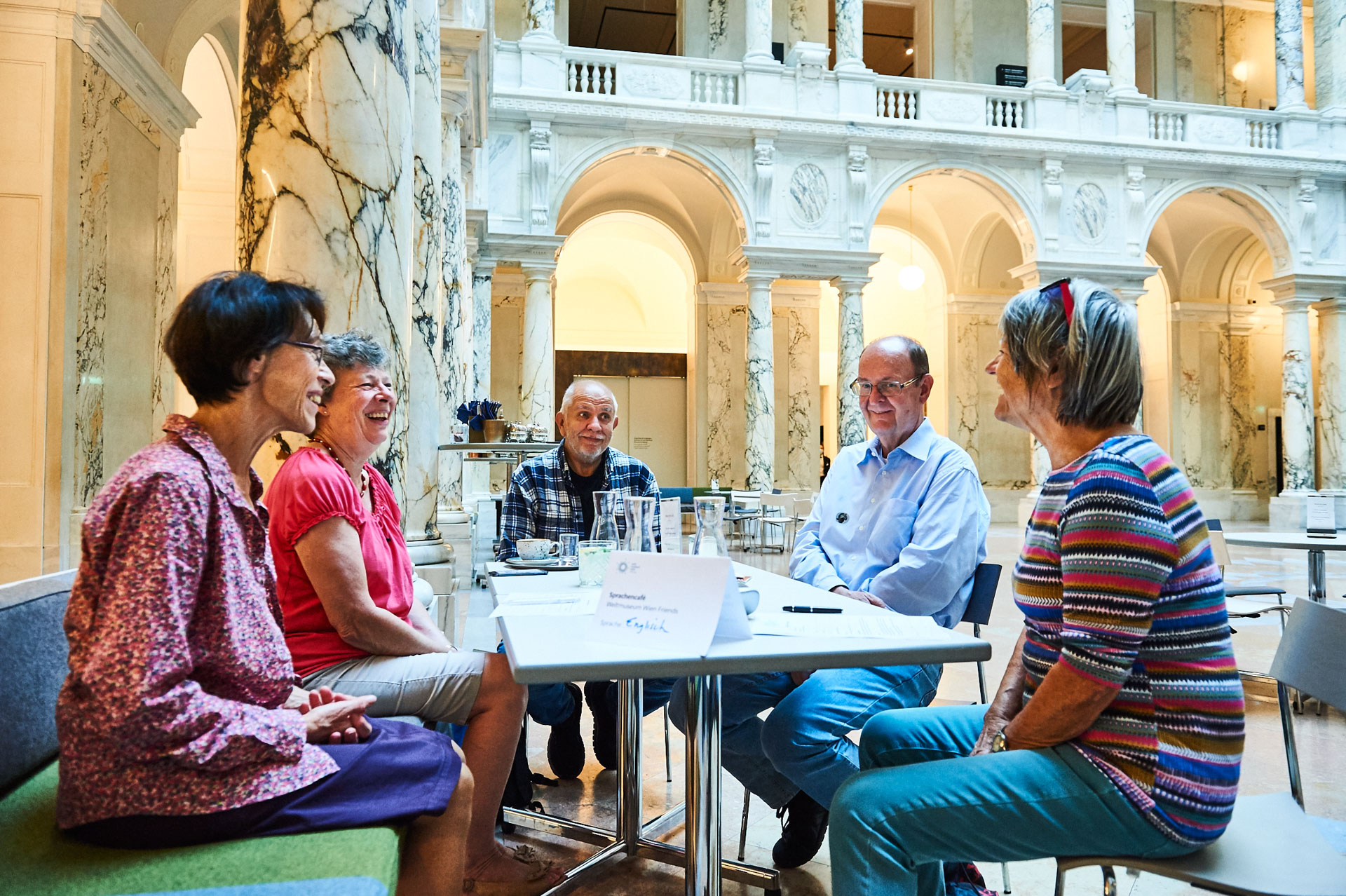
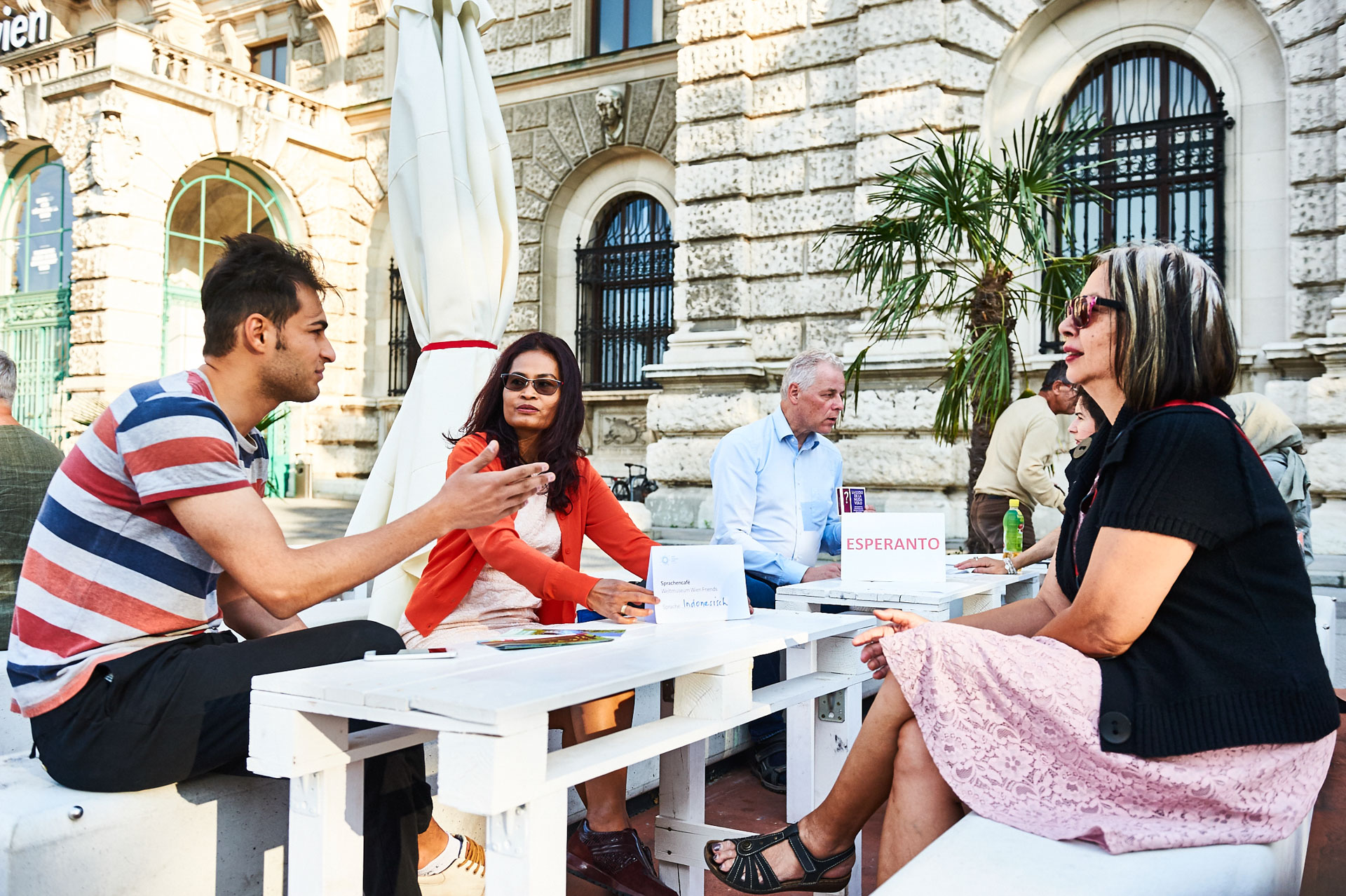
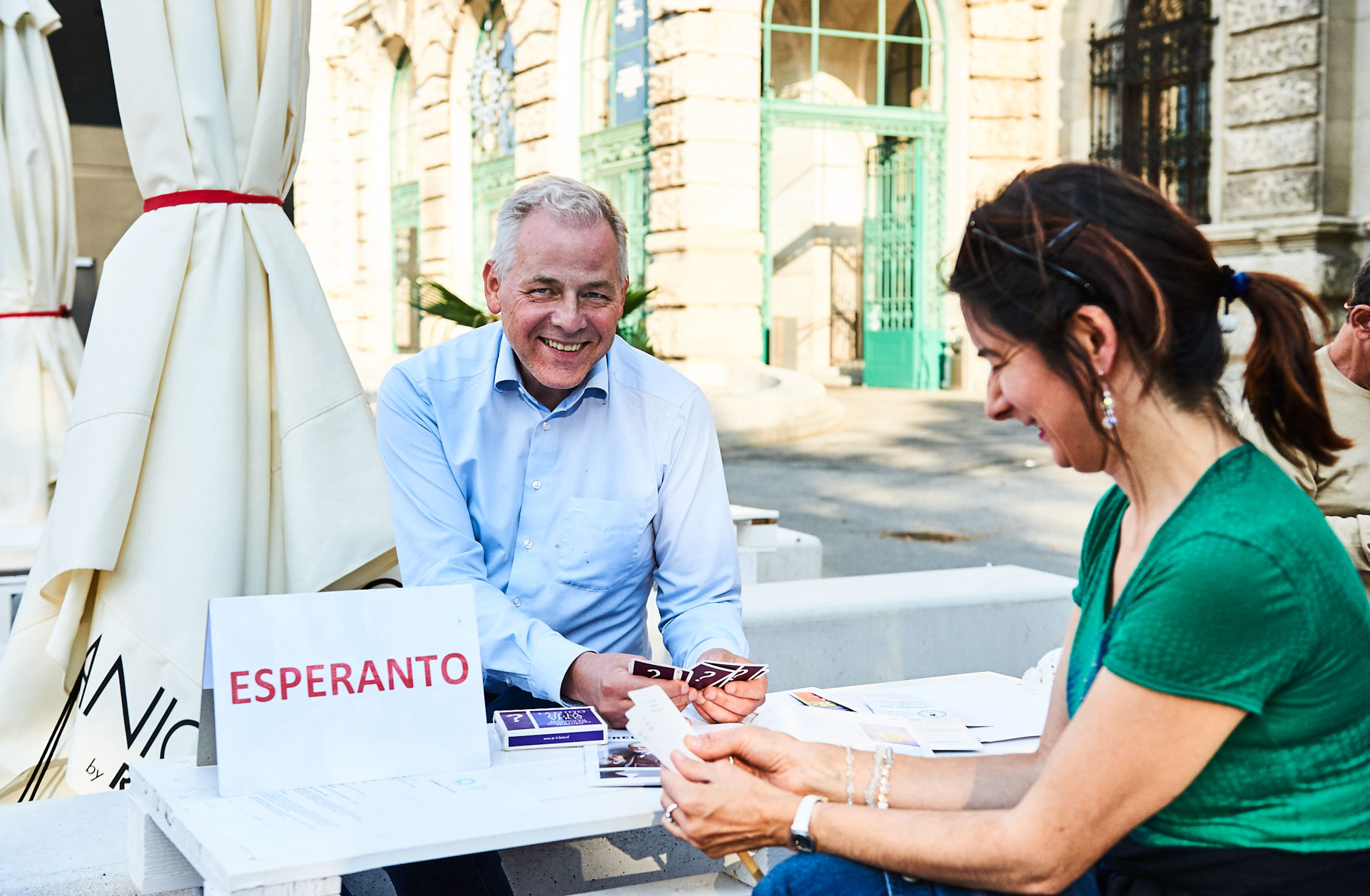
Language Café

Would you like to learn a new language? Or refresh your foreign language skills? Then join us!

Languages: Arabic, German, English, Esperanto, Indonesian, and Spanish.

A cooperation between the Weltmuseum Wien Friends, the Cultural Education Department of the Weltmuseum Wien, and Duolingo.

The Weltmuseum Wien Friends association offers a wide range of additional activities for anyone interested in the contents of the Weltmuseum Wien, such as object talks, special guided tours, excursions, as well as film and photography lectures.

Duration: 90 min.
Participation: free
Registration: friends@weltmuseumwien.at
Meeting Point: Hall of Columns

Register now

Online museum talks German as a foreign language

Would you like to improve your German skills while exchanging fascinating stories about museum treasures? This language café is intended for everyone who would like to improve their German in a historical context.

Mondays at 5:30 p.m.
Duration: 60 min.
Registration: lea.nagel@weltmuseumwien.at
Meeting point: online via Zoom
Participation: free of charge

Register now

School programmes for language development

Learning Language Through Play (German as a Foreign / Second Language)

The aim of the language development workshops is to support learners of German and to promote an appreciative approach to multilingualism. Both beginners and advanced learners are very welcome!

The Sprachförderzentrum Wien is a cooperation partner for these two programmes. If you book a museum visit with students from a German support class or a German support course, you will receive a discount of €2 per student.

For the association Weltmuseum Wien Friends language development is a matter close to their hearts. In addition to the Language Café, which takes place at the museum every second Monday, they also support the language development workshops.

For children aged 6 to 10
DaF/DaZ workshop from A1 level of German
Of Feathers, Shells and Dog Teeth

On this exciting journey through the Weltmuseum Wien, you will be accompanied by stories from around the world, numerous hands-on objects and surprising artefacts. Perhaps we will encounter Hawaiian deities, see exquisite garments from Ethiopia, admire samurai swords or marvel at the magnificent feather headdresses of the Aztecs. The travel route is different every day, and we are happy to take your wishes into account. Your self-designed postcard will remind you of the stories and encounters.

For children aged 10 to 15
DaF/DaZ workshop from A1 level of German
Feather Headdresses and Abalone Shells

What does an abalone shell feel like? Who wears a feather headdress? What do orange blossom flowers smell like? We explore these questions while getting to know museum objects and learning new words. Along the way, we create a memory game using the newly learned vocabulary!

For children aged 6 to 12
DaF/DaZ workshop from A2 level of German
and for students who benefit from
a language-sensitive approach
The Emperor’s New Clothes

This workshop can also be booked in an easy-language format.

The Emperor’s New Clothes is a well-known fairy tale by the Danish author Hans Christian Andersen. The story of the emperor who loved beautiful clothes so much that he changed them every hour accompanies us on this lively tour through the Weltmuseum Wien. We listen to the story while admiring exquisite garments made of velvet, silk and lion’s mane from Ethiopia, colourful symbol-rich women’s garments woven by women in Mexico, and a Chinese imperial robe made of silk. The many different materials and styles will hopefully inspire you to create your own designs!

Workshops for Spanish learners

These interactive workshops combine playful learning with a creative phase in the Kaleidoscope Studio. 

Can be booked as a bilingual workshop (German and Spanish combined) or entirely in Spanish.

For young people aged 13 and over
Mesoamerica and special exhibition
De Oro, Plumas y Calaveras – Historias de América Latina

En este taller exploraremos la herencias culturales de Latinoamérica y cómo se han adaptado  a la sociedades de hoy en día. El programa es interactivo y cuenta con  objetos que estarán a disposición de los estudiantes para que los puedan tocar.
Veremos  valiosos objetos de nuestra colección que ilustran las tradiciones del pasado y presente, como plumería, blusas tejidas y calaveras del Día de Muertos.

Más de calacas, catrinas y calaveras: a principios de octubre, noviembre  nos enfocaremos en el Día de Muertos (Es posible tener este mismo enfoque en el programa hispanohablante). Nos sumergiremos profundamente en esta importante fiesta mexicana de raíces coloniales.  Conoceremos diferentes tradiciones y prácticas culturales y al final realizaremos un ejercicio creativo en grupos, donde escribiremos nuestra propia calaverita literaria.