The objects relate how people saw their gods, organised their societies, their place in society, how they transformed their lands into fruitful fields, used the products of their animals, what clothes they wore, how they enjoyed their free time, and how they waged wars. Depending on the viewpoint and the context, the same object can tell very different stories.
South Asia, Southeast Asia, Himalayas
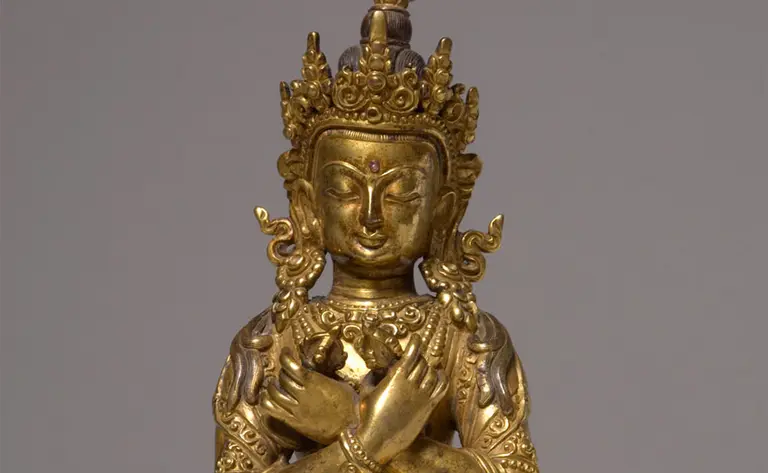
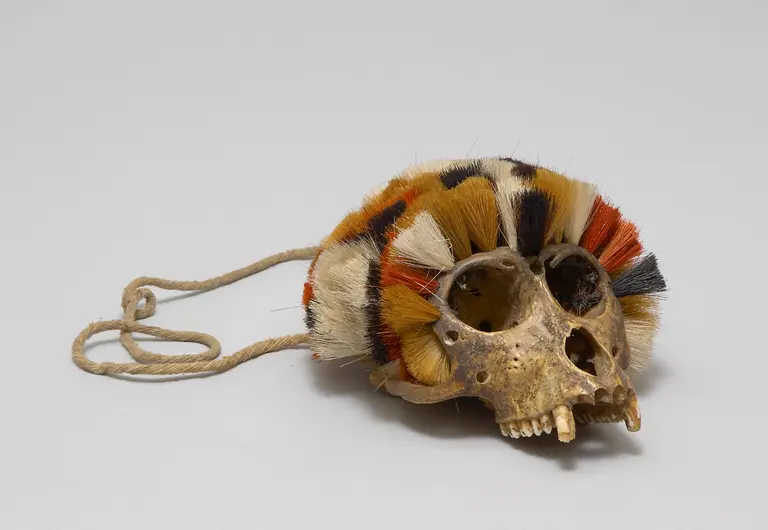
The borders of this enormous area are formed by Sri Lanka in the south, Mongolia in the north, Vietnam in the east, and Pakistan in the west. Indian musical instruments, figures from the Vietnamese water puppet theatre, Khmer statues, Taoist painting, Buddha statues from Thailand, Naga headhunting trophies – these are but a few examples from the collection numbering more than 30,000 objects.
About the collection

Research projects on the collection
Publications
Contact
History of the collection
The collection has been continuously growing ever since the first objects were added to the then anthropological collection of the Natural History Museum in 1839. The most important contributions, to name only a few, were provided by Sourindro Mohun Tagore with his Indian musical instruments, Richard Teschner with marionettes from Southeast Asia, Christoph Schneller with Taoist paintings from Thailand, Helmut Ploog with Khmer statues, Alfred Raquez who covered the inventory of Laos with his 1,640 objects, Carl Bock with exceptional Thai Buddhas, and the Austrian heir to the throne, Franz Ferdinand of Austria-Este, with thousands of objects.
What route do objects take in their transformation from cultural artefacts to museum objects? This question cannot be answered without taking into account the collector, and is addressed here using three examples: the aristocrat Carl Alexander Anselm Freiherr von Hügel who embarked on a long journey to India because of private interest, the entomologist Hans Leder who developed an interest in the Mongolian pantheon, and the ethnologist Christoph von Fürer-Haimendorf who assembled a collection of Naga objects by working with the British colonial administration in India.
Carl Alexander Anselm Freiherrvon Hügel
The first objects from India came into possession of the Museum from Carl Alexander Anselm Freiherr von Hügel, and with 441 inventory numbers formed the nucleus of the India collection. Hügel reached Mumbai, the starting point of his long sojourn in India, in 1832. He is supposed to have been the first European to cross India from the southernmost point to its northernmost border. On this journey, he collected botanical and zoological objects, but also ethnographic artefacts. The variety of the objects indicates that Hügel followed neither a system nor a specific ethnographic interest in the organisation of his collection. It seems that he was rather guided by his personal taste and interests. As a representative of the educated European aristocracy, he was always closer to both the local rulers and the British colonial powers than to the rural populace. Everyday objects are thus only scarcely represented. The focus of Hügel’s collecting activities lay in the areas of weapons, jewellery, and religion.
Hans Leder
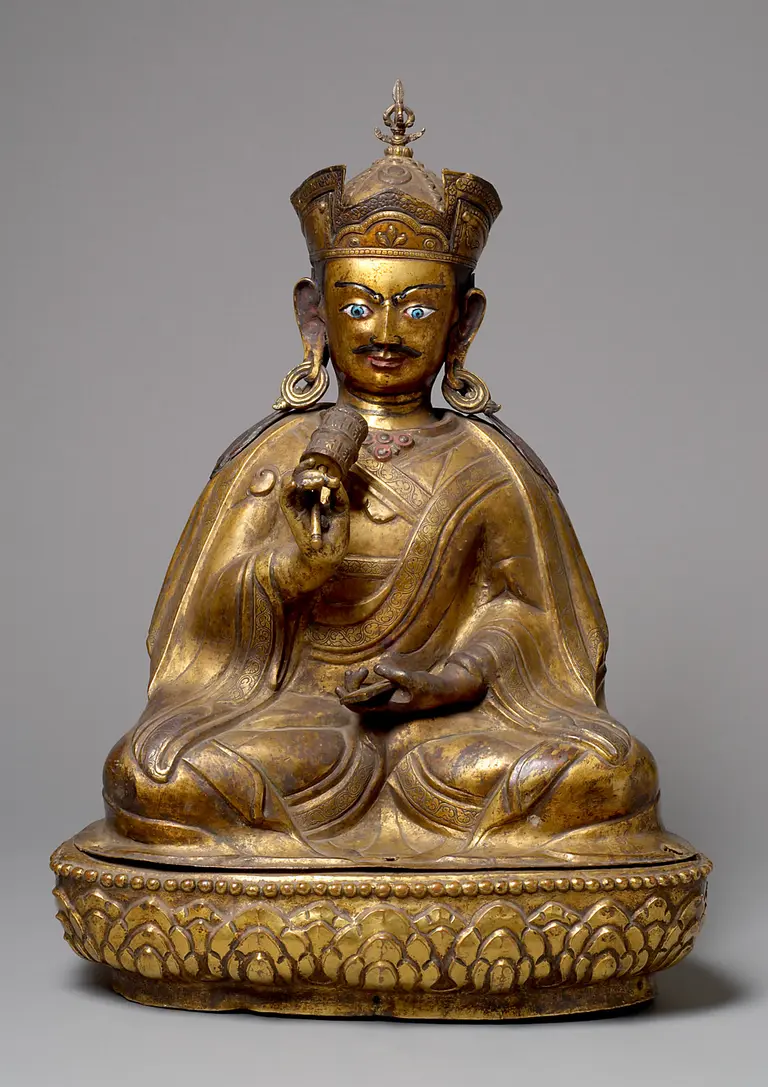
Hans Leder formed the core of the Tibetan Buddhism collections in the years 1899/1900, 1902, and finally 1904/1905 in Mongolia. Although Leder was sent to Mongolia with the task of collecting insects, his interest shifted from beetles to Mongolian culture through his close contact with the residents, whereby his primary interest lay in everyday religious practice. The collection of 824 objects offers a rare and comprehensive picture of religious and ritual art at the turn of the century, and gives insight into the iconography of the Mongolian pantheon.
Christoph von Fürer-Haimendorf
The change to ethnographically-based collecting began with Christoph von Fürer-Haimendorf (1909–1995). Good contacts to the British colonial administration in India enabled him to conduct thirteen months of field research among the Naga in the years 1936 and 1937. During this journey, he assembled a collection of 889 objects. On closer examination, his endeavour of providing a complete picture of the Naga in all of their life contexts becomes clear. A total of 533 of the 889 objects in his collection can be assigned to the realms of household, clothing, agriculture, craftsmanship, or tools. The head trophies and other objects related to headhunting belong without doubt to the most spectacular in the collection.