This is a wood steelyard balance. The steelyard balance is thought to have been invented in Ancient Rome or China. It was used in Japan for a very long time. During the Edo period (1603–1868), the use of balance scales was restricted to merchant bankers (ryōgaeya). Therefore, steelyard balances were widely used. One would hold the cord (called a torio in Japanese) and hang the item to be measured from the hook at the end of the pole. Then, after moving the position of the weight (with a cord attached) to counterbalance the item, one would read the graduation. By using the law of the level and different types of torio cords, one can measure items with a wide range of weight using just one light weight. It appears that this steelyard balance, which is approximately 60 cm long, was able to measure items up to around 20 kg. xxxWe find the inscription “Tokyo Moriya,” indicating that it was made by someone in Tokyo named Moriya. During the Edo period (1603–1868), the manufacturing of steelyard balances was controlled by the Shuzui family in Eastern Japan and the Jin family in Western Japan. Upon entering the Meiji period (1868–1912), a license-based system was put in place. One finds the name Moriya Sadakichi in an early list of licensees. Hiroyuki KUTSUSAWA
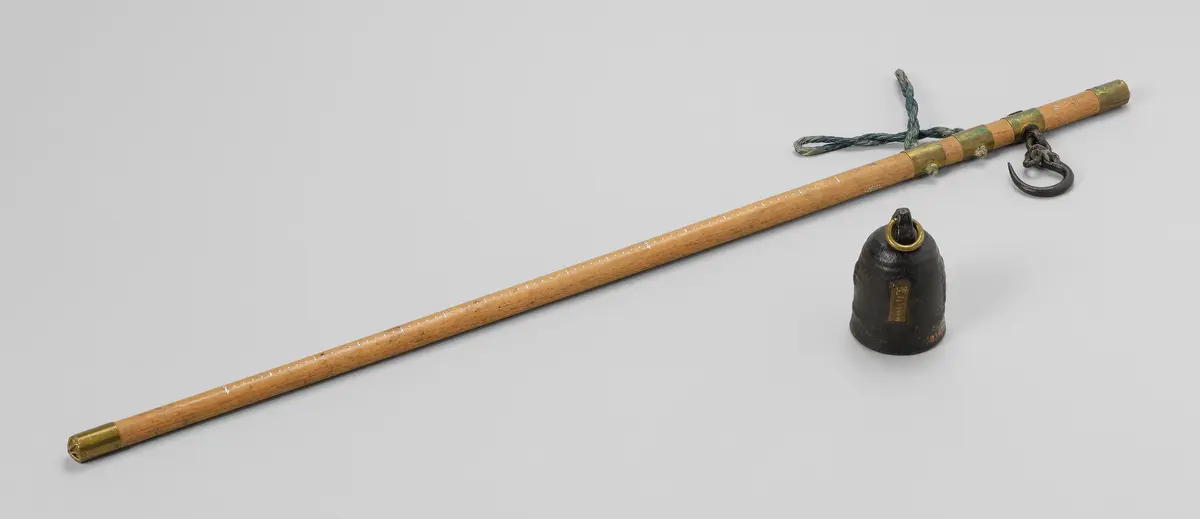
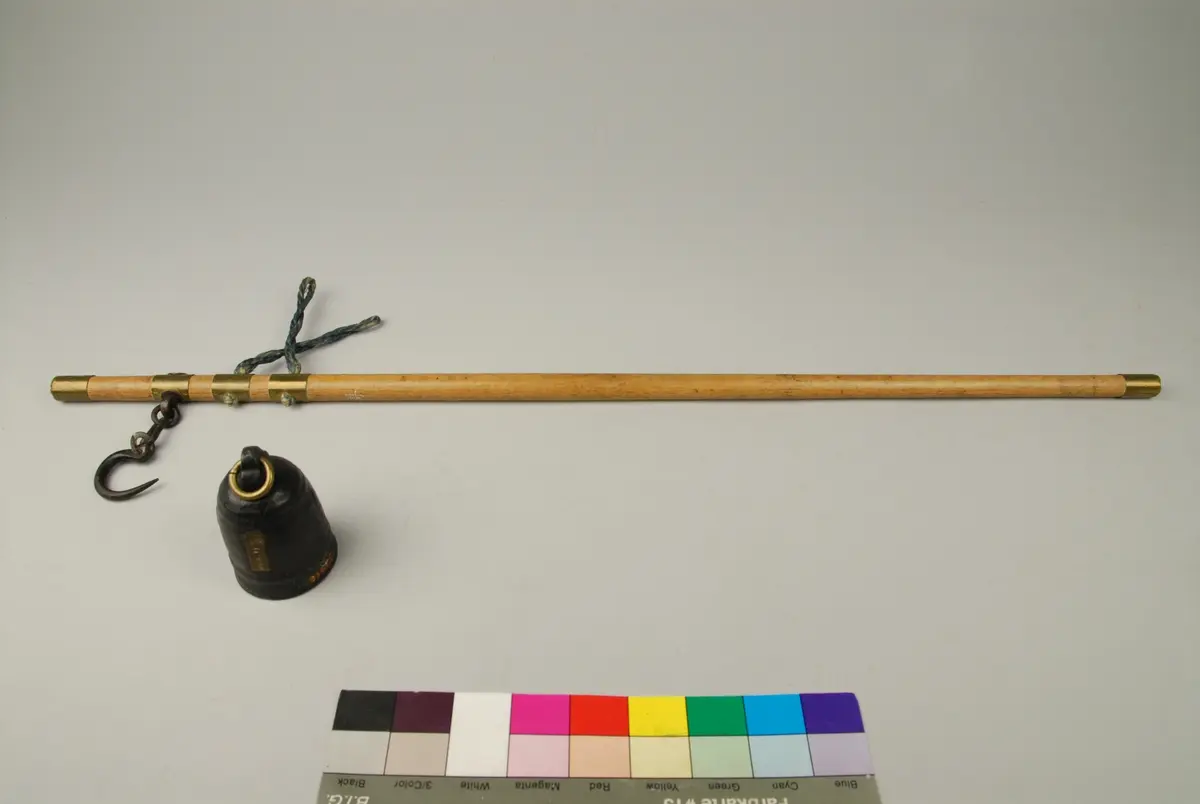
This is a wood steelyard balance. The steelyard balance is thought to have been invented in Ancient Rome or China. It was used in Japan for a very long time. During the Edo period (1603–1868), the use of balance scales was restricted to merchant bankers (ryōgaeya). Therefore, steelyard balances were widely used. One would hold the cord (called a torio in Japanese) and hang the item to be measured from the hook at the end of the pole. Then, after moving the position of the weight (with a cord attached) to counterbalance the item, one would read the graduation. By using the law of the level and different types of torio cords, one can measure items with a wide range of weight using just one light weight. It appears that this steelyard balance, which is approximately 60 cm long, was able to measure items up to around 20 kg. xxxWe find the inscription “Tokyo Moriya,” indicating that it was made by someone in Tokyo named Moriya. During the Edo period (1603–1868), the manufacturing of steelyard balances was controlled by the Shuzui family in Eastern Japan and the Jin family in Western Japan. Upon entering the Meiji period (1868–1912), a license-based system was put in place. One finds the name Moriya Sadakichi in an early list of licensees. Hiroyuki KUTSUSAWA
Collector:
Heinrich von Siebold (1852 St. Martin/Boppard - 1908 Schloss Freudenstein/Bozen) DNB
Material/technology:
wood, brass
Dimensions:
L: 61.5 cm
Copyright
Weltmuseum Wien
Collection area
East Asia: China, Korea, Japan
Geography
Ostasien/Japan
Invs.
33425