Bodycloth
20. Jhdt. | Christoph von Fürer-Haimendorf
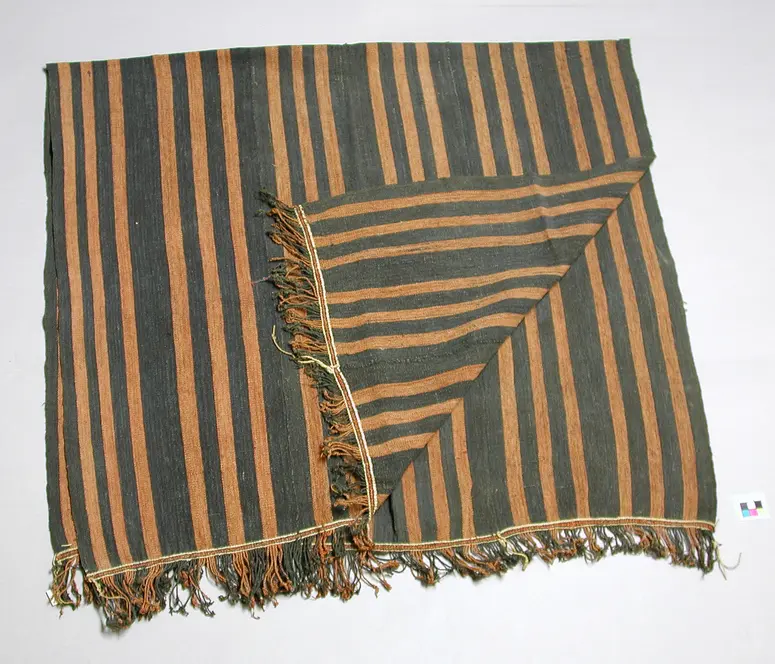
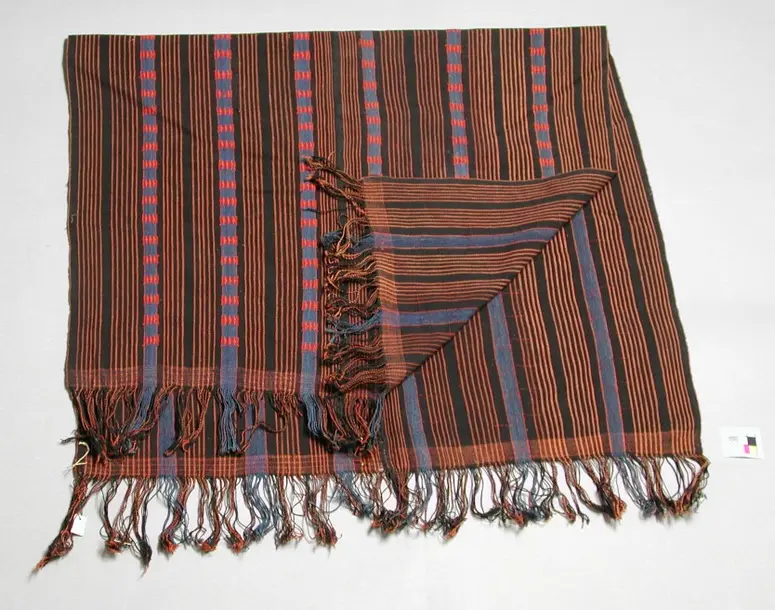
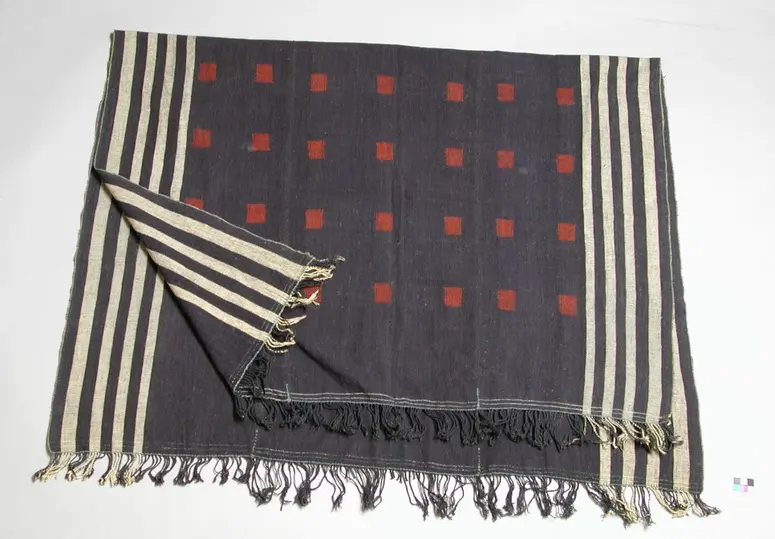
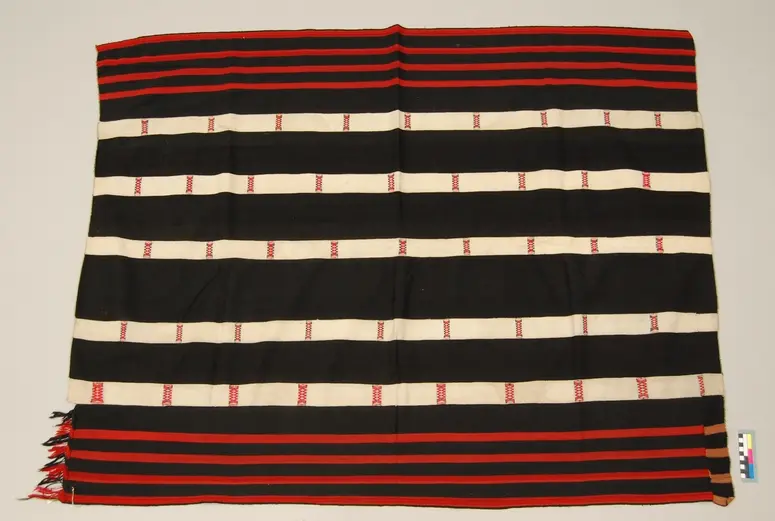
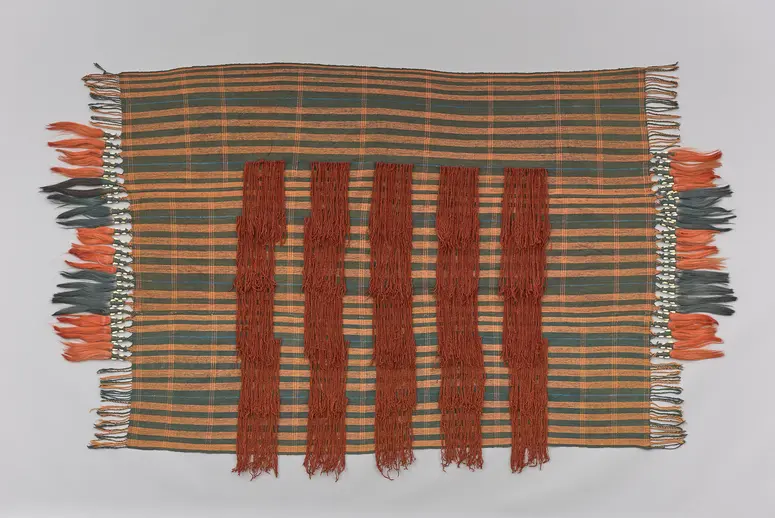
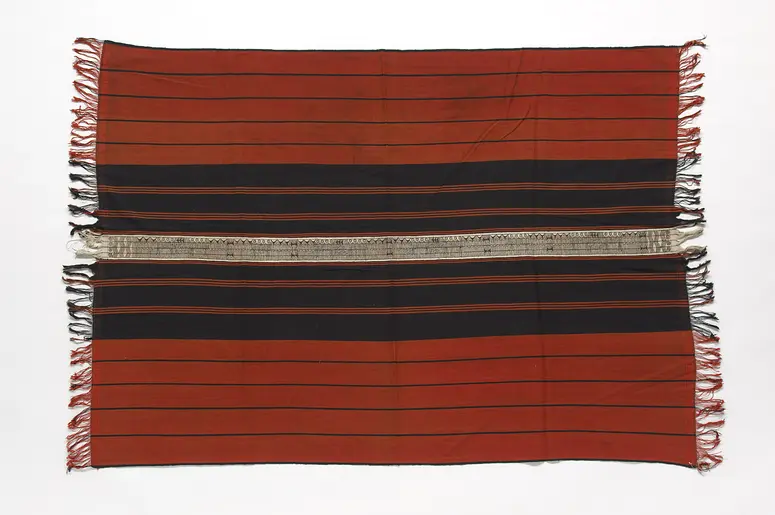
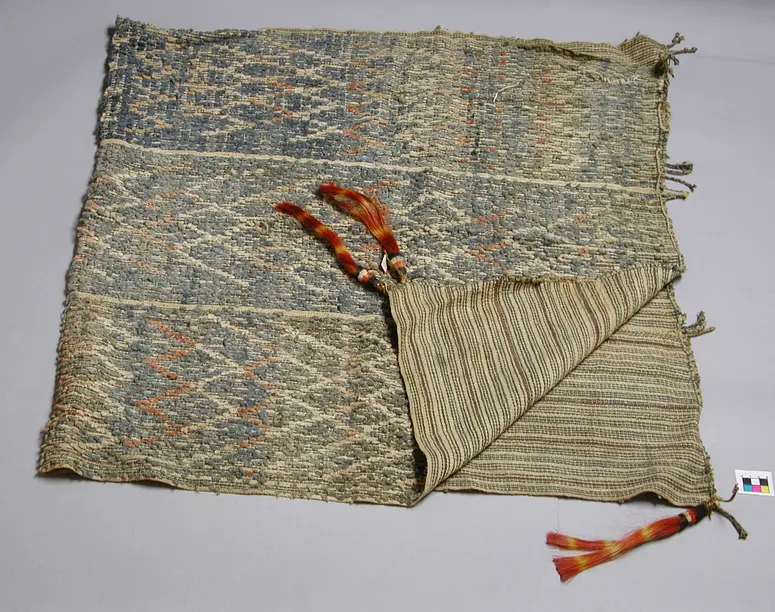
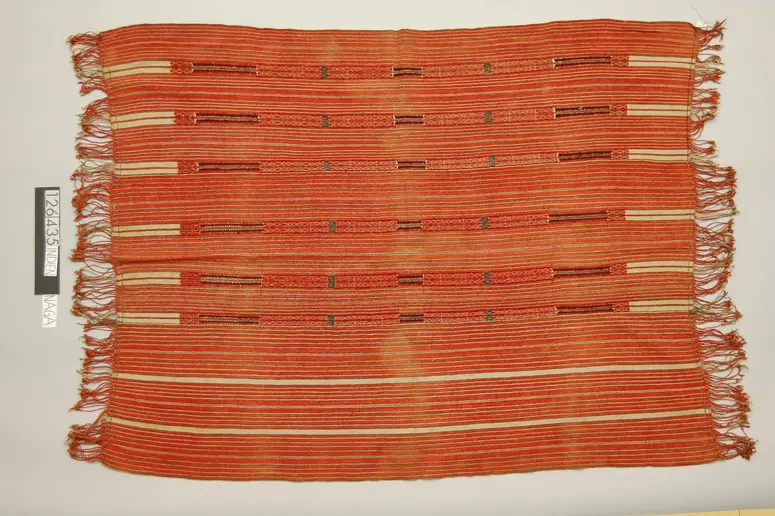
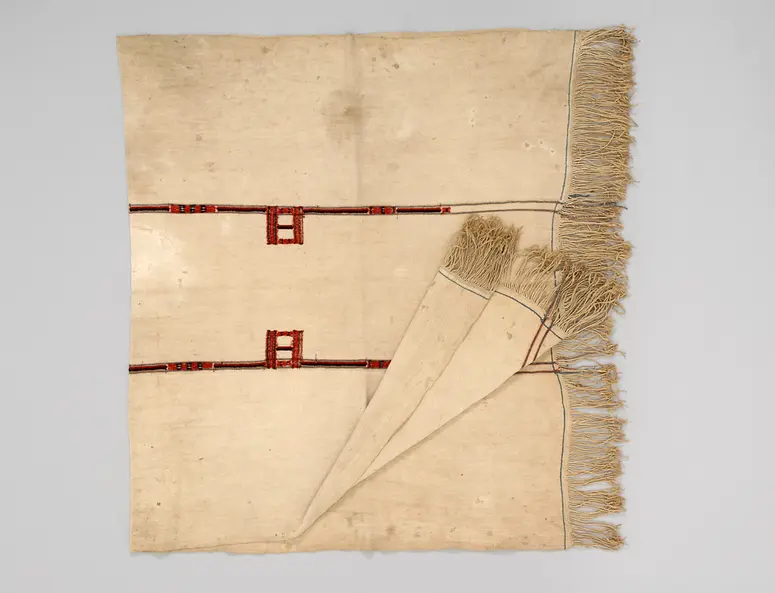
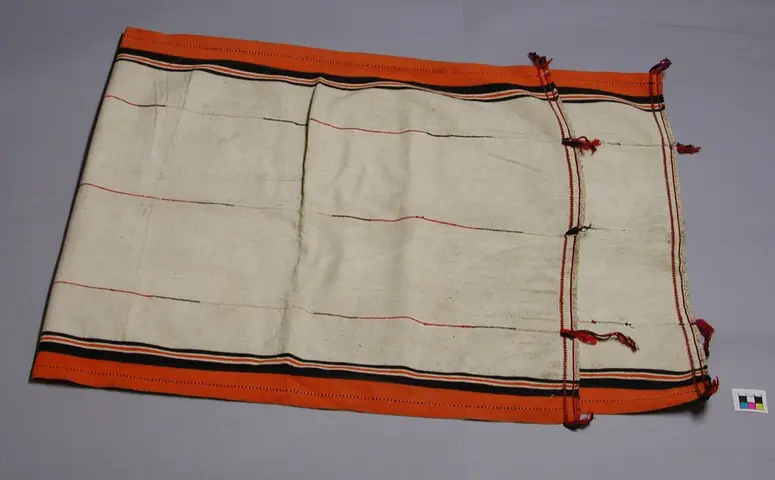
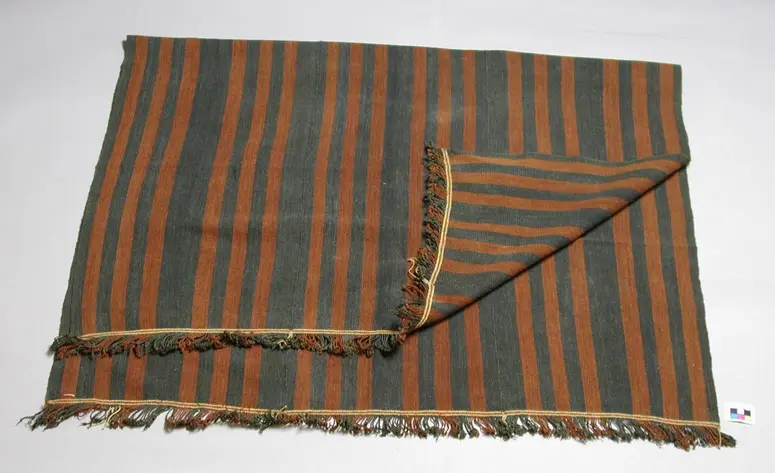
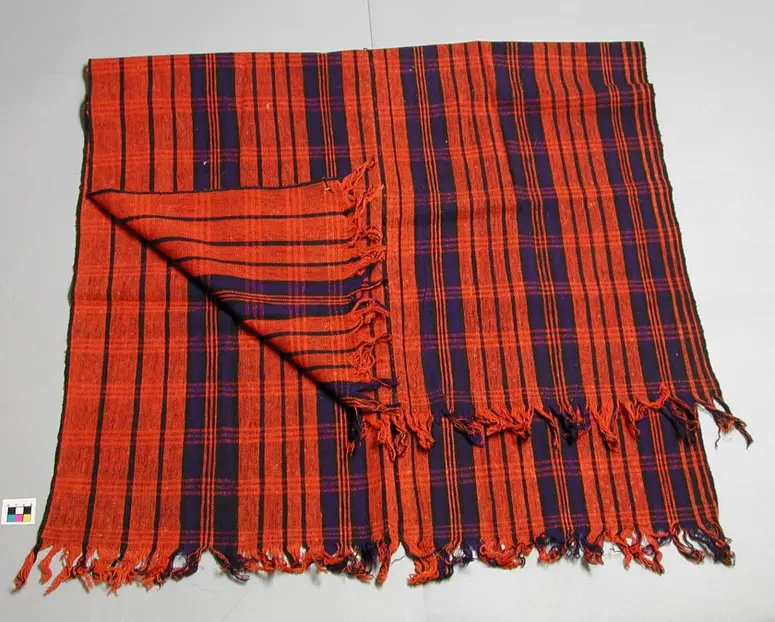
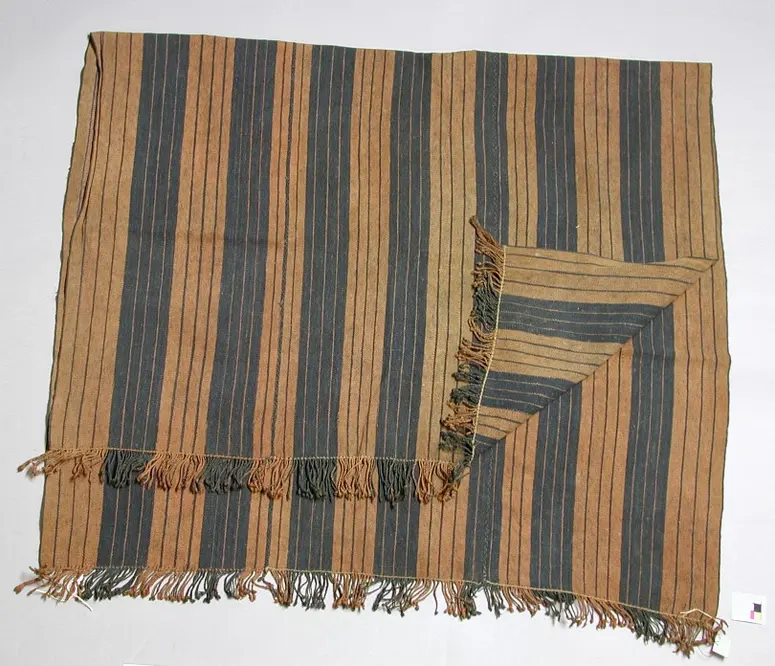
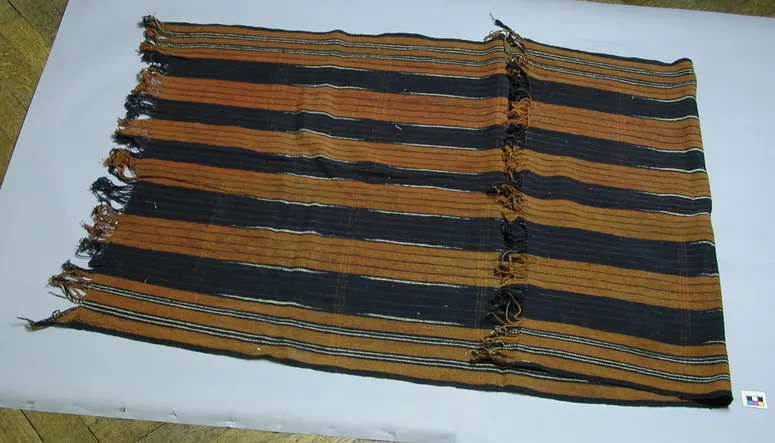
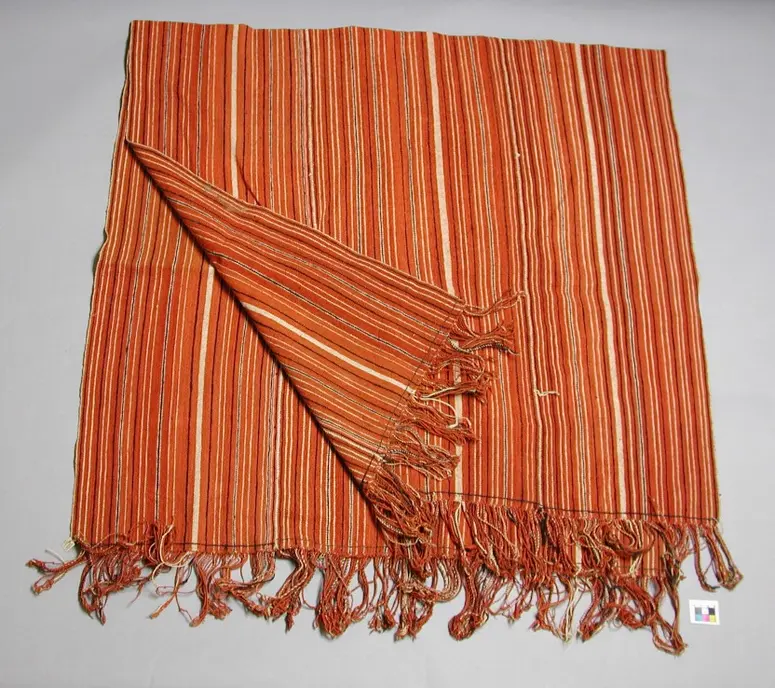
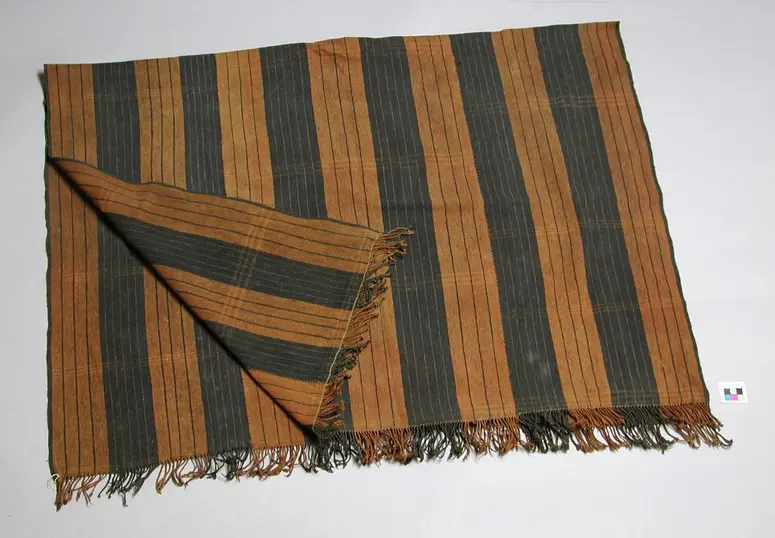
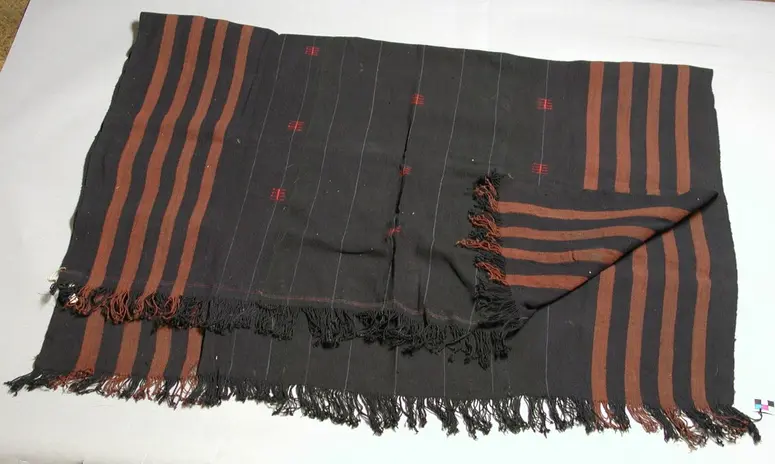
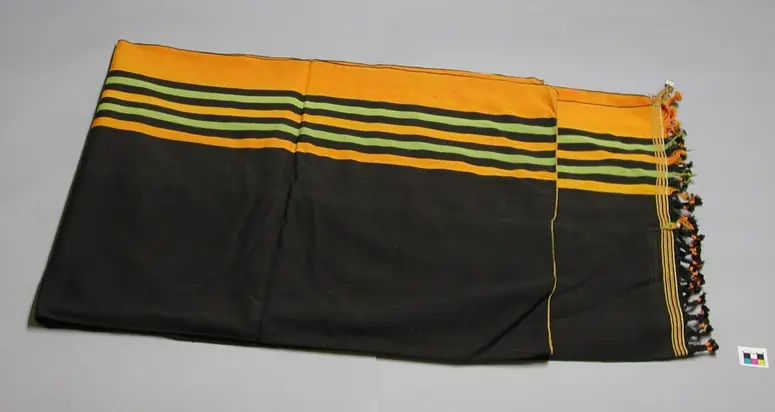
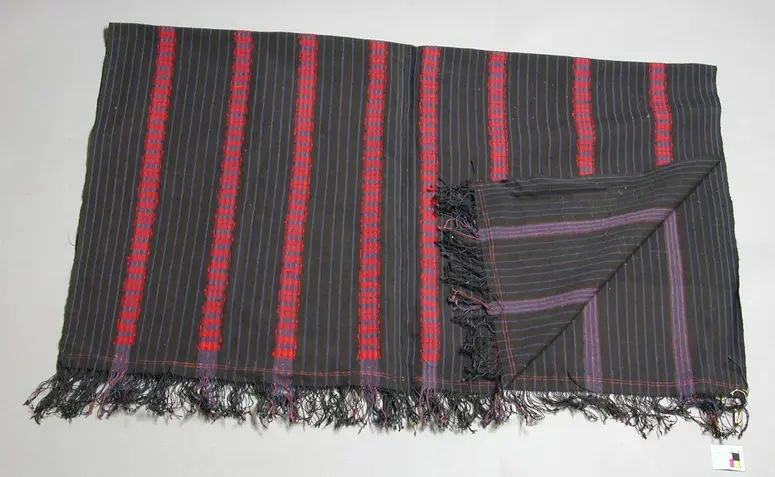
The term Naga is the collective term for a number of culturally and linguistically related and at the same time highly diverse tribes in the border region between India and Burma. Until not so long ago, the majority of the population lived in independent villages from agriculture and cattle breeding. Feared and shunned by their neighbors as headhunters, the Naga developed a unique culture. Weaving is still of particular importance today. Its high quality was not primarily aesthetic, but semantically motivated. The men's shawls not only told a story about the world in general, but also about the social status of their wearers.Only the king of Longkhai, a village on the border between India and Burma, was entitled to wear this shawl on special occasions. Only in this village could one read the message of the woven patterns, which tell of the hardships of life: the black background stands for the struggle for existence; while the white zigzag pattern still symbolizes peace, the yellow stripes formed from seeds next to it refer to hunger, the red ones to headhunting. Finally, the round metal plates tell of the constant battles between the Naga villages.
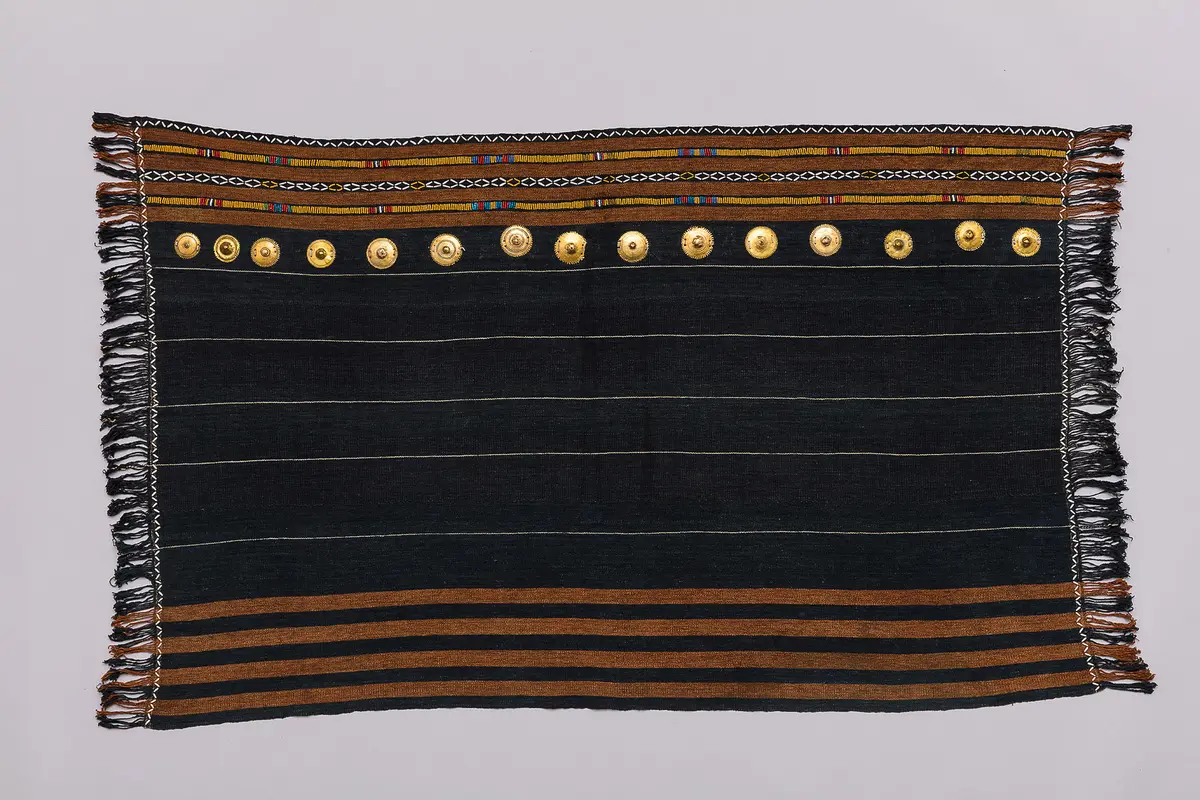
The term Naga is the collective term for a number of culturally and linguistically related and at the same time highly diverse tribes in the border region between India and Burma. Until not so long ago, the majority of the population lived in independent villages from agriculture and cattle breeding. Feared and shunned by their neighbors as headhunters, the Naga developed a unique culture. Weaving is still of particular importance today. Its high quality was not primarily aesthetic, but semantically motivated. The men's shawls not only told a story about the world in general, but also about the social status of their wearers.Only the king of Longkhai, a village on the border between India and Burma, was entitled to wear this shawl on special occasions. Only in this village could one read the message of the woven patterns, which tell of the hardships of life: the black background stands for the struggle for existence; while the white zigzag pattern still symbolizes peace, the yellow stripes formed from seeds next to it refer to hunger, the red ones to headhunting. Finally, the round metal plates tell of the constant battles between the Naga villages.
Collector:
Christoph von Fürer-Haimendorf (1909 Wien - 1995 London) DNB
Time:
20. Jhdt.
Object Name
Schultertuch
Culture
Nagaland, Indien
Material/technology:
brass, cotton, seeds, conch
Copyright
Weltmuseum Wien
Collection area
South Asia, Southeast Asia, Himalayas
Invs.
126463