Cap
Songko-lotong
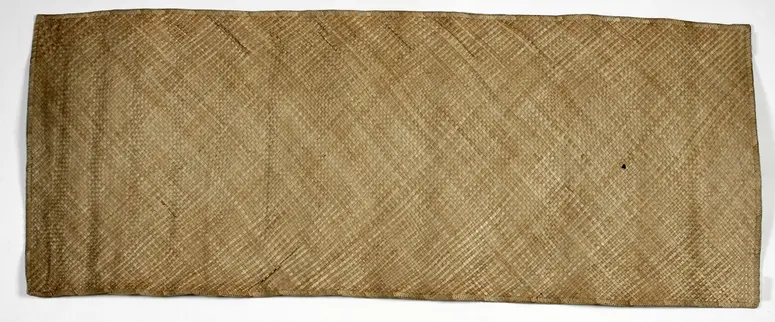
Note: The following text is taken from a 19th-century collection catalog and, in its language and perspective, partially reflects colonial thought patterns. We present the text in its original version to make the collection's history transparent and promote a critical examination of the colonial legacy. Certain terms and formulations may be perceived as problematic today. A 2009 research project concluded that most descriptions are factually correct and still usable; only a few details were found to be inaccurate or incorrect. The results of this project were published in the following collection catalog: khm-wmw-tm-library.on.worldcat.org/oclc/1457155265"311. Cap - "Songko-lotong". A small cap, similar to a European house-cap; woven very beautifully and artfully from horsehair, decorated with two rows of silver threads woven in. This type of cap is the national head covering of the Buginese and Makassars and is not found anywhere else in the Indian archipelago. The heads of all Muslim natives, to which these two ethnic groups belong - at least in form - are always covered with the indispensable head-cloth which is not even removed at night during sleep. All head coverings, and these caps as well, are worn atop these head cloths. This cap, however, is an exception: it is worn without the normal head cloth on the uncovered head and this only by nobles, chiefs, the rich and privileged persons who would never wear the straw hats mentioned above, with the exception of the yellow-covered hunting hat. All the others are work hats. The privileged either wear only their head cloths or only these caps. Princes wear caps decorated with a wide edge which is made of gold wire which has been woven in."Translation of: Czurda, F. A. J. (1883). Catalog mit Erklärungen der Etnografischen Privatsammlung des Dr. F. A. J. Czurda in Postelberg (Böhmen). (p. 63-64). Wien, Wilhelm Braumüller
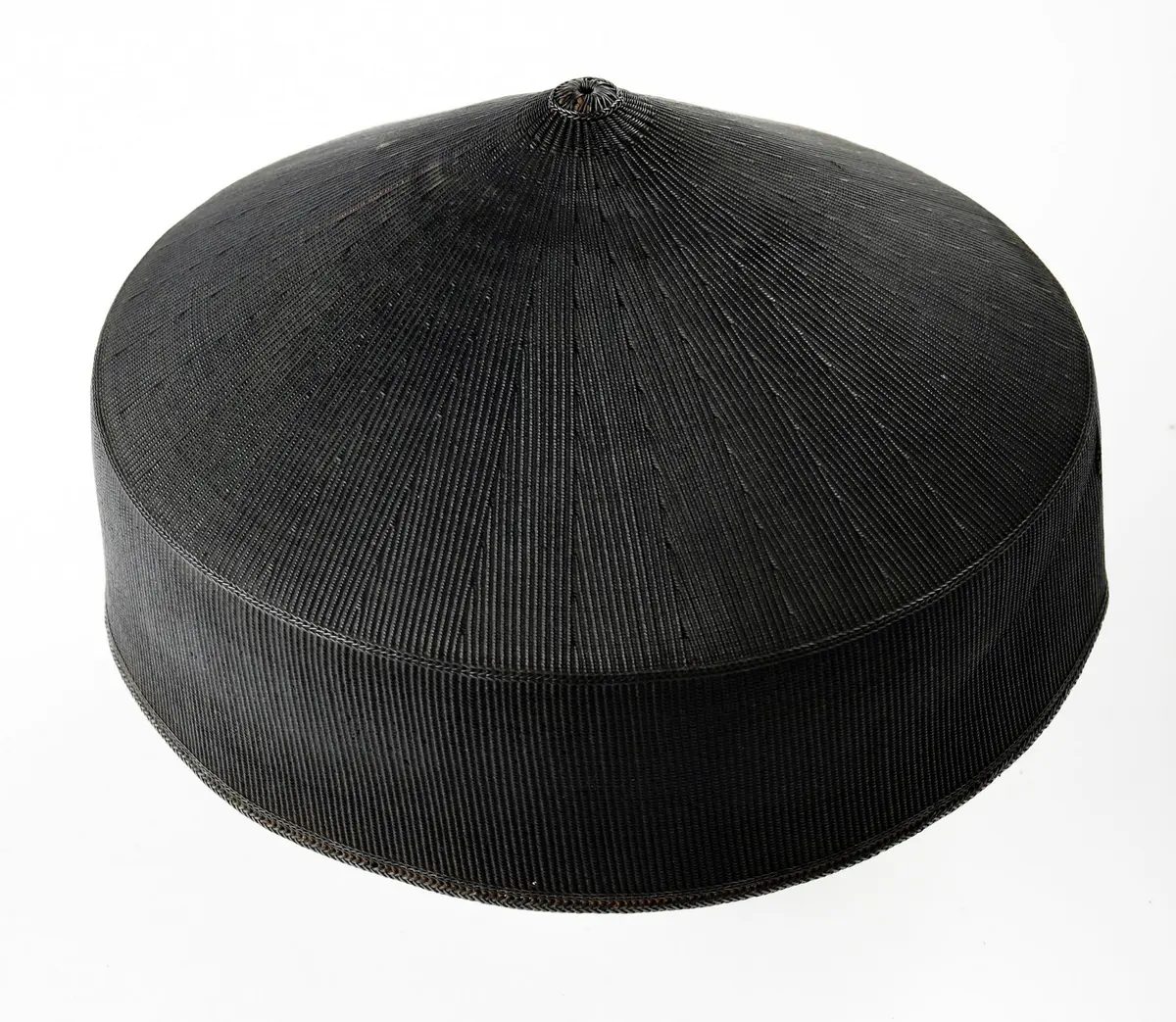
Note: The following text is taken from a 19th-century collection catalog and, in its language and perspective, partially reflects colonial thought patterns. We present the text in its original version to make the collection's history transparent and promote a critical examination of the colonial legacy. Certain terms and formulations may be perceived as problematic today. A 2009 research project concluded that most descriptions are factually correct and still usable; only a few details were found to be inaccurate or incorrect. The results of this project were published in the following collection catalog: khm-wmw-tm-library.on.worldcat.org/oclc/1457155265"311. Cap - "Songko-lotong". A small cap, similar to a European house-cap; woven very beautifully and artfully from horsehair, decorated with two rows of silver threads woven in. This type of cap is the national head covering of the Buginese and Makassars and is not found anywhere else in the Indian archipelago. The heads of all Muslim natives, to which these two ethnic groups belong - at least in form - are always covered with the indispensable head-cloth which is not even removed at night during sleep. All head coverings, and these caps as well, are worn atop these head cloths. This cap, however, is an exception: it is worn without the normal head cloth on the uncovered head and this only by nobles, chiefs, the rich and privileged persons who would never wear the straw hats mentioned above, with the exception of the yellow-covered hunting hat. All the others are work hats. The privileged either wear only their head cloths or only these caps. Princes wear caps decorated with a wide edge which is made of gold wire which has been woven in."Translation of: Czurda, F. A. J. (1883). Catalog mit Erklärungen der Etnografischen Privatsammlung des Dr. F. A. J. Czurda in Postelberg (Böhmen). (p. 63-64). Wien, Wilhelm Braumüller
Collector:
František A. J. Czurda (1844 Pisek - 1886 Cirebon) DNB
Entry Date:
1883
Object Name
Cap
Culture
Süd-Sulawesi
Material/technology:
Horsehair; woven
Copyright
Weltmuseum Wien
Collection area
Insular Southeast Asia
Invs.
17565