Ceremonial shield or dance shield
ca. 1500 | Ambras
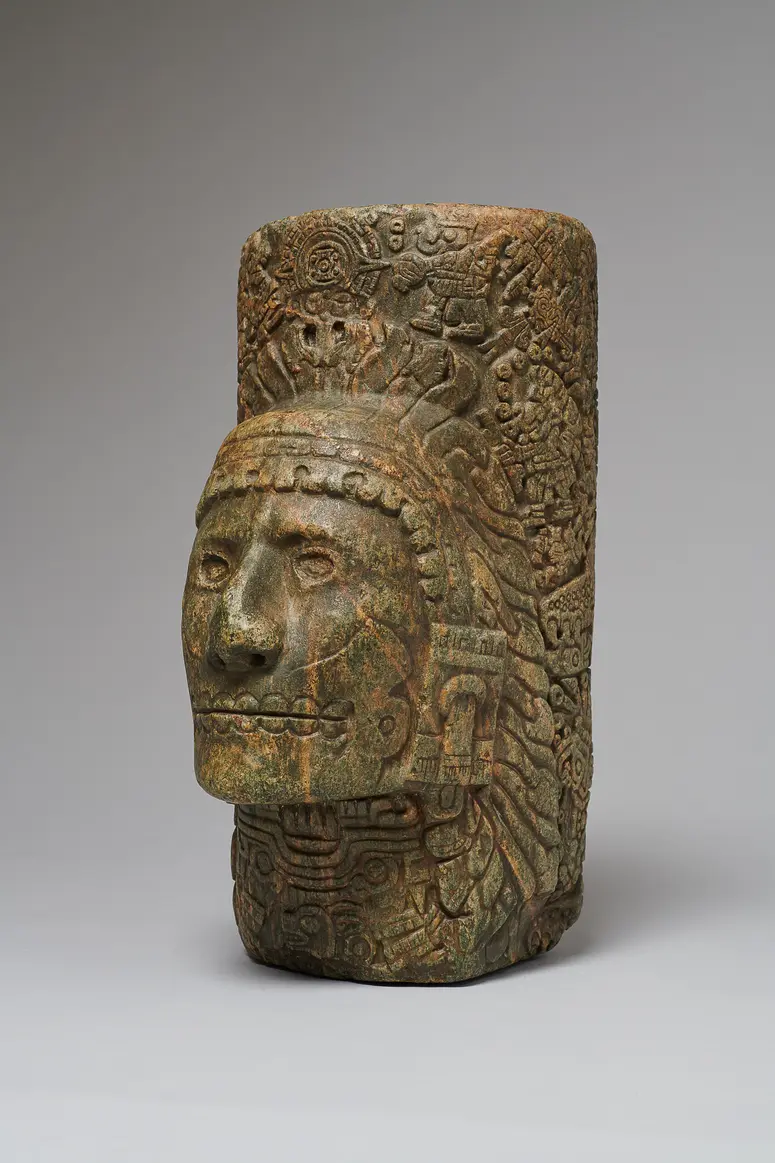
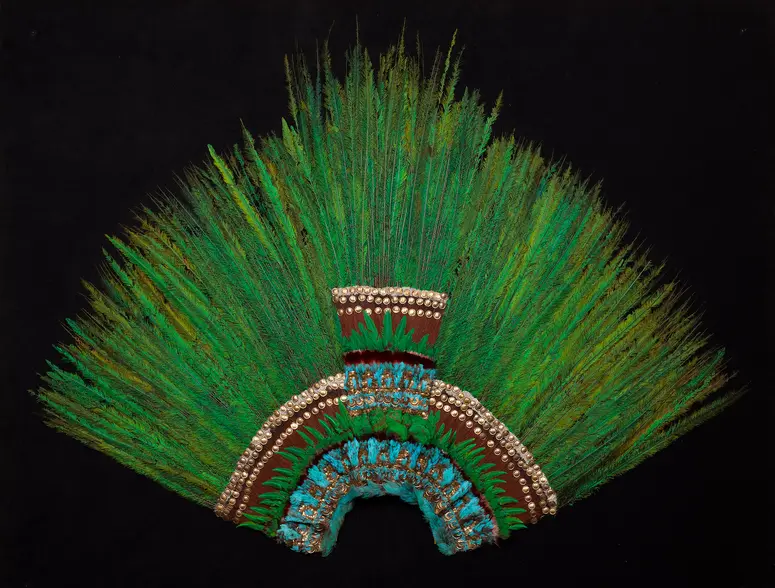
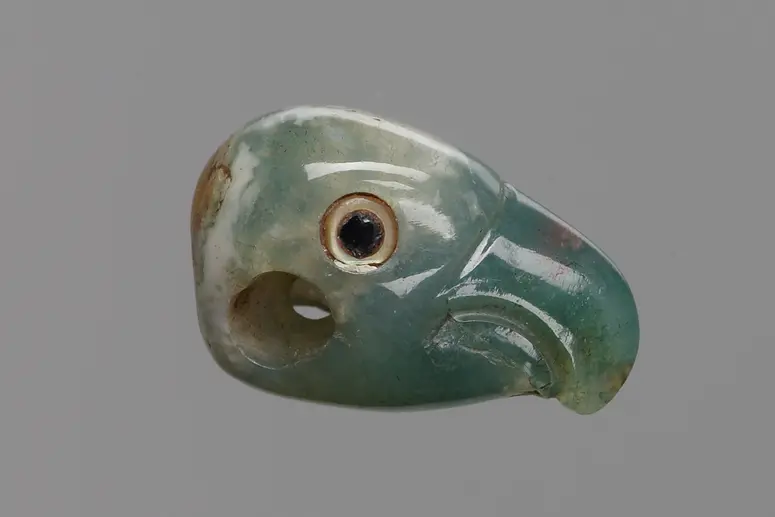
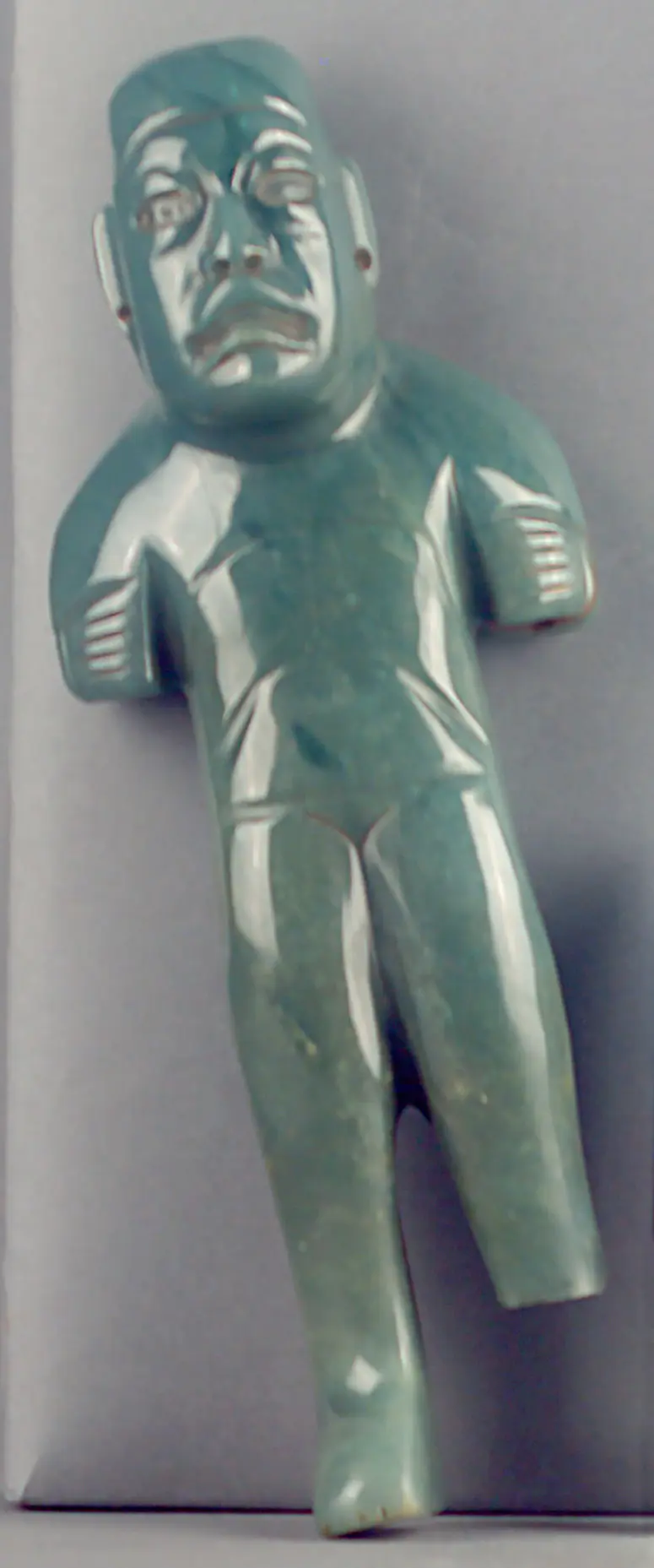
Like a Renaissance European cabinet of curiosities, this showcase contains objects made of materials highly regarded by the Aztecs: turquoise, jade, obsidian, gold and, above all, colourful and variegated feathers. For Europeans these were exotic materials. And indeed, these objects come from European collections, including the famous cabinet of curiosities in Ambras belonging to Archduke Ferdinand II of Tyrol. This is where the round mosaic, originally with over 22,000 stones, comes from. Turquoise was particularly valuable in Mesoamerica, because its blue-green colour symbolised water and hence fertility. The same applies to apple-green jadeite, which the small standing figure on the right is made of. It comes from the Olmec culture, which existed between 1500 and 400 before the common era. Typical features include the highly polished surface, the drooping corners of the mouth and the relatively large head. We know very little about this fascinating figure, however. It’s a male figure but we don’t really know what it represents. Similar figures have been found at sites with valuable sacrificial objects. They had a ceremonial role. But the truth is, we know very little about this culture. We can only speculate, even if it’s not very scientific to do so!

Like a Renaissance European cabinet of curiosities, this showcase contains objects made of materials highly regarded by the Aztecs: turquoise, jade, obsidian, gold and, above all, colourful and variegated feathers. For Europeans these were exotic materials. And indeed, these objects come from European collections, including the famous cabinet of curiosities in Ambras belonging to Archduke Ferdinand II of Tyrol. This is where the round mosaic, originally with over 22,000 stones, comes from. Turquoise was particularly valuable in Mesoamerica, because its blue-green colour symbolised water and hence fertility. The same applies to apple-green jadeite, which the small standing figure on the right is made of. It comes from the Olmec culture, which existed between 1500 and 400 before the common era. Typical features include the highly polished surface, the drooping corners of the mouth and the relatively large head. We know very little about this fascinating figure, however. It’s a male figure but we don’t really know what it represents. Similar figures have been found at sites with valuable sacrificial objects. They had a ceremonial role. But the truth is, we know very little about this culture. We can only speculate, even if it’s not very scientific to do so!
Time:
ca. 1500
Entry Date:
1891
Object Name
Ceremonial shield or dance shield
Culture
Mixteken-Nahua
Material/technology:
Wood, turquoise, green stone, resin
Copyright
Weltmuseum Wien
Collection area
North and Central America
Geography
Mittelamerika/Mesoamerika/Mexiko
Invs.
43379