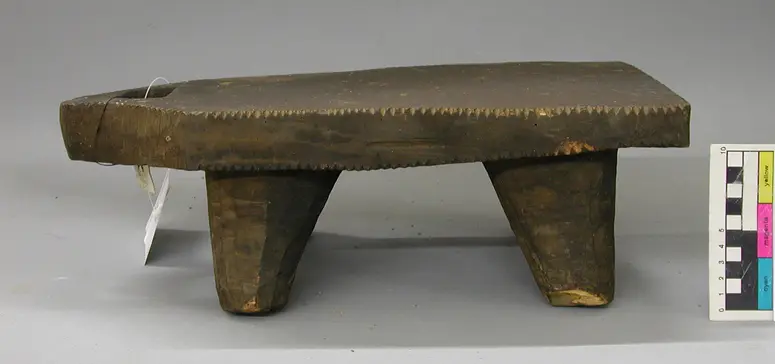
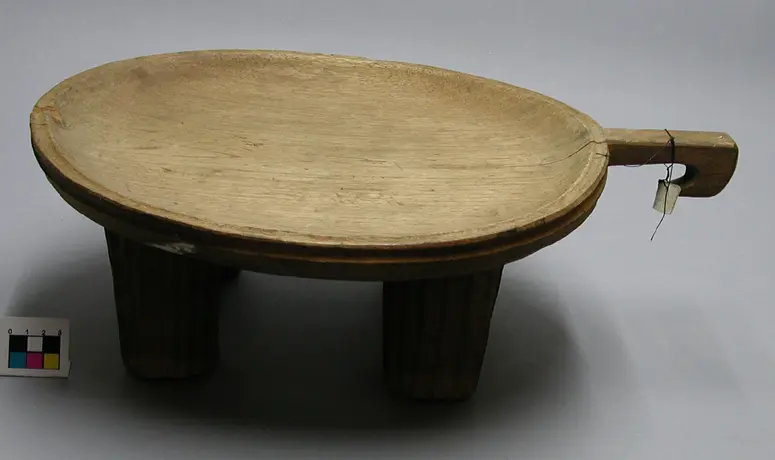
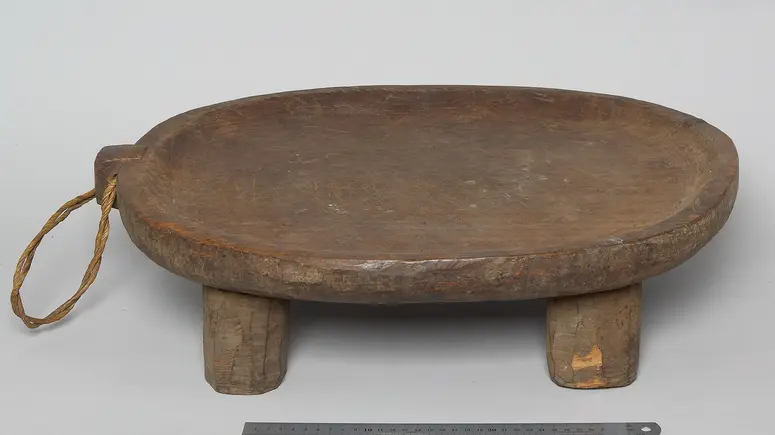
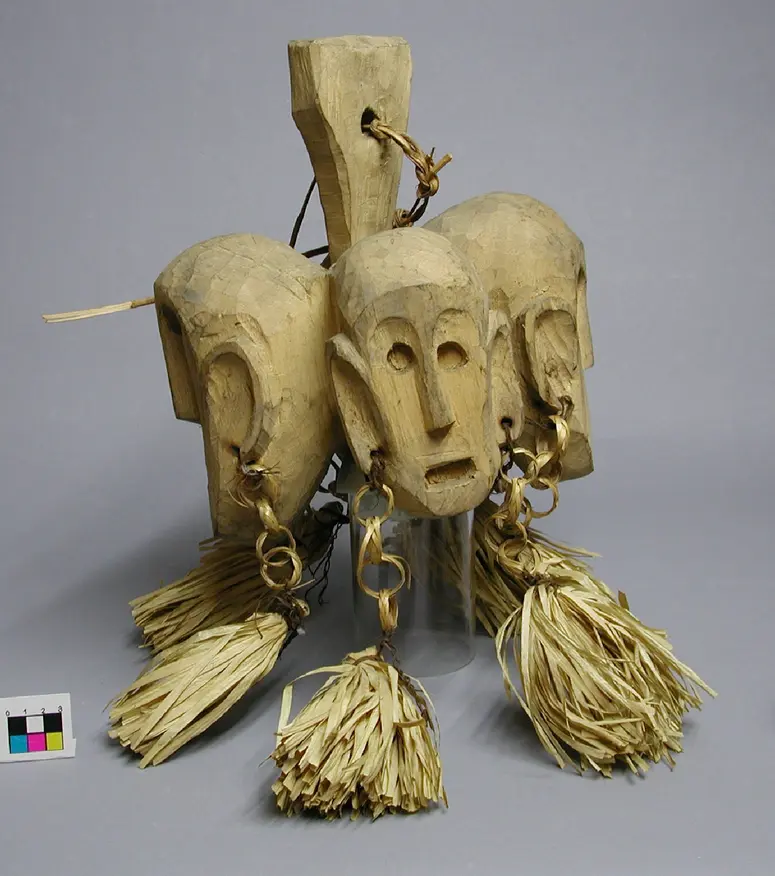
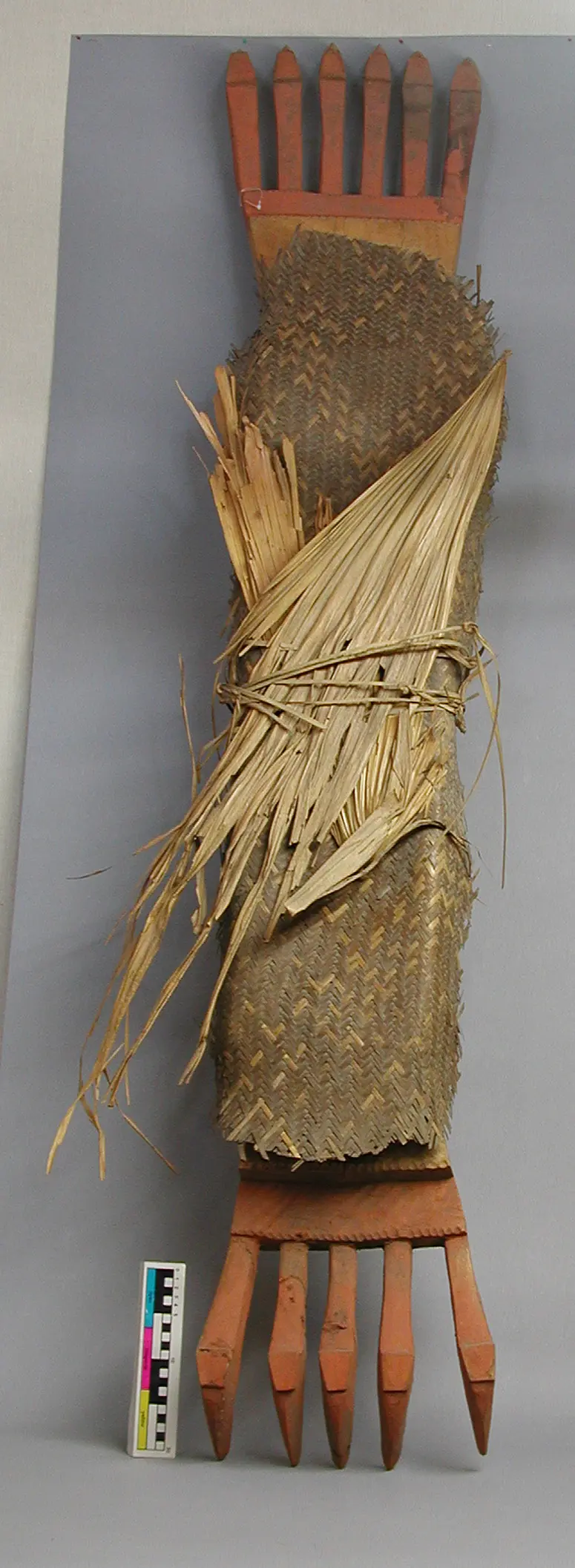
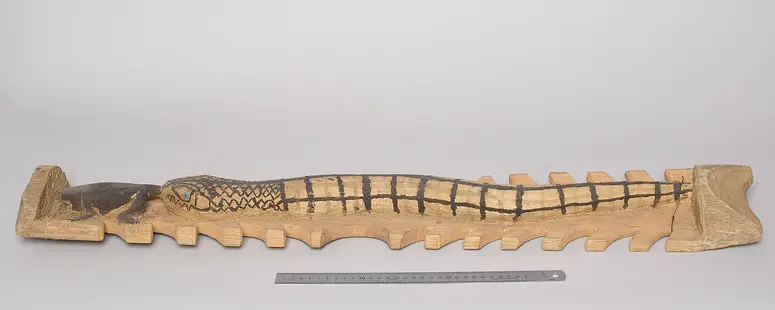
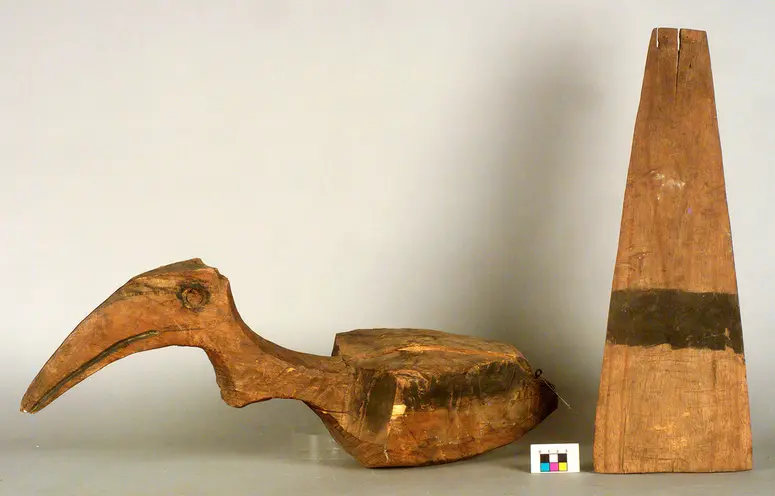
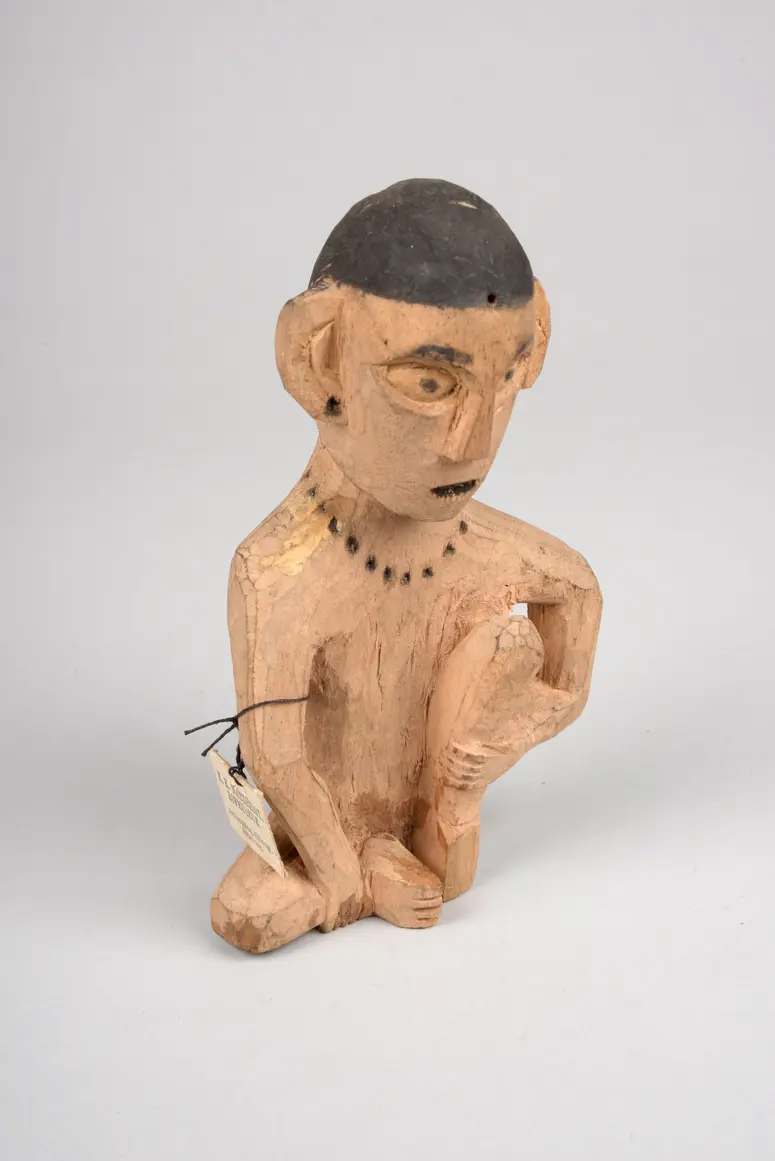
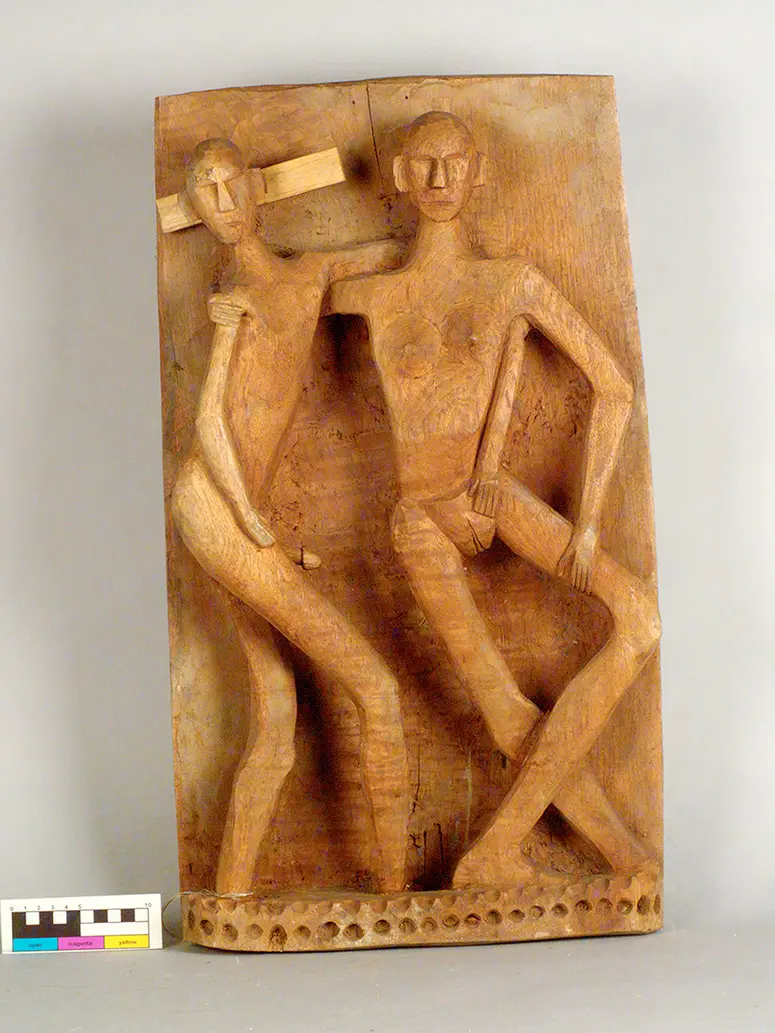
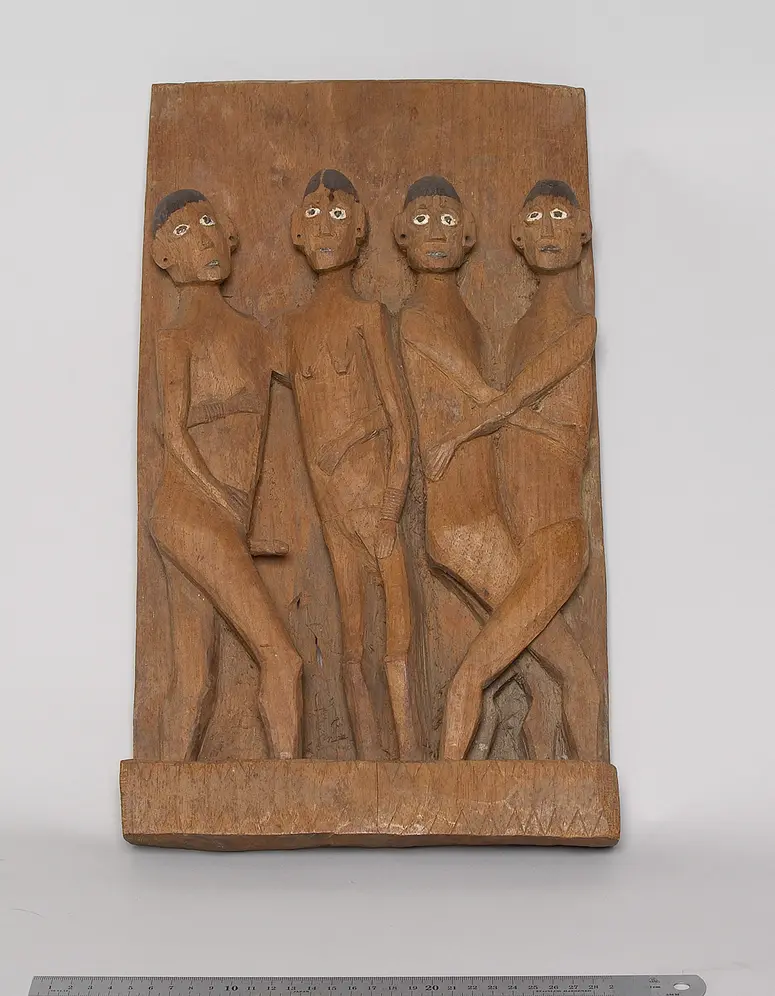
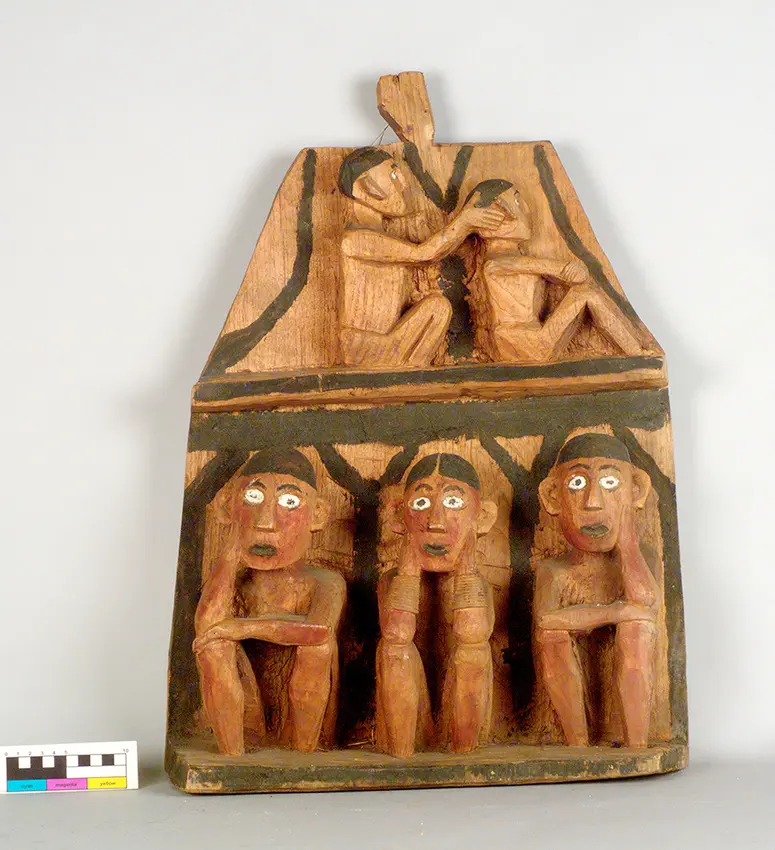
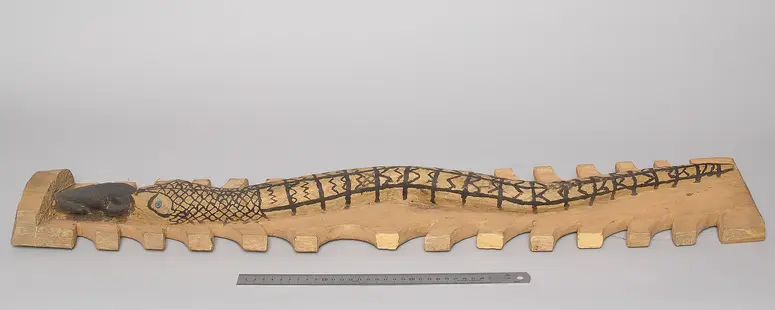
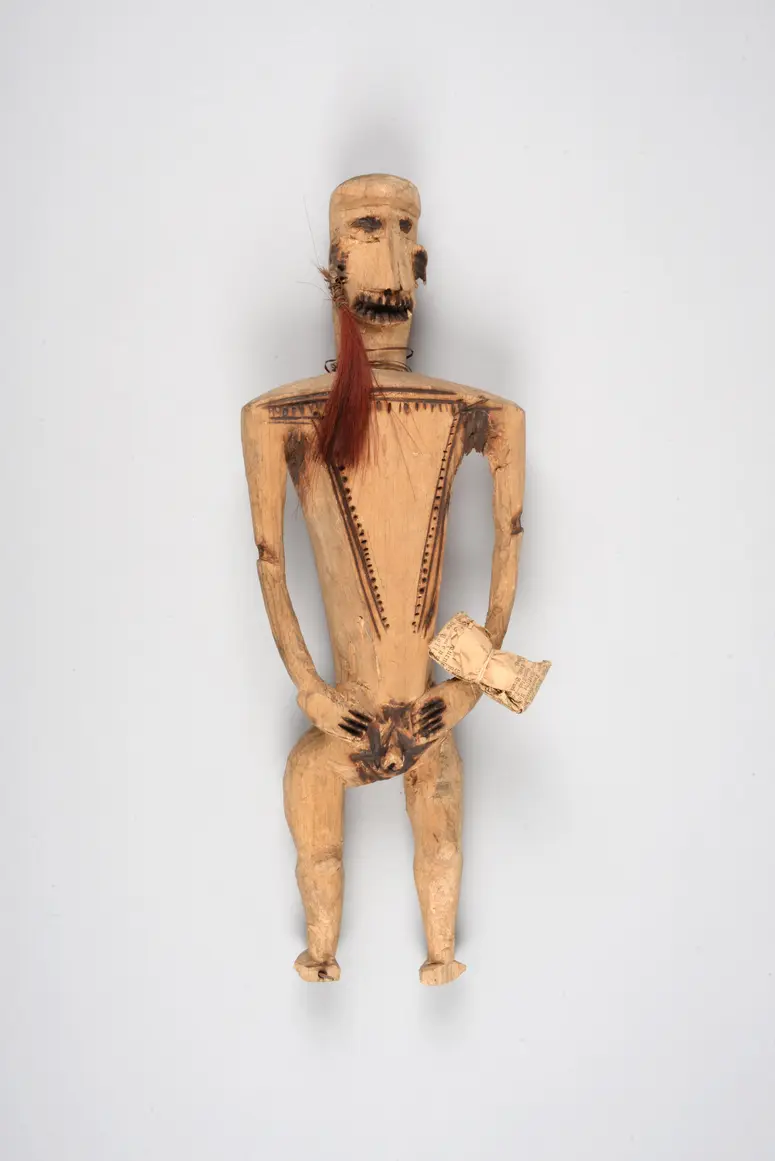
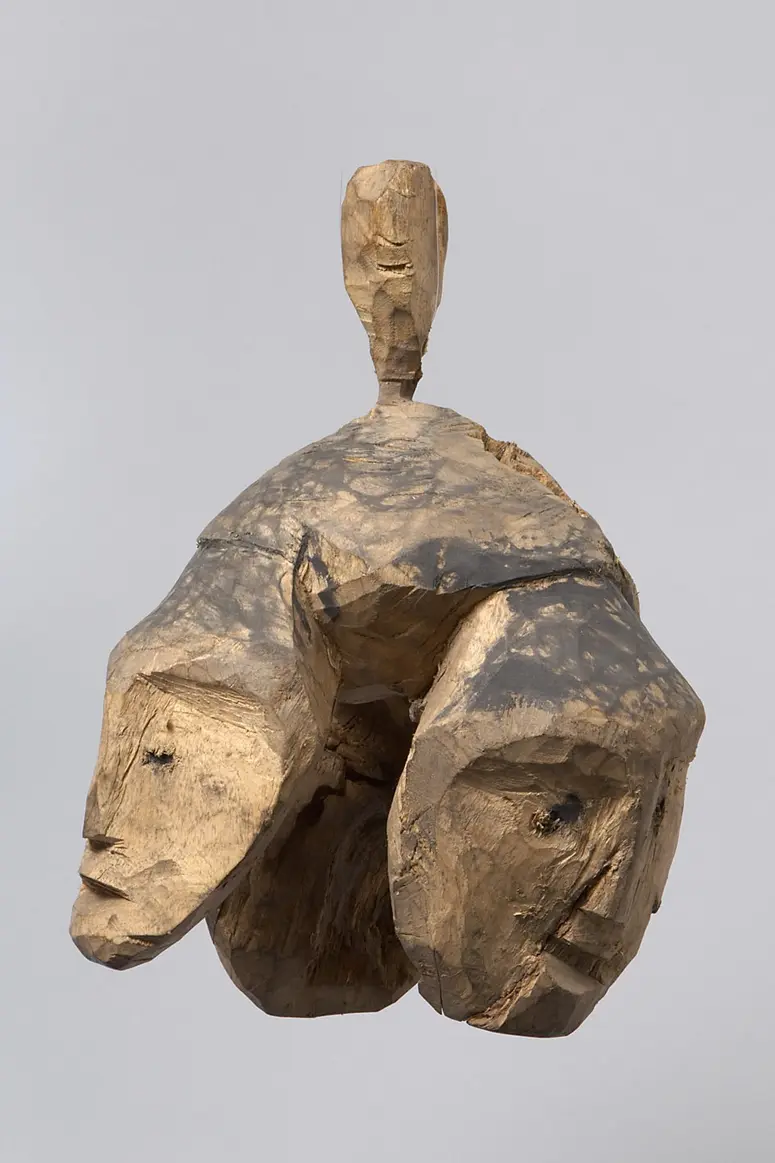
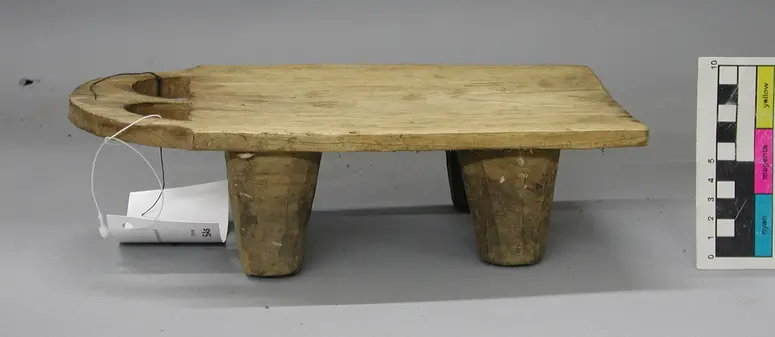
Modell einer Einbaum-Trommel
The collective term "Naga" refers to around 30 different tribal groups who live in the mountainous regions of north-east India and north-west Myanmar, primarily from agriculture and livestock farming.
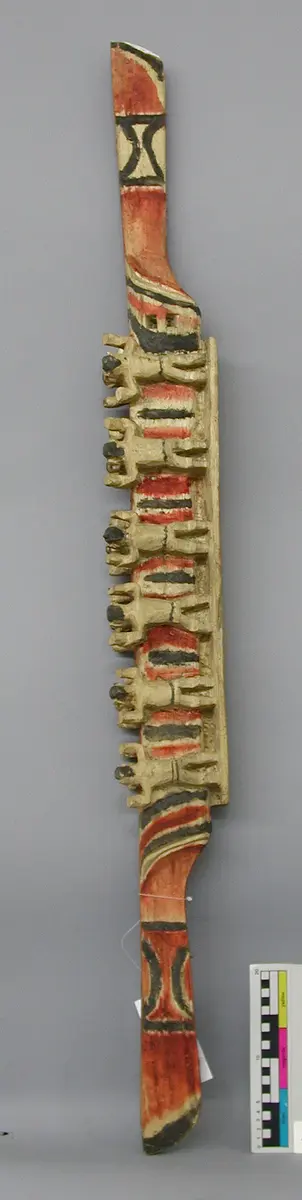
From the second half of the 19th century, the Naga underwent an astonishing transformation from a culture based on a complex belief system to Christianity. Since many Naga were converted to Christianity by American Baptist missionaries, the Christian high god has replaced the indigenous creator god. But let's stay with the description of this model of a dugout drum made by the Nagas themselves in the "old" culture:
The drum, made from a single tree trunk, stood as a visible emblem for the community at its center. The tree was chosen by a religious specialist on the basis of dreams in the forest and pulled into the village by the entire village community. In special dedication ceremonies, it was enthroned there as the symbolic head of the village. In many villages, it was also revered as the seat and embodiment of the god Tsangrangre, who protected the village and ensured its well-being, and different rhythms were played during religious ceremonies or warned of enemy attacks or fires.
The collective term "Naga" refers to around 30 different tribal groups who live in the mountainous regions of north-east India and north-west Myanmar, primarily from agriculture and livestock farming.
From the second half of the 19th century, the Naga underwent an astonishing transformation from a culture based on a complex belief system to Christianity. Since many Naga were converted to Christianity by American Baptist missionaries, the Christian high god has replaced the indigenous creator god. But let's stay with the description of this model of a dugout drum made by the Nagas themselves in the "old" culture:
The drum, made from a single tree trunk, stood as a visible emblem for the community at its center. The tree was chosen by a religious specialist on the basis of dreams in the forest and pulled into the village by the entire village community. In special dedication ceremonies, it was enthroned there as the symbolic head of the village. In many villages, it was also revered as the seat and embodiment of the god Tsangrangre, who protected the village and ensured its well-being, and different rhythms were played during religious ceremonies or warned of enemy attacks or fires.
Collector:
Christoph von Fürer-Haimendorf (1909 Wien - 1995 London) DNB
Object Name
Modell einer Einbaum-Trommel
Culture
Naga / Indien
Material/technology:
wood
Copyright
Weltmuseum Wien
Collection area
South Asia, Southeast Asia, Himalayas
Invs.
126272