Rope
Gumuti
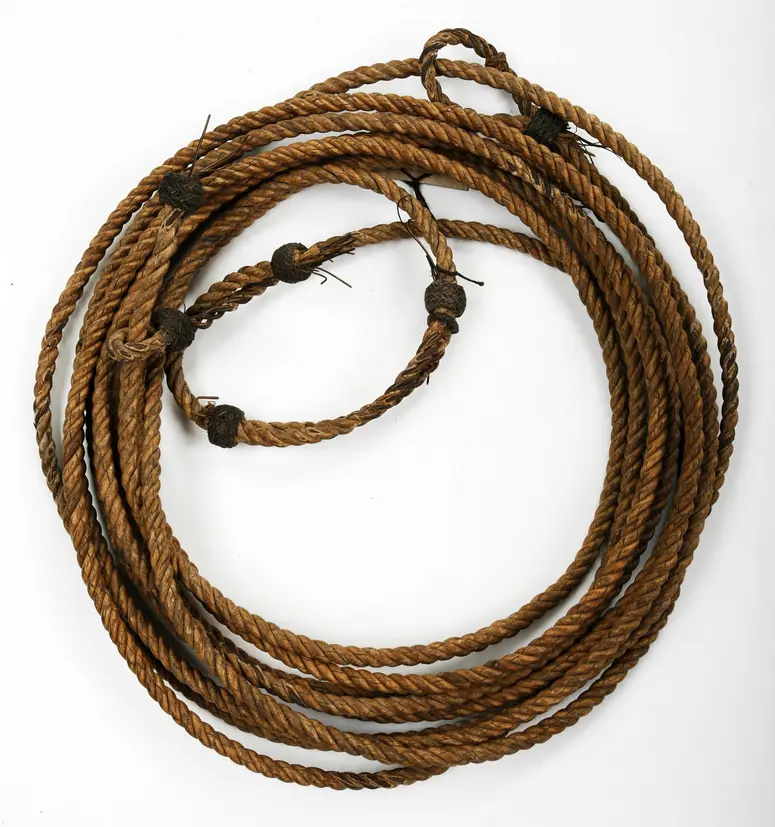
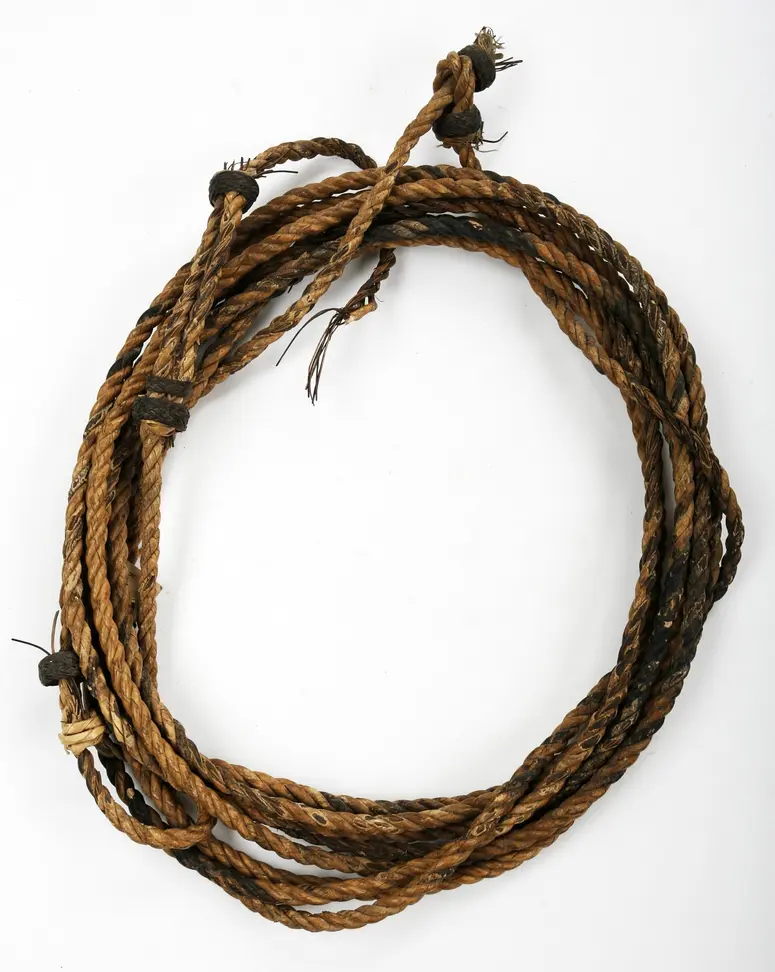
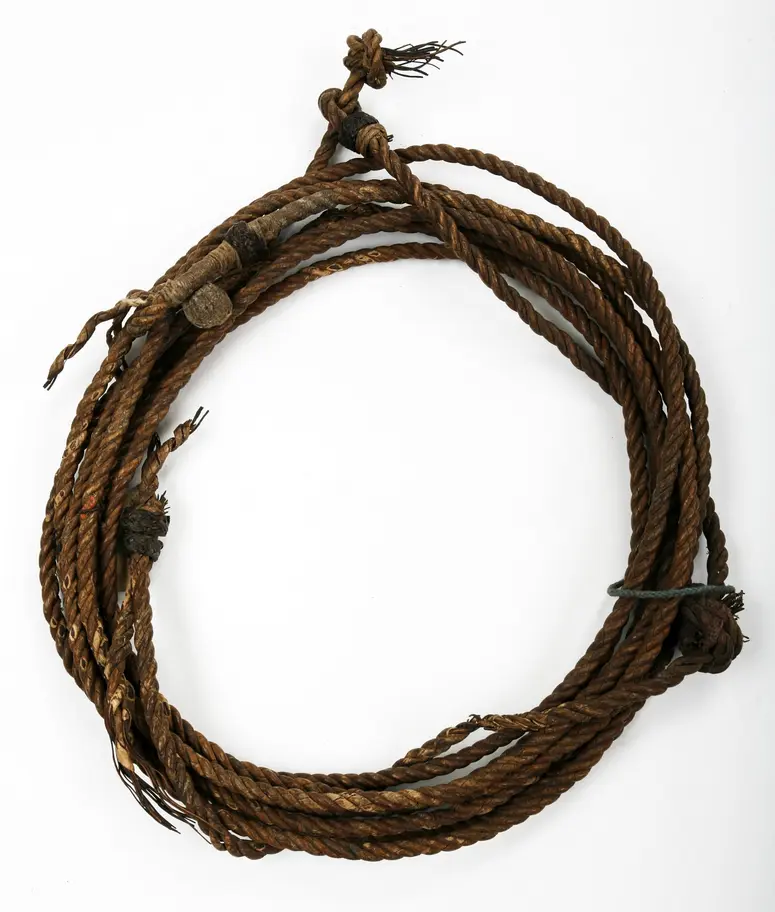
Note: The following text is taken from a 19th-century collection catalog and, in its language and perspective, partially reflects colonial thought patterns. We present the text in its original version to make the collection's history transparent and promote a critical examination of the colonial legacy. Certain terms and formulations may be perceived as problematic today. A 2009 research project concluded that most descriptions are factually correct and still usable; only a few details were found to be inaccurate or incorrect. The results of this project were published in the following collection catalog: khm-wmw-tm-library.on.worldcat.org/oclc/1457155265"283-285. Cords and ropes Cords and ropes of various thicknesses twisted from black fibres of the arenga palm. These cords or ropes, which are known under the name "Gumuti" ropes in the whole Indian Archipelago, are an important export item from South Celebes. These ropes, which are twisted to various thicknesses up to that of a man's arm, are well suited for marine use since the fibres from which these are twisted are not hygroscopic and thus are more resistant to the harmful effects especially of salty sea water than are the European ropes and cords. The Buginese are the inventors and only producers of these famous elastic ropes which are used preferentially by large European ships from all nations which sail in the Indian waters."Translation of: Czurda, F. A. J. (1883). Catalog mit Erklärungen der Etnografischen Privatsammlung des Dr. F. A. J. Czurda in Postelberg (Böhmen). (p. 59-60). Wien, Wilhelm Braumüller
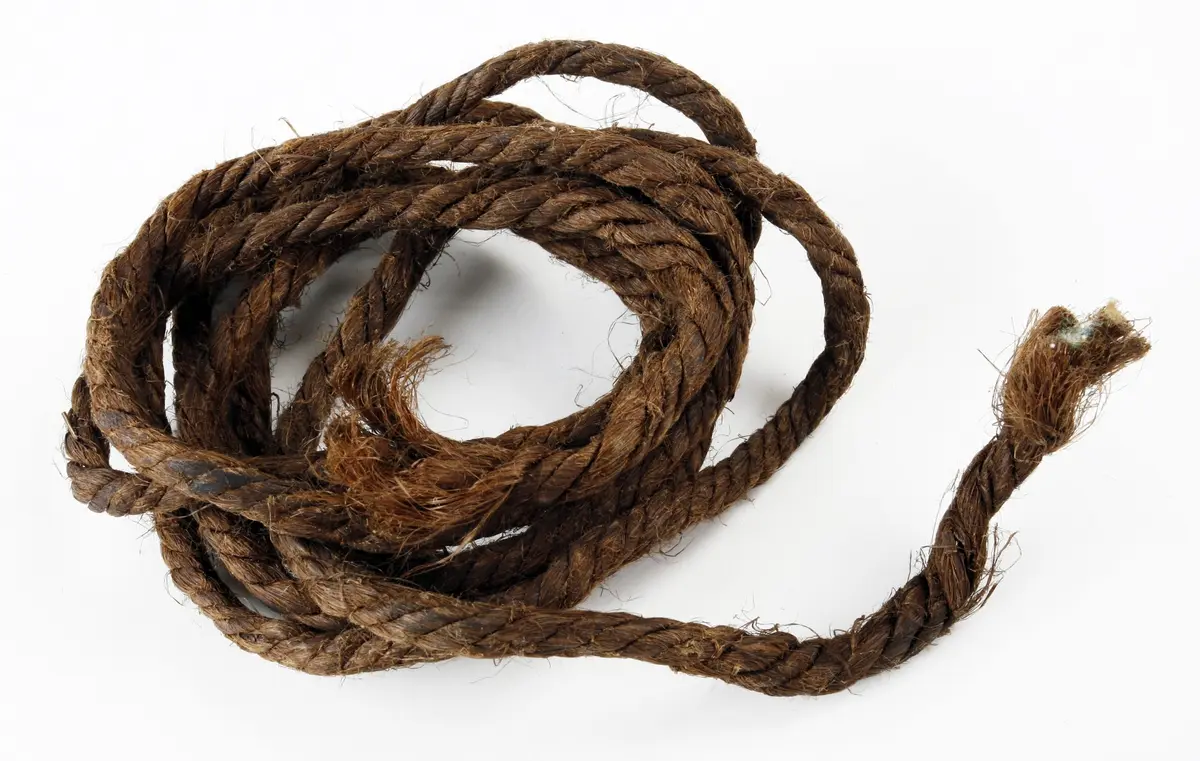
Note: The following text is taken from a 19th-century collection catalog and, in its language and perspective, partially reflects colonial thought patterns. We present the text in its original version to make the collection's history transparent and promote a critical examination of the colonial legacy. Certain terms and formulations may be perceived as problematic today. A 2009 research project concluded that most descriptions are factually correct and still usable; only a few details were found to be inaccurate or incorrect. The results of this project were published in the following collection catalog: khm-wmw-tm-library.on.worldcat.org/oclc/1457155265"283-285. Cords and ropes Cords and ropes of various thicknesses twisted from black fibres of the arenga palm. These cords or ropes, which are known under the name "Gumuti" ropes in the whole Indian Archipelago, are an important export item from South Celebes. These ropes, which are twisted to various thicknesses up to that of a man's arm, are well suited for marine use since the fibres from which these are twisted are not hygroscopic and thus are more resistant to the harmful effects especially of salty sea water than are the European ropes and cords. The Buginese are the inventors and only producers of these famous elastic ropes which are used preferentially by large European ships from all nations which sail in the Indian waters."Translation of: Czurda, F. A. J. (1883). Catalog mit Erklärungen der Etnografischen Privatsammlung des Dr. F. A. J. Czurda in Postelberg (Böhmen). (p. 59-60). Wien, Wilhelm Braumüller
Collector:
František A. J. Czurda (1844 Pisek - 1886 Cirebon) DNB
Entry Date:
1883
Object Name
Rope
Culture
Nord-Sulawesi
Material/technology:
Fiber of the Areng palm; twisted
Copyright
Weltmuseum Wien
Collection area
Insular Southeast Asia
Invs.
17537