Schmuckgehänge
19. Jhdt. | Hans Leder
This jewellery ensemble was part of the elaborate headdress and hairstyle of a married Mongolian woman. A multitude of iconographic influences that are characteristic of Mongolian art can be seen in the decorative elements. In addition to Mongolian ornaments, Chinese and Buddhist symbols can be found. The jewellery was given to a woman by her parents as a dowry on the morning of her wedding. It was an expression of her social status, wealth and origin. As of the 1920s, this form of headdress increasingly disappeared. Jewellery ensembles of this type were confiscated in the Soviet era and often given to museums. Various narratives surround the unusual form of this hairstyle, which was sometimes interpreted as wings. Great power is ascribed to hair. To this day, the ritual “hair cutting festival”, the first haircut of a child, is an event of great importance in the life of the Mongolians. These objects were collected by the Austrian researcher and collector Hans Leder on one of his four trips to Mongolia around 1900.
HEAD JEWELLERY FOR WOMENPendant, hair clips, pair of earringsAnonymousMongolia, 19th centurySilver, agate, coral, turquoise, cotton stringsHans Leder Collection
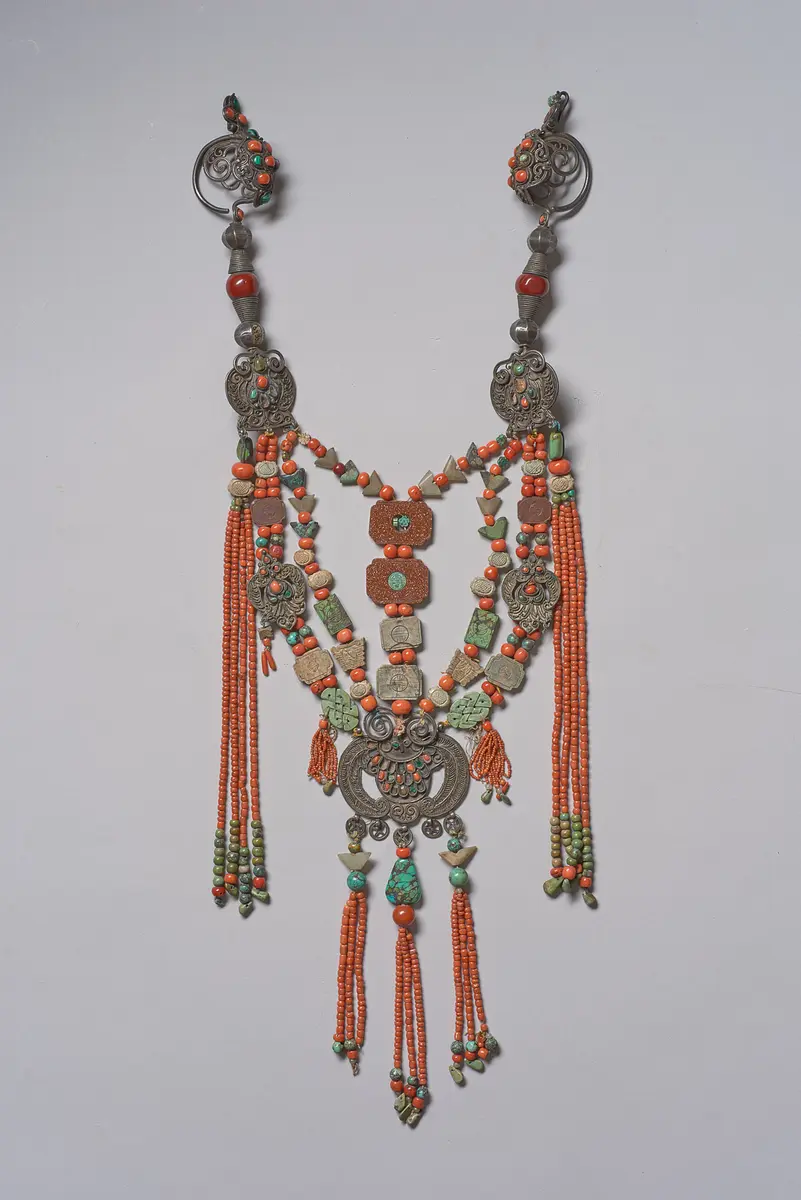
This jewellery ensemble was part of the elaborate headdress and hairstyle of a married Mongolian woman. A multitude of iconographic influences that are characteristic of Mongolian art can be seen in the decorative elements. In addition to Mongolian ornaments, Chinese and Buddhist symbols can be found. The jewellery was given to a woman by her parents as a dowry on the morning of her wedding. It was an expression of her social status, wealth and origin. As of the 1920s, this form of headdress increasingly disappeared. Jewellery ensembles of this type were confiscated in the Soviet era and often given to museums. Various narratives surround the unusual form of this hairstyle, which was sometimes interpreted as wings. Great power is ascribed to hair. To this day, the ritual “hair cutting festival”, the first haircut of a child, is an event of great importance in the life of the Mongolians. These objects were collected by the Austrian researcher and collector Hans Leder on one of his four trips to Mongolia around 1900.
HEAD JEWELLERY FOR WOMENPendant, hair clips, pair of earringsAnonymousMongolia, 19th centurySilver, agate, coral, turquoise, cotton stringsHans Leder Collection
Collector:
Hans Leder DNB
Time:
19. Jhdt.
Object Name
Schmuckgehänge
Culture
Mongolei
Material/technology:
Silber, Achat, Korallen, Türkise, Baumwollschnüre
roter Goldfluss (red goldstone) (Aventuringlas, Goldstein) (ein synthetisches Glas)
Copyright
Weltmuseum Wien
Collection area
South Asia, Southeast Asia, Himalayas
Geography
Zentralasien/Mongolei
Invs.
64851
Browse more Similar items you might be interested in
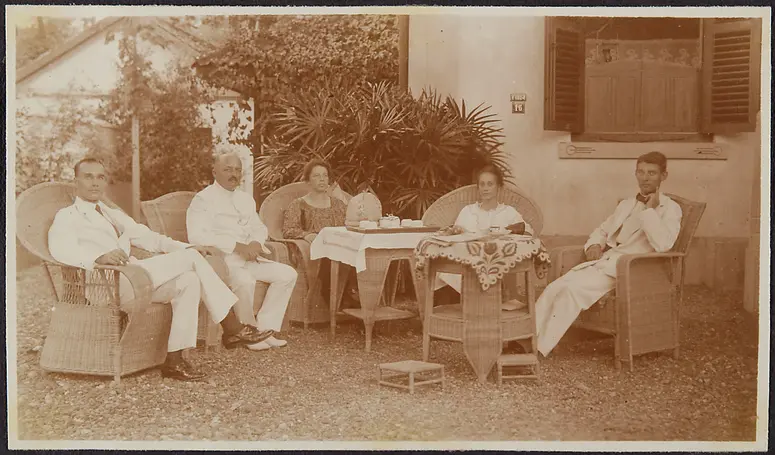
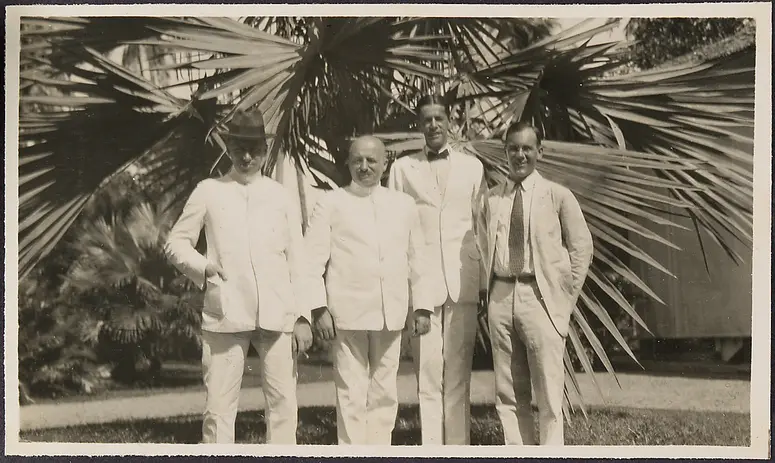
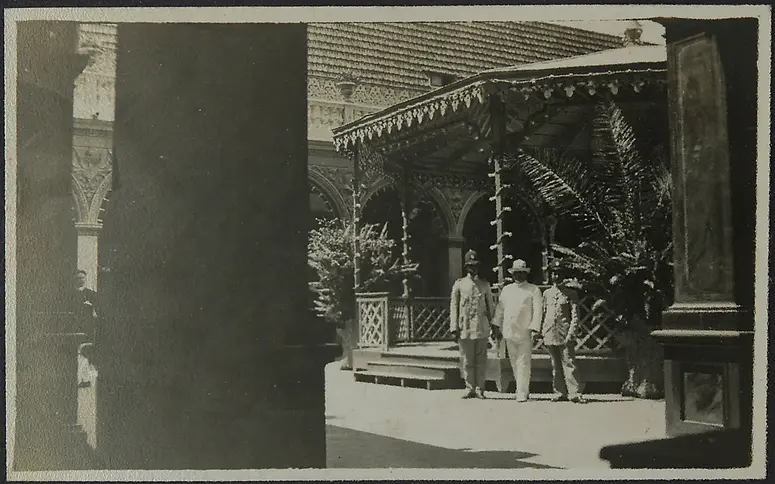
Consul Johann Schild with two civil servants in front of a house Johann Schild ca. 1900
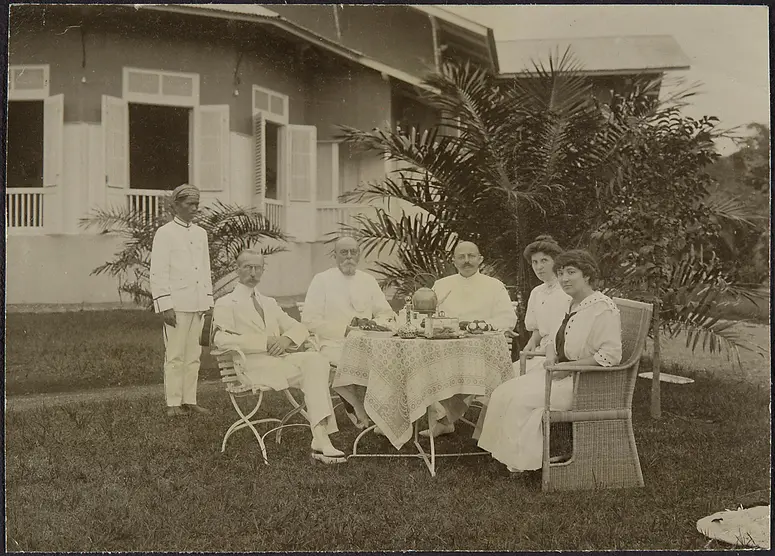
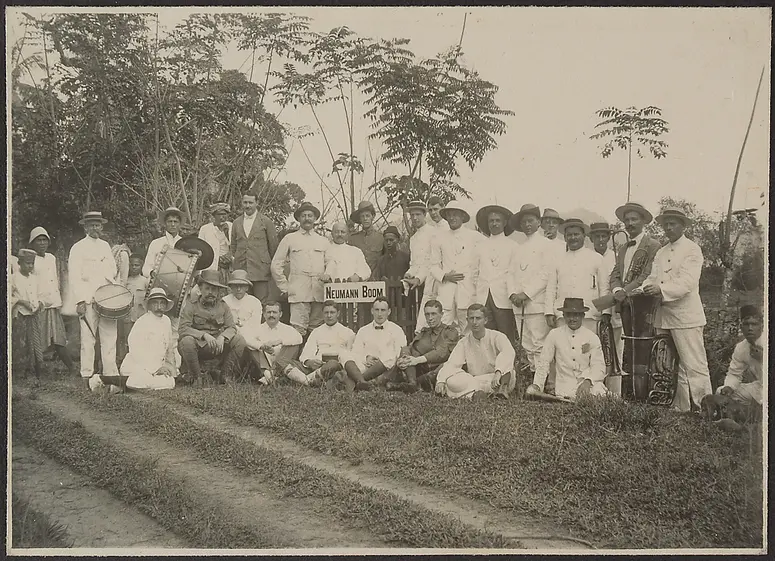
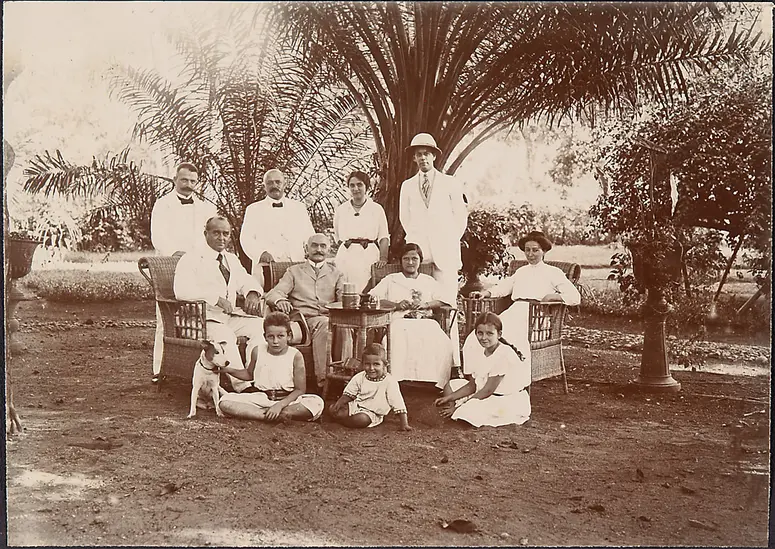
Johann Schild with his guests; some of them are probably musicians from the group Neumann Boom Johann Schild ca. 1900