Schmuckkette
Such necklaces were originally reserved for Angami-Naga men, but were later adopted by other Naga groups and also worn by women. In the pre-Christian belief system, the processing of the snails, from which the elongated tubes are cut, required the observance of certain taboos so that they could be spiritually purified. This was to prevent the ears of rice from remaining as white and empty as parts of this jewelry in a kind of analogy spell. Only then could it be worn at festivals and during the harvest, as the blessing of the spirits was to be transferred to the crops.
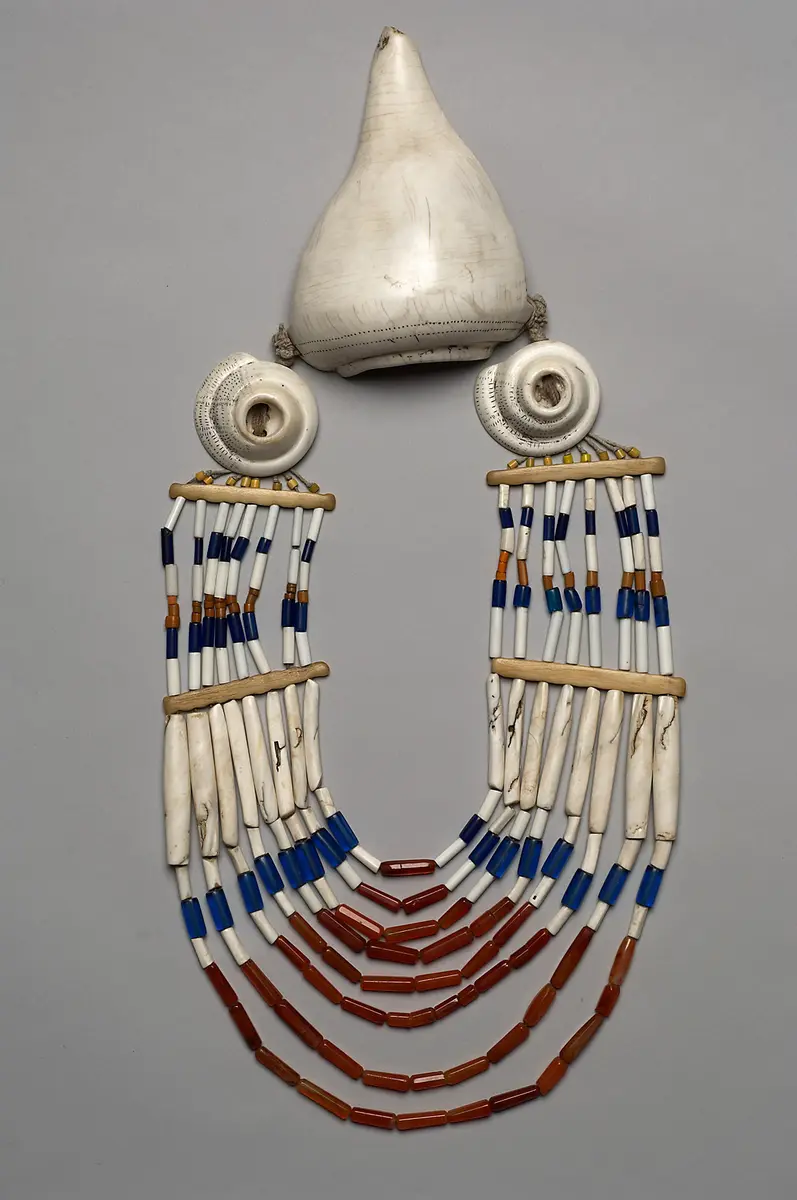
Such necklaces were originally reserved for Angami-Naga men, but were later adopted by other Naga groups and also worn by women. In the pre-Christian belief system, the processing of the snails, from which the elongated tubes are cut, required the observance of certain taboos so that they could be spiritually purified. This was to prevent the ears of rice from remaining as white and empty as parts of this jewelry in a kind of analogy spell. Only then could it be worn at festivals and during the harvest, as the blessing of the spirits was to be transferred to the crops.
Collector:
Hans Kaufmann
Object Name
Schmuckkette
Culture
Nagaland
Material/technology:
conch, bone, glass, sea nail shell, gipas
Copyright
Weltmuseum Wien
Collection area
South Asia, Southeast Asia, Himalayas
Geography
Südasien/Subkontinent/Indien
Invs.
181954
Browse more Similar items you might be interested in
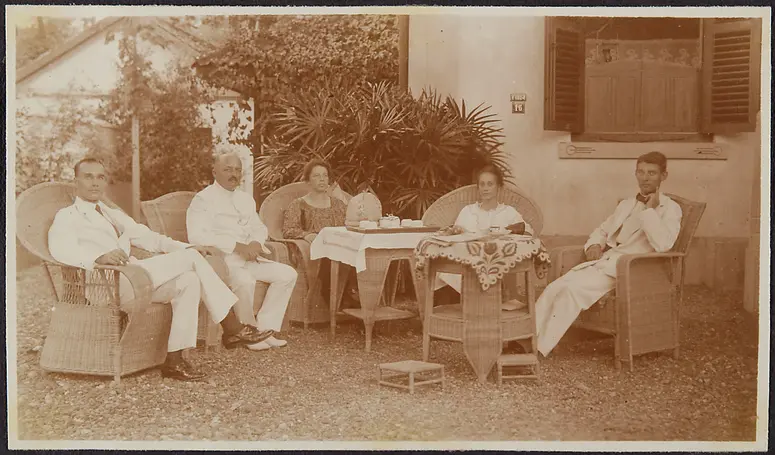
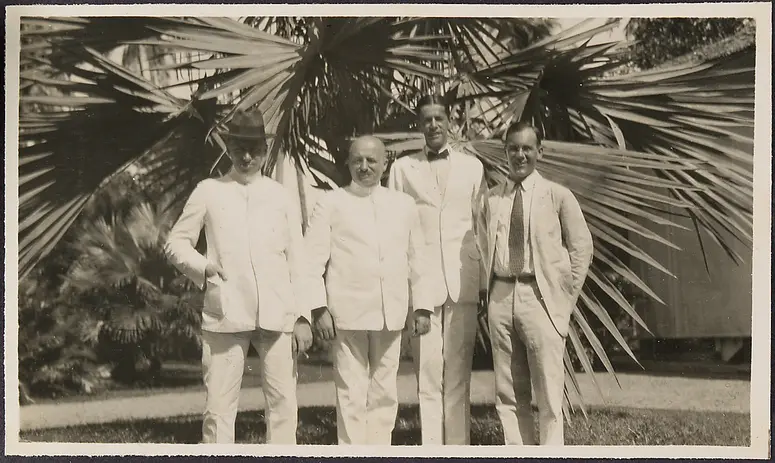
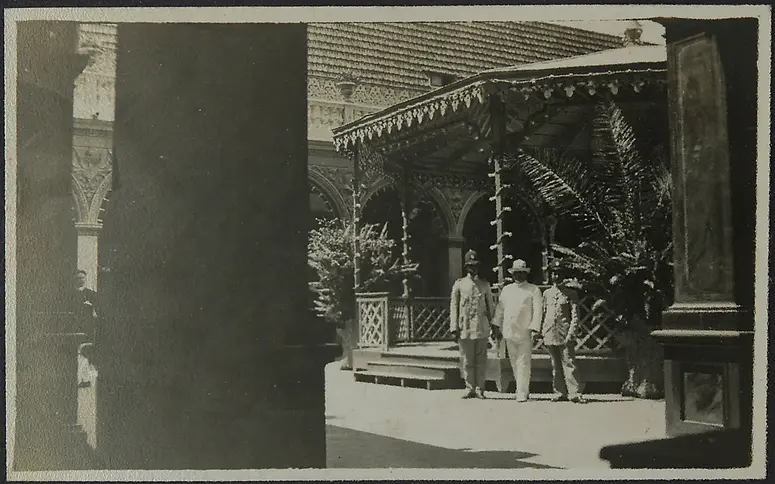
Consul Johann Schild with two civil servants in front of a house Johann Schild ca. 1900
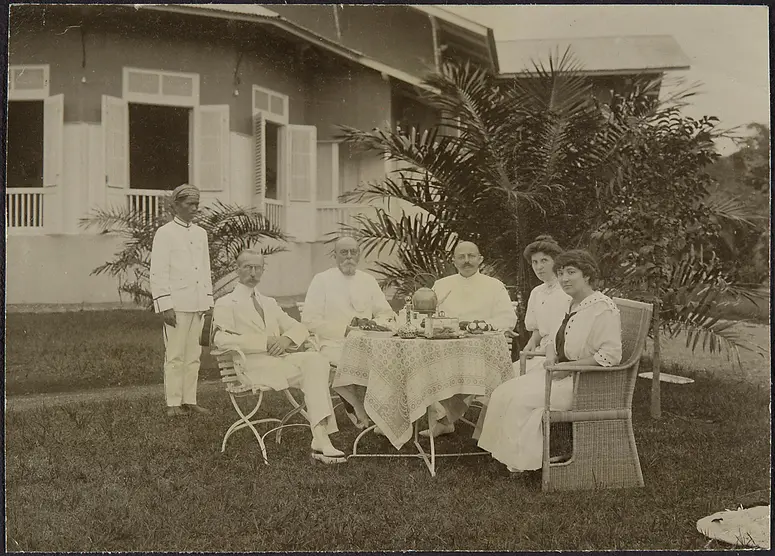
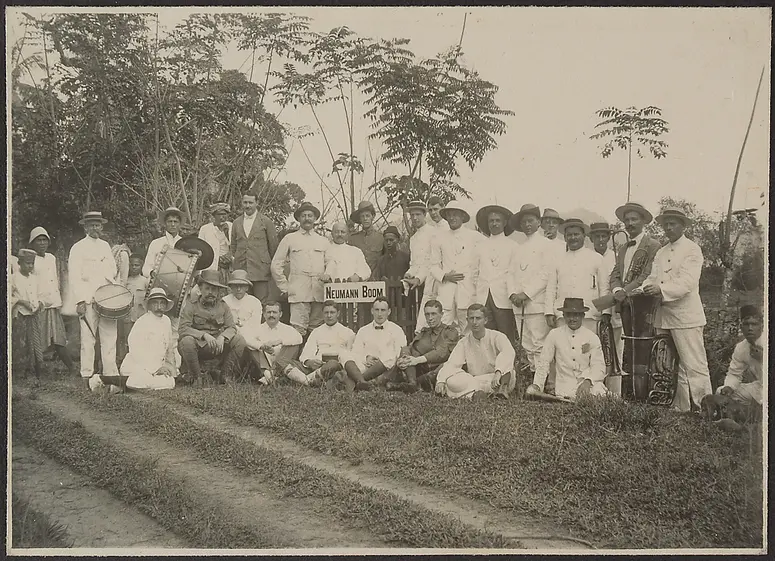
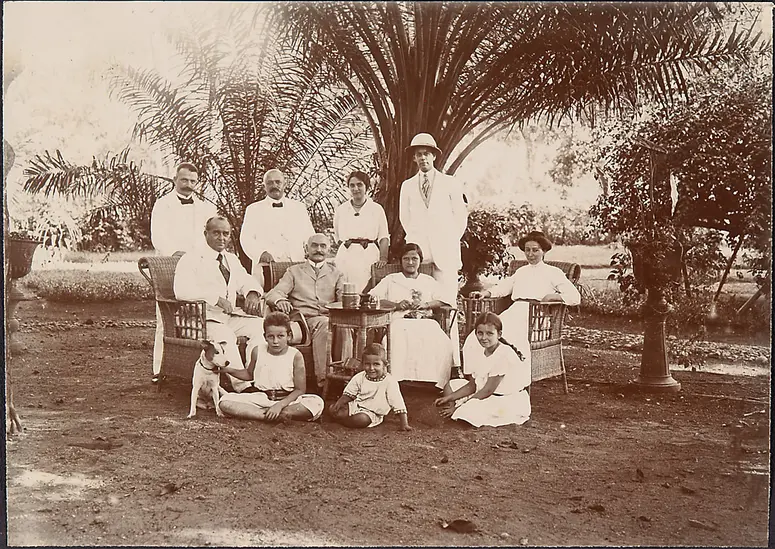
Johann Schild with his guests; some of them are probably musicians from the group Neumann Boom Johann Schild ca. 1900