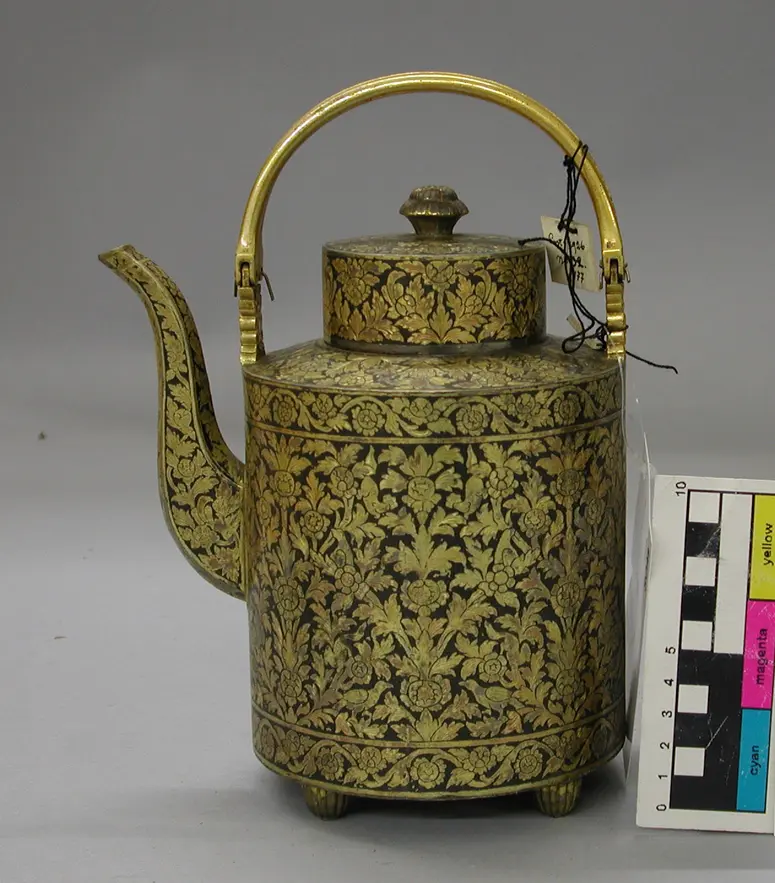
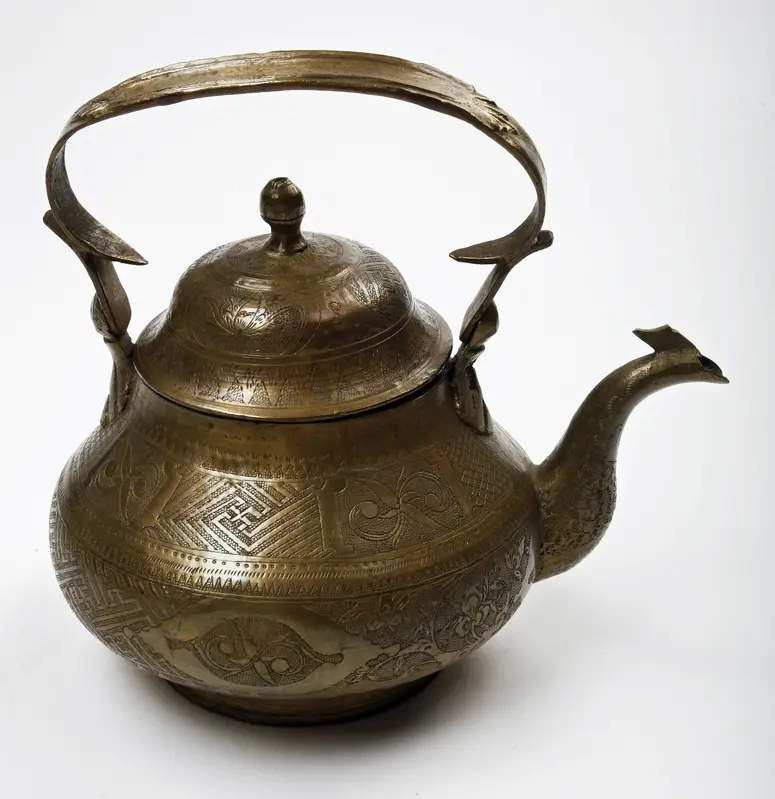
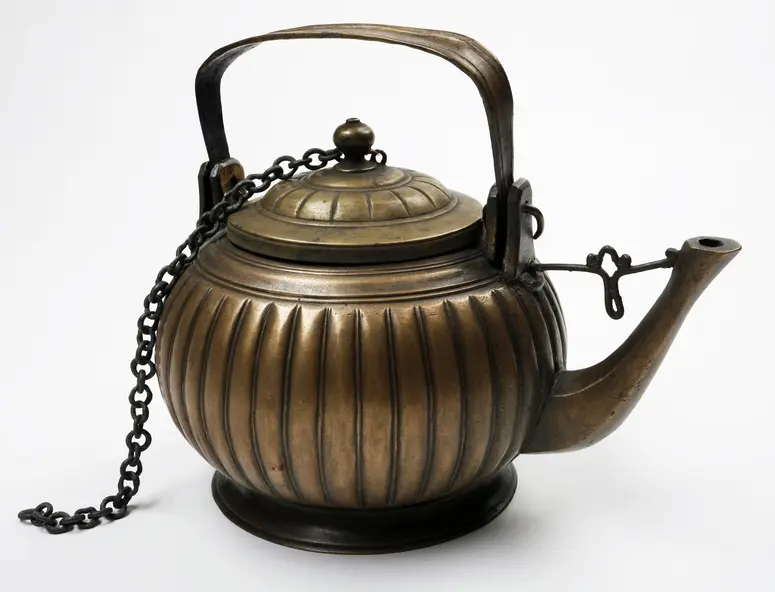
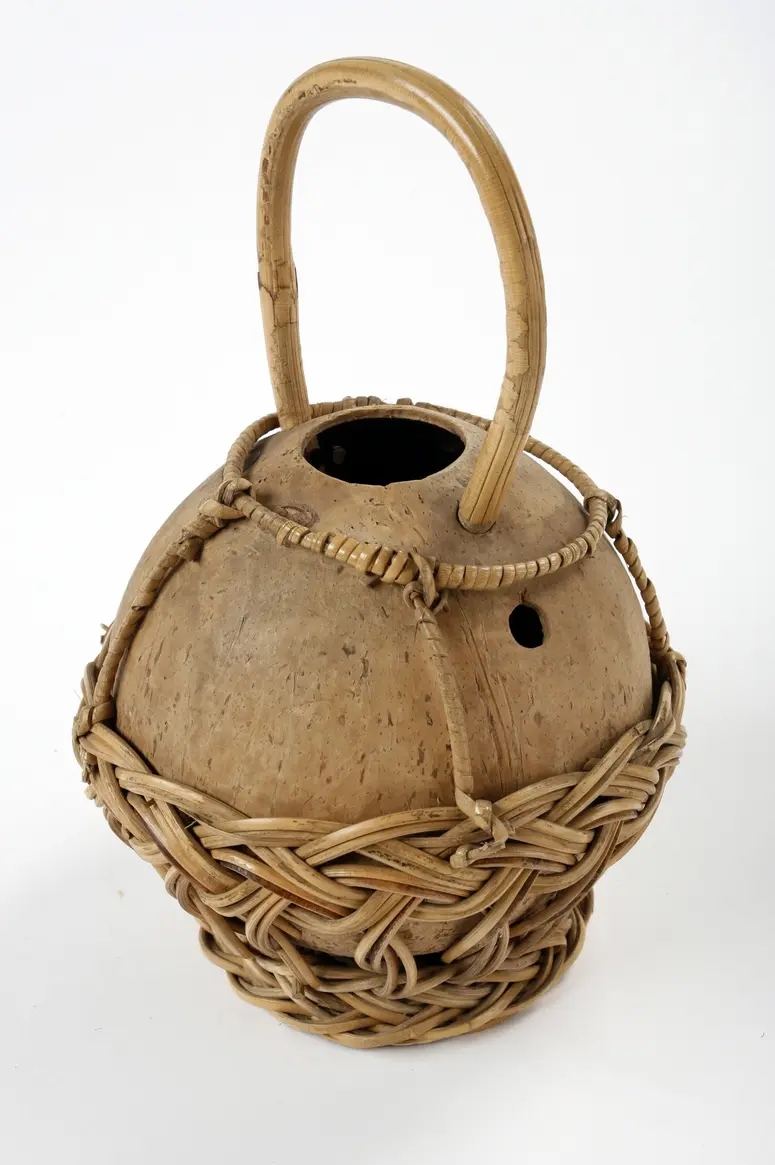
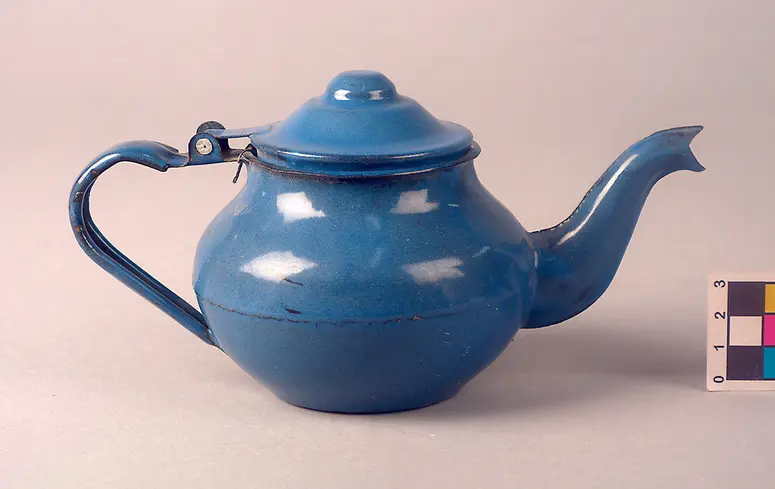
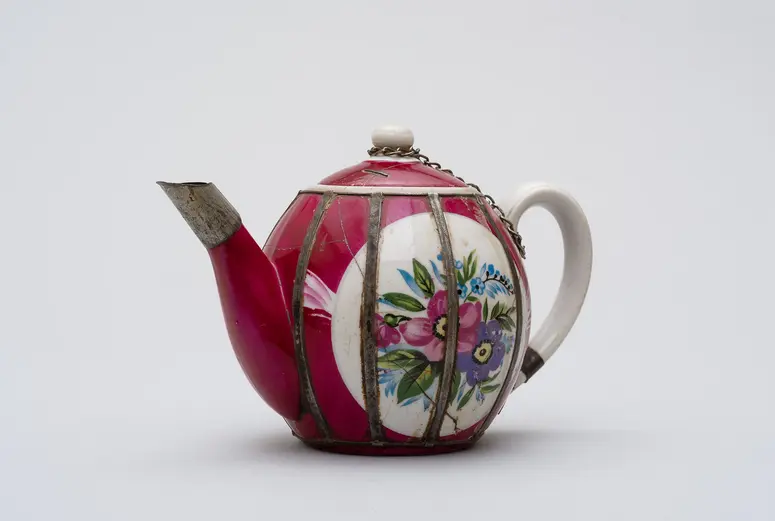
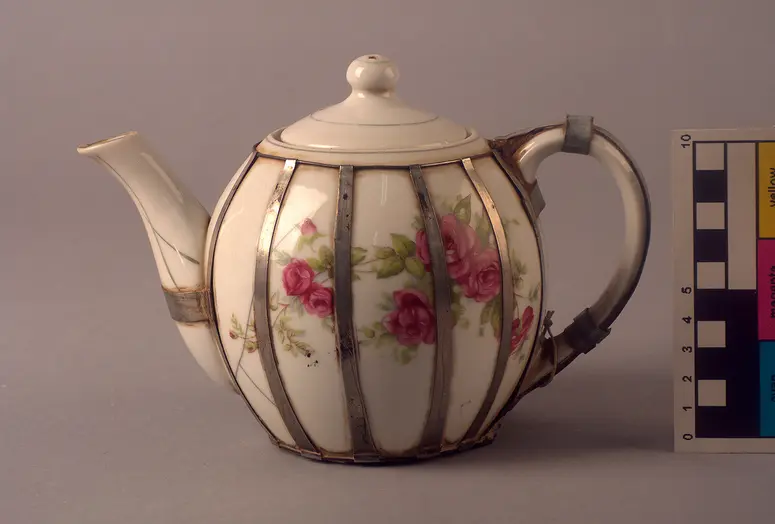
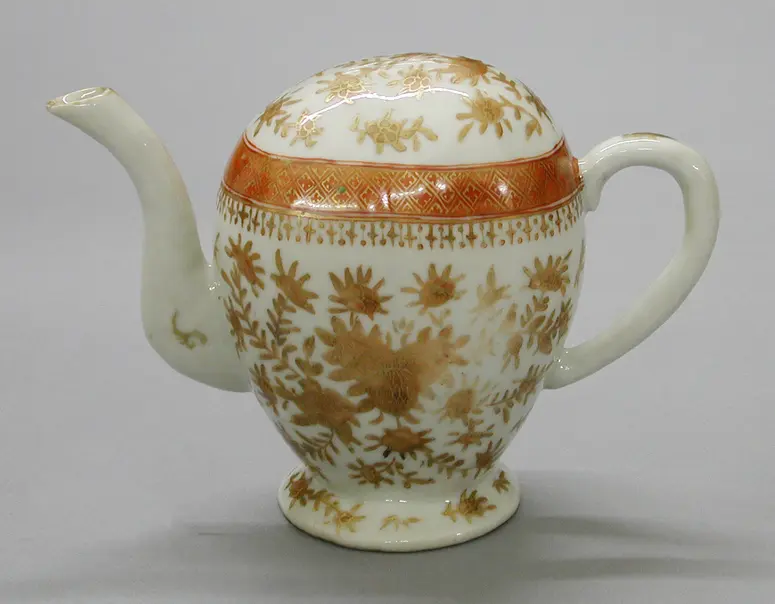
Tea pot
19. Jhdt.
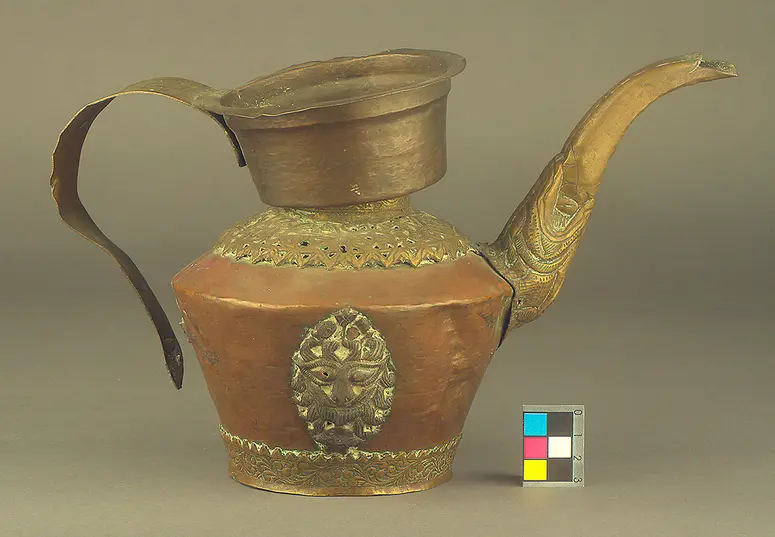
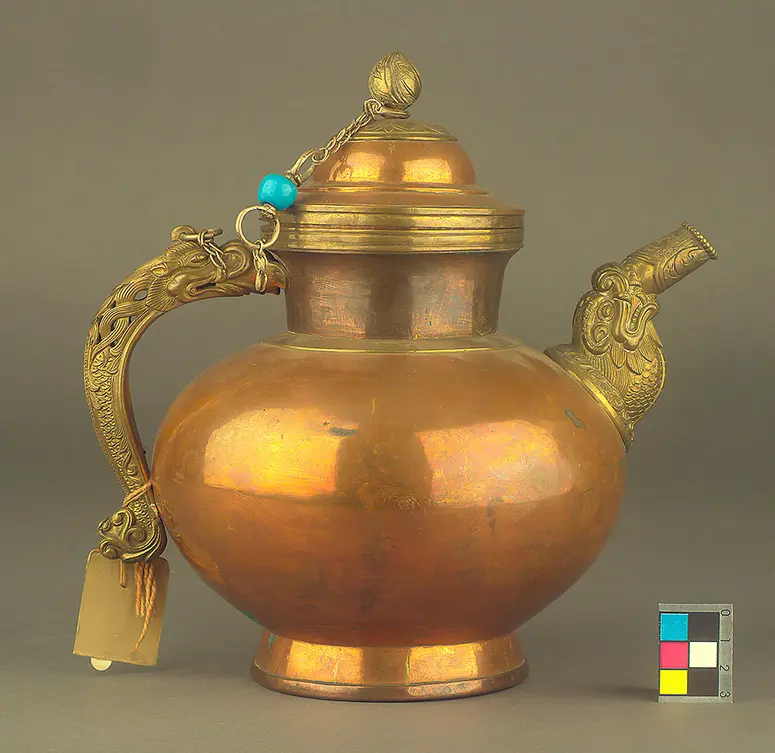
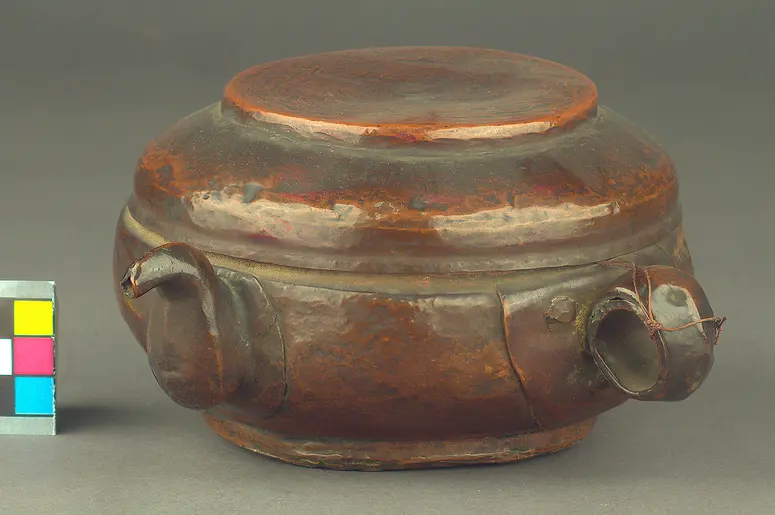
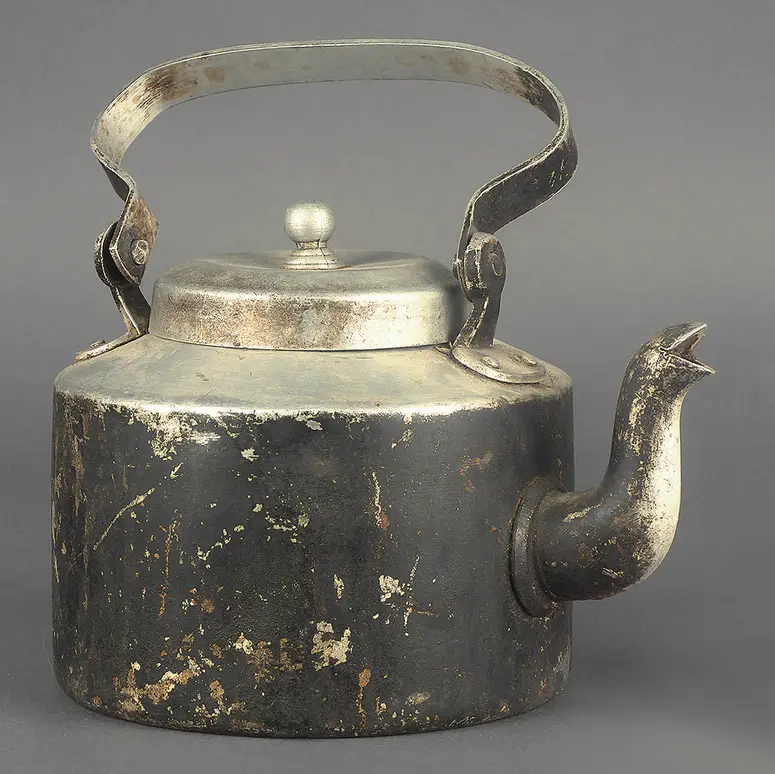
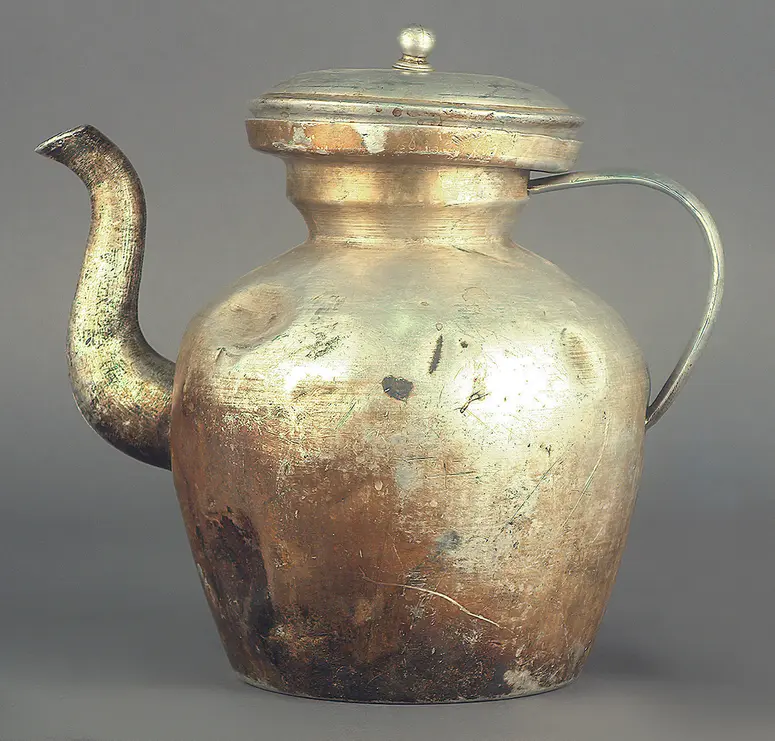
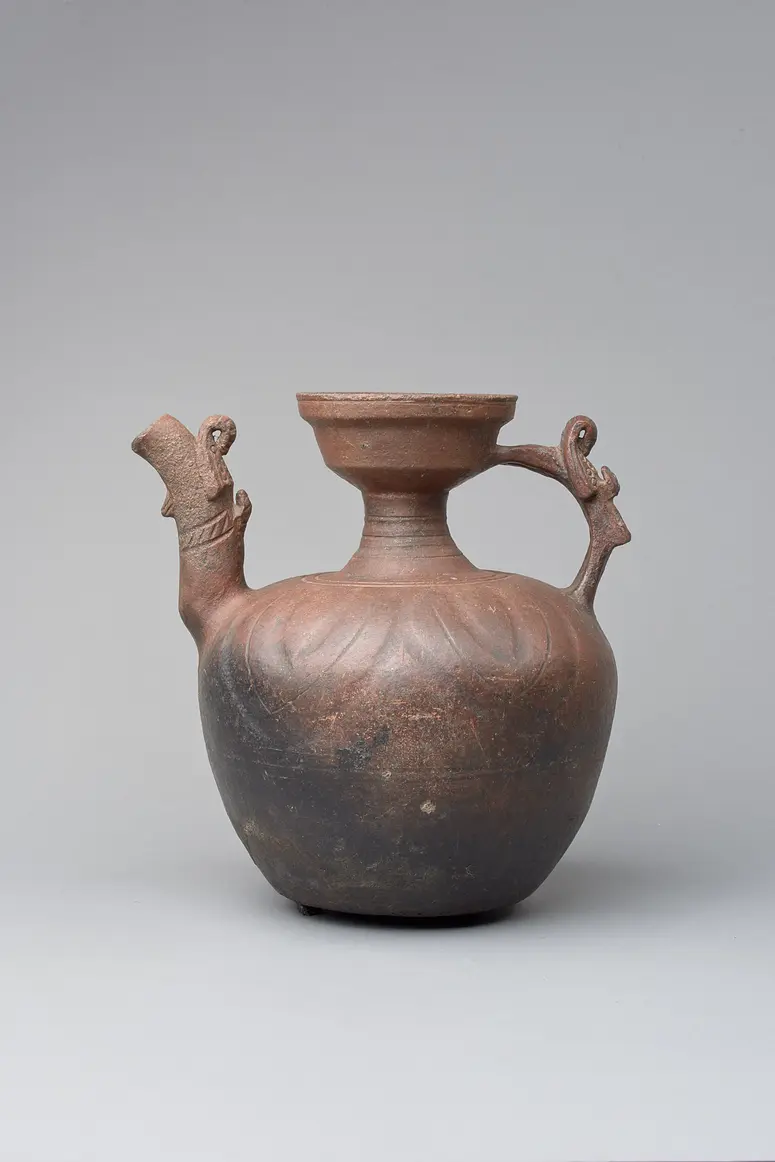
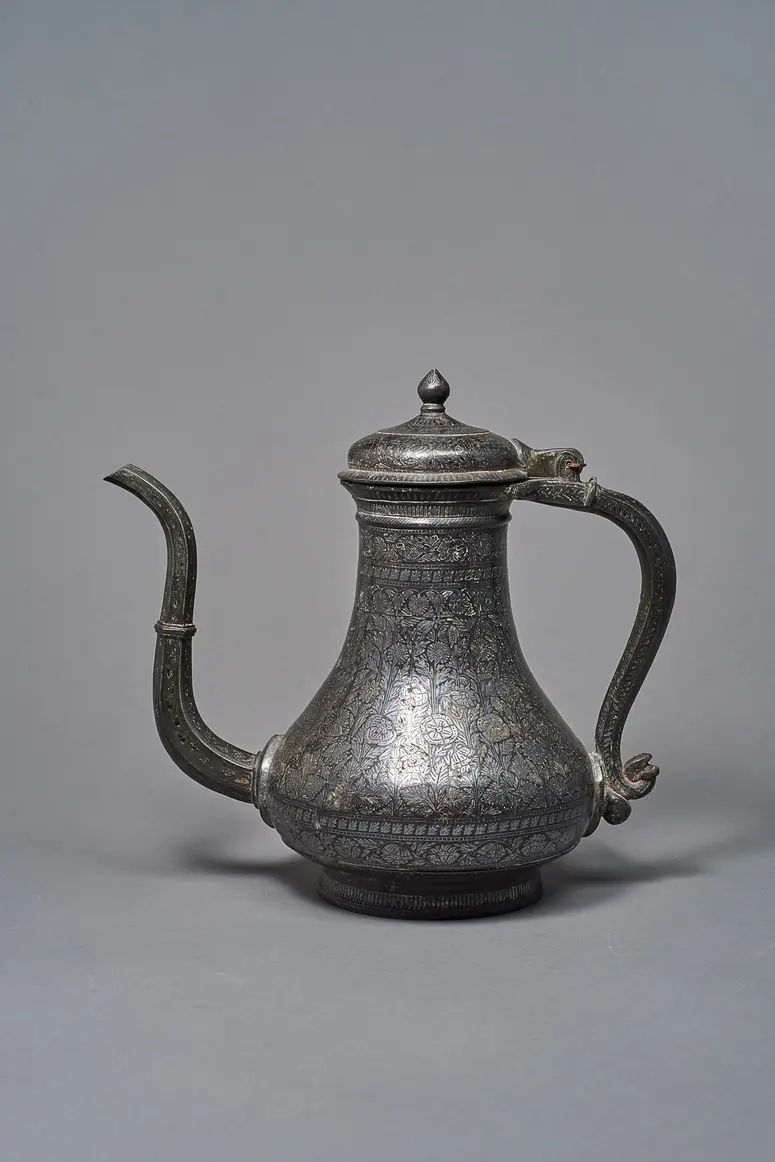
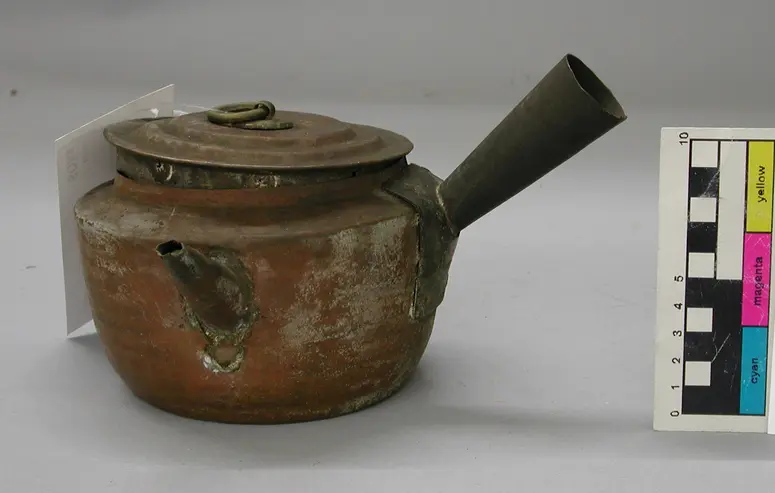
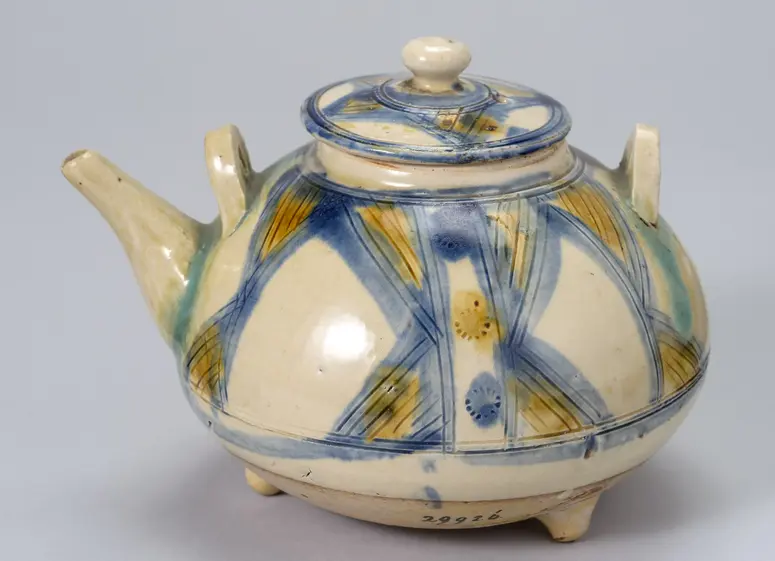
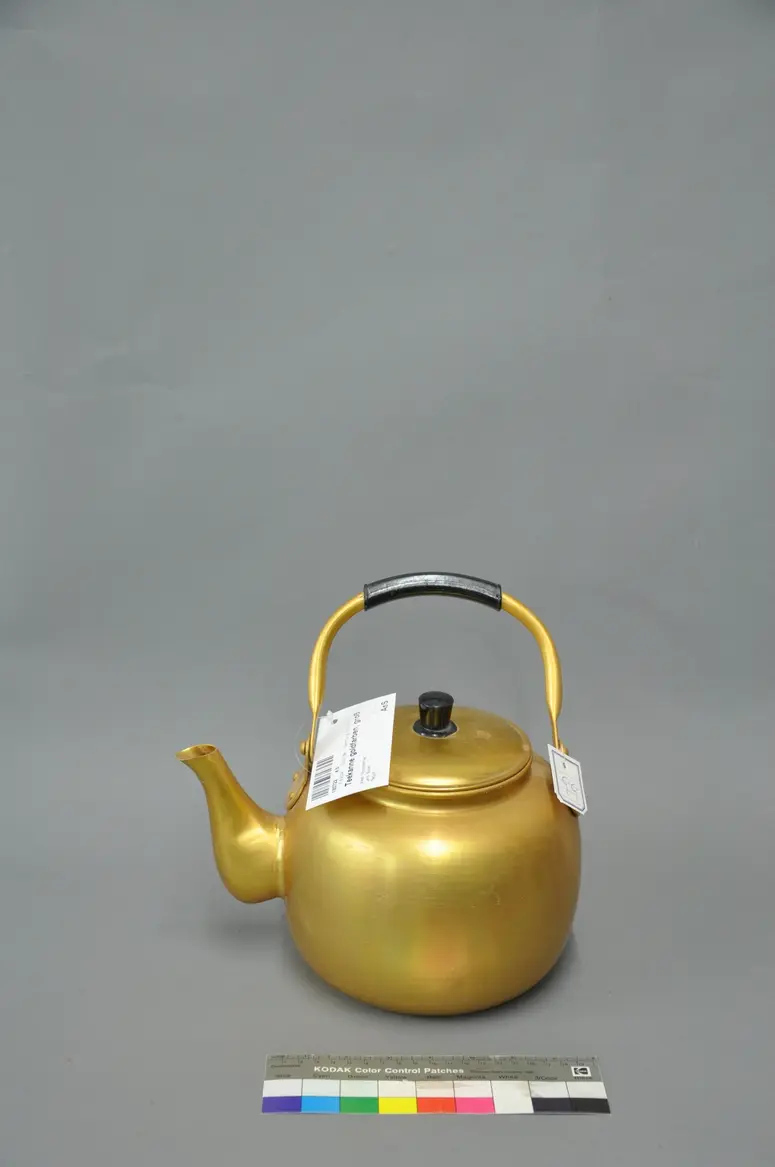
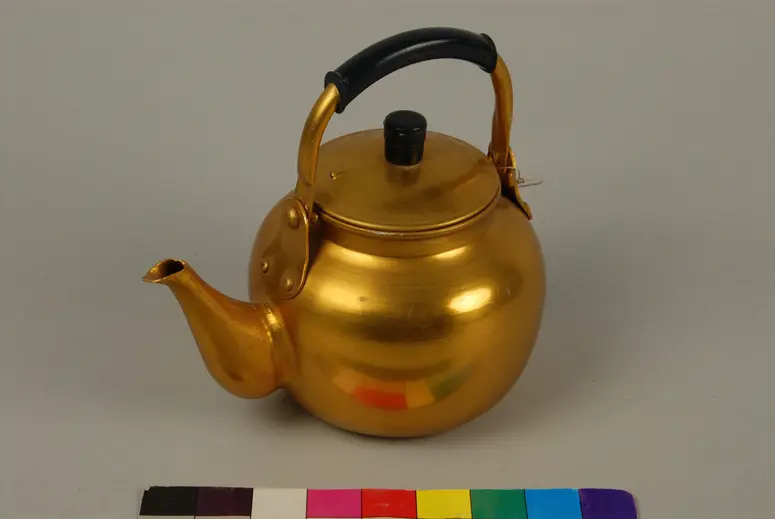
Butter tea is usually only served from such pots on festive occasions or during Buddhist rituals. Clichés about Tibetan butter tea such as "rancid butter", "oversalted" and even "terrible flavour" are easily heard. How arrogant such an established cliché can be, if not insulting to those for whom "their" drink is an integral part of their identity. Only rarely is butter tea described by travellers as a tasty and nutritious drink, as what it is for Tibetans and what it is valued for.Tea is much more than a drink, it can be seen as a "social bonding agent". Drinking tea together establishes the relationship between a guest and the host, just as the tea bowl can become an expression of social relationships. Sharing a cup is a sign of utmost familiarity, something that only happens very rarely.
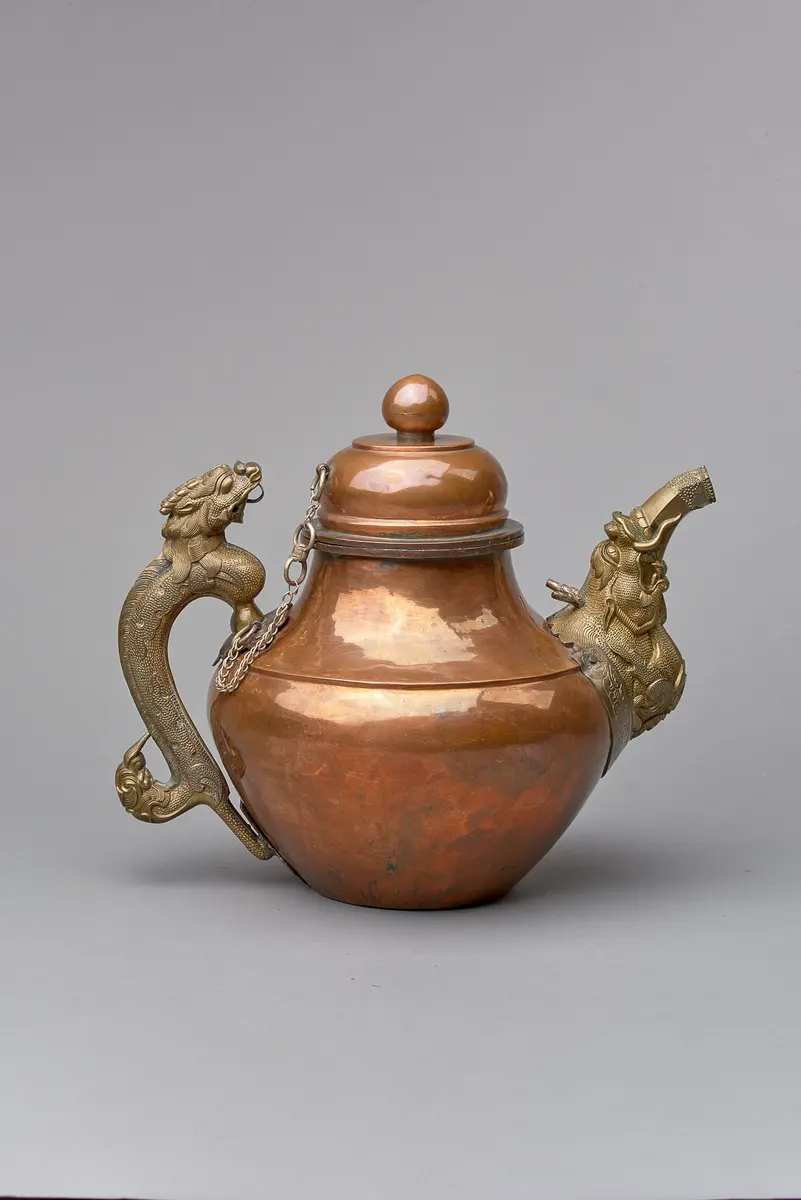
Butter tea is usually only served from such pots on festive occasions or during Buddhist rituals. Clichés about Tibetan butter tea such as "rancid butter", "oversalted" and even "terrible flavour" are easily heard. How arrogant such an established cliché can be, if not insulting to those for whom "their" drink is an integral part of their identity. Only rarely is butter tea described by travellers as a tasty and nutritious drink, as what it is for Tibetans and what it is valued for.Tea is much more than a drink, it can be seen as a "social bonding agent". Drinking tea together establishes the relationship between a guest and the host, just as the tea bowl can become an expression of social relationships. Sharing a cup is a sign of utmost familiarity, something that only happens very rarely.
Time:
19. Jhdt.
Object Name
Teekanne
Culture
Tibet
Material/technology:
Korpus und Deckel: Kupferlegierung; Schnabel und Griff: Neusilber, Treibtechnik, graviert, punziert
Copyright
Weltmuseum Wien
Collection area
South Asia, Southeast Asia, Himalayas
Geography
Südasien/Himalaya/Tibet
Invs.
98214