Tea pot
Cere
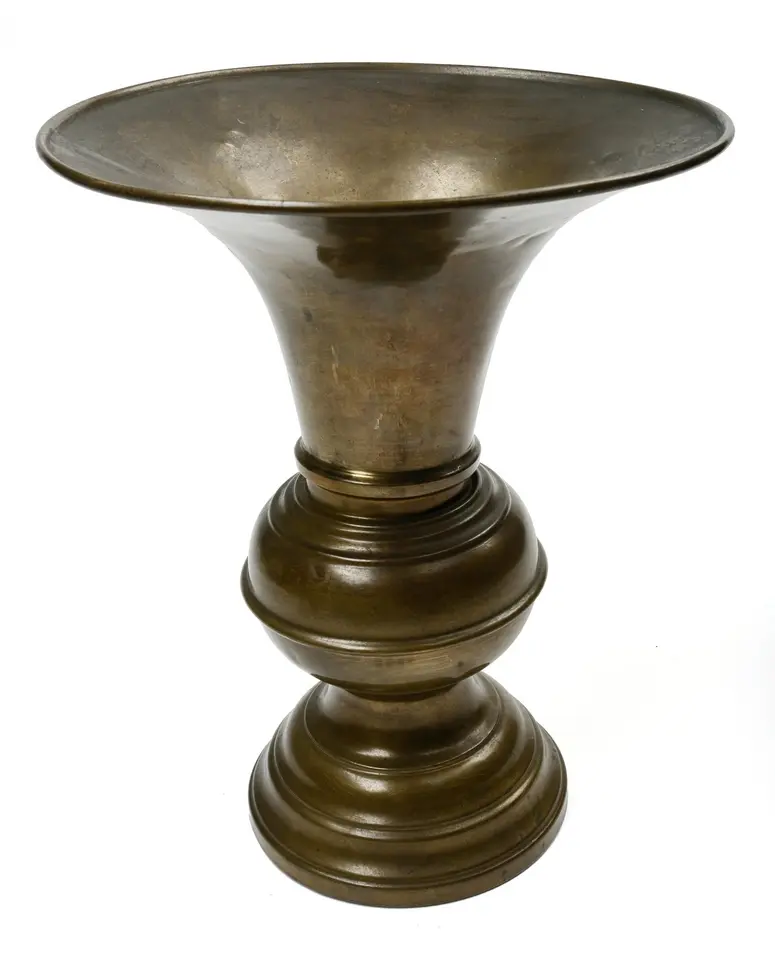
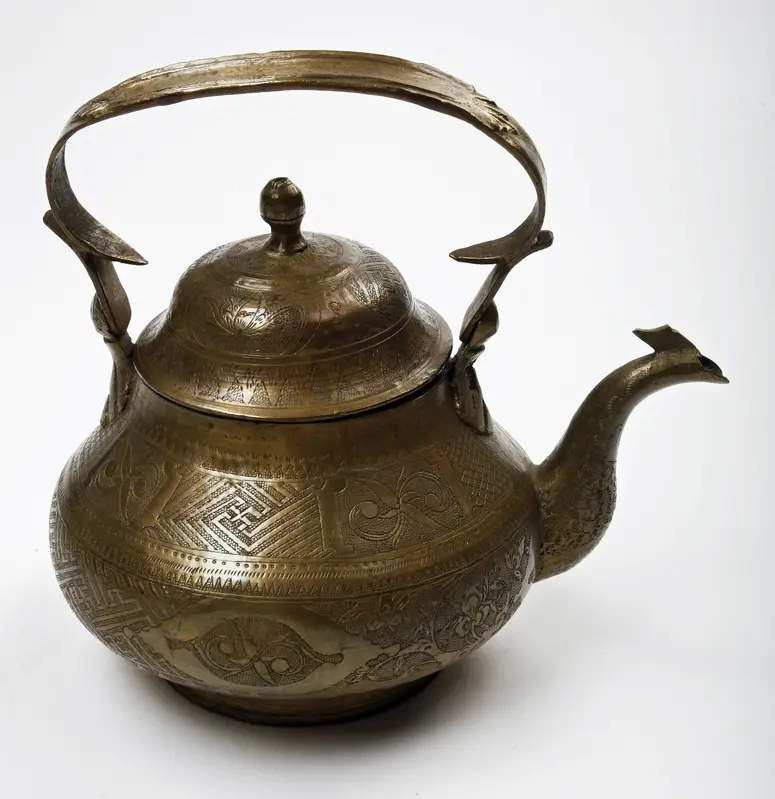
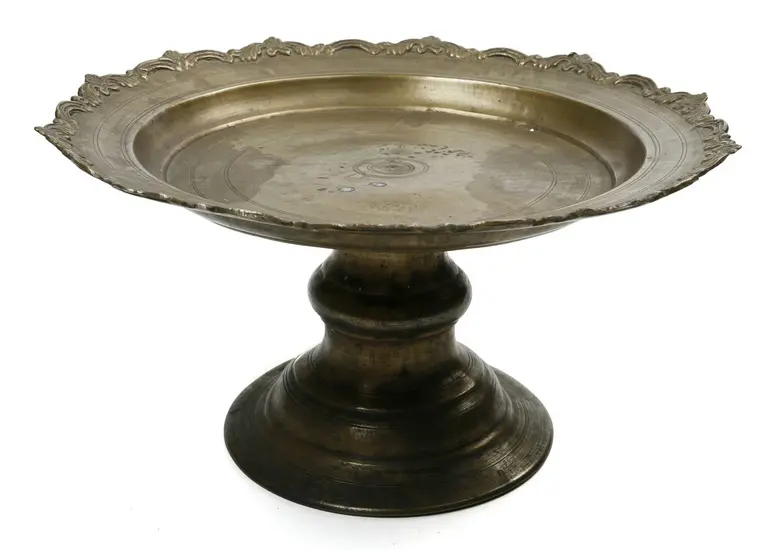
Note: The following text is taken from a 19th-century collection catalog and, in its language and perspective, partially reflects colonial thought patterns. We present the text in its original version to make the collection's history transparent and promote a critical examination of the colonial legacy. Certain terms and formulations may be perceived as problematic today. A 2009 research project concluded that most descriptions are factually correct and still usable; only a few details were found to be inaccurate or incorrect. The results of this project were published in the following collection catalog: khm-wmw-tm-library.on.worldcat.org/oclc/1457155265"135. TeakettleA common teakettle, formed just like a European one; the outer surface decorated with smooth, lengthwise ribs, made by the natives themselves, as are all of the brass objects described here which were found on Aceh. Since tea is a favourite drink of all the natives of the Indian Archipelago, such a utensil as the teakettle, made of more or less expensive materials, is to be found in every household. Pure water is drunk by the natives only rarely, they usually prefer cold or tepid tea, which stands drink-ready all day long. All the tea in Aceh is imported from China and sold by travelling Chinese salesmen. On Java there are large tea plantations which were planted by the Dutch. The tea plant is not native there and thrives only at an altitude of between 4 and 5,000 feet. The plantations on Java are now primarily in private hands: Europeans and Chinese. "Translation of: Czurda, F. A. J. (1883). Catalog mit Erklärungen der Etnografischen Privatsammlung des Dr. F. A. J. Czurda in Postelberg (Böhmen). (p. 32-33). Wien, Wilhelm Braumüller
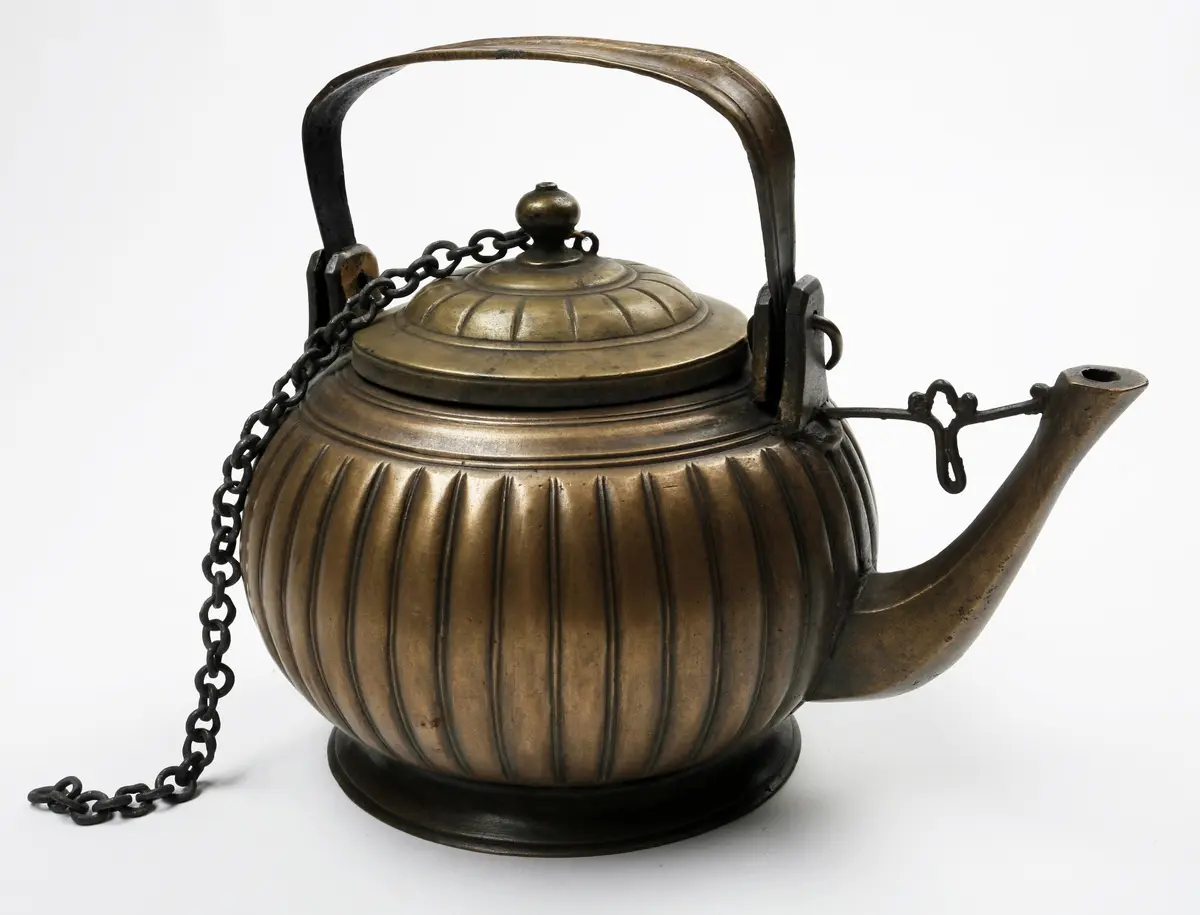
Note: The following text is taken from a 19th-century collection catalog and, in its language and perspective, partially reflects colonial thought patterns. We present the text in its original version to make the collection's history transparent and promote a critical examination of the colonial legacy. Certain terms and formulations may be perceived as problematic today. A 2009 research project concluded that most descriptions are factually correct and still usable; only a few details were found to be inaccurate or incorrect. The results of this project were published in the following collection catalog: khm-wmw-tm-library.on.worldcat.org/oclc/1457155265"135. TeakettleA common teakettle, formed just like a European one; the outer surface decorated with smooth, lengthwise ribs, made by the natives themselves, as are all of the brass objects described here which were found on Aceh. Since tea is a favourite drink of all the natives of the Indian Archipelago, such a utensil as the teakettle, made of more or less expensive materials, is to be found in every household. Pure water is drunk by the natives only rarely, they usually prefer cold or tepid tea, which stands drink-ready all day long. All the tea in Aceh is imported from China and sold by travelling Chinese salesmen. On Java there are large tea plantations which were planted by the Dutch. The tea plant is not native there and thrives only at an altitude of between 4 and 5,000 feet. The plantations on Java are now primarily in private hands: Europeans and Chinese. "Translation of: Czurda, F. A. J. (1883). Catalog mit Erklärungen der Etnografischen Privatsammlung des Dr. F. A. J. Czurda in Postelberg (Böhmen). (p. 32-33). Wien, Wilhelm Braumüller
Collector:
František A. J. Czurda (1844 Pisek - 1886 Cirebon) DNB
Entry Date:
1883
Object Name
Tea pot
Culture
Aceh
Material/technology:
Brass; cast, engraved, chased
Copyright
Weltmuseum Wien
Collection area
Insular Southeast Asia
Invs.
18069