Spitoon
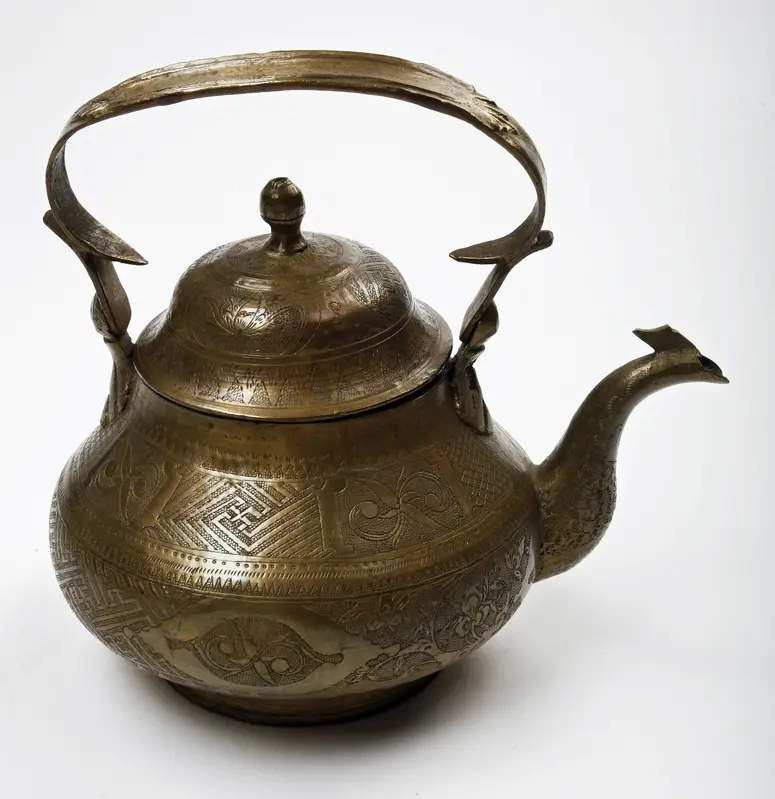
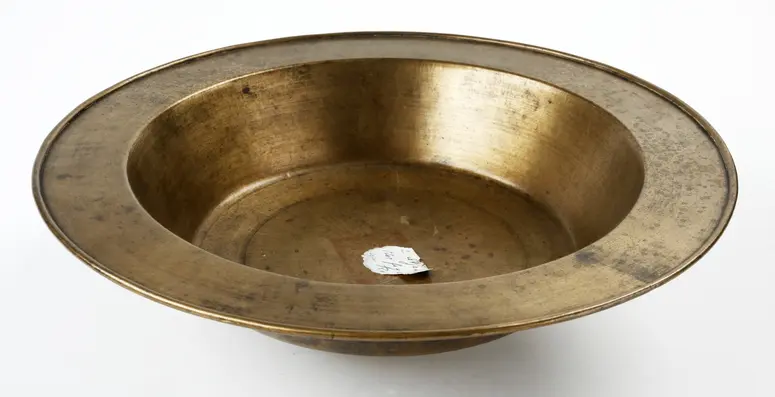
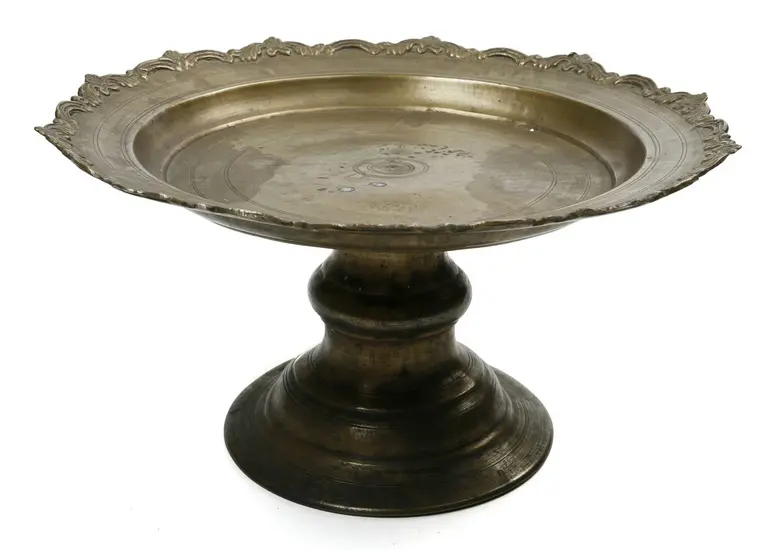
Note: The following text is taken from a 19th-century collection catalog and, in its language and perspective, partially reflects colonial thought patterns. We present the text in its original version to make the collection's history transparent and promote a critical examination of the colonial legacy. Certain terms and formulations may be perceived as problematic today. A 2009 research project concluded that most descriptions are factually correct and still usable; only a few details were found to be inaccurate or incorrect. The results of this project were published in the following collection catalog: khm-wmw-tm-library.on.worldcat.org/oclc/1457155265"132. SpittoonIt is known that all the natives in the Indian Archipelago, not excluding the women, use a strong saliva-causing substance as a stimulus for the mouth cavity, something which is for them an indispensable pleasure. This stimulus substance consists of the fresh leaves of the betel plant, the thickened juice of the areca palm (Areca catechu), the crushed nut of this palm and lime. These ingredients are mixed together and formed into a ball and shoved between the teeth and the cheek. When the areca palm juice comes into contact with lime and saliva, a red color develops which colors the saliva which has been stimulated and this in turn also results in constantly dark red lips and teeth, something considered beautiful by the natives; dazzling white teeth are seen to be animalistic. Since large amounts of red-colored saliva need to be spit out at any time, all the rooms of the bamboo or wooden houses of the natives would be covered with this red color. Thus everywhere in the entire archipelago - in the homes of princes and the common man - there are these spittoons, which are always close to those who are chewing betel. Privileged persons use spittoons of precious metals which are often impressively finished and carried by slaves. When visitors come, the first thing that is brought to the guest, and set at his side, is such a spittoon. The material from which these containers are made differs depending on rank and riches. Very simple ones can be found of coconut, up to the most valuable examples of heavy, chased gold."Translation of: Czurda, F. A. J. (1883). Catalog mit Erklärungen der Etnografischen Privatsammlung des Dr. F. A. J. Czurda in Postelberg (Böhmen). (p. 31-32). Wien, Wilhelm Braumüller
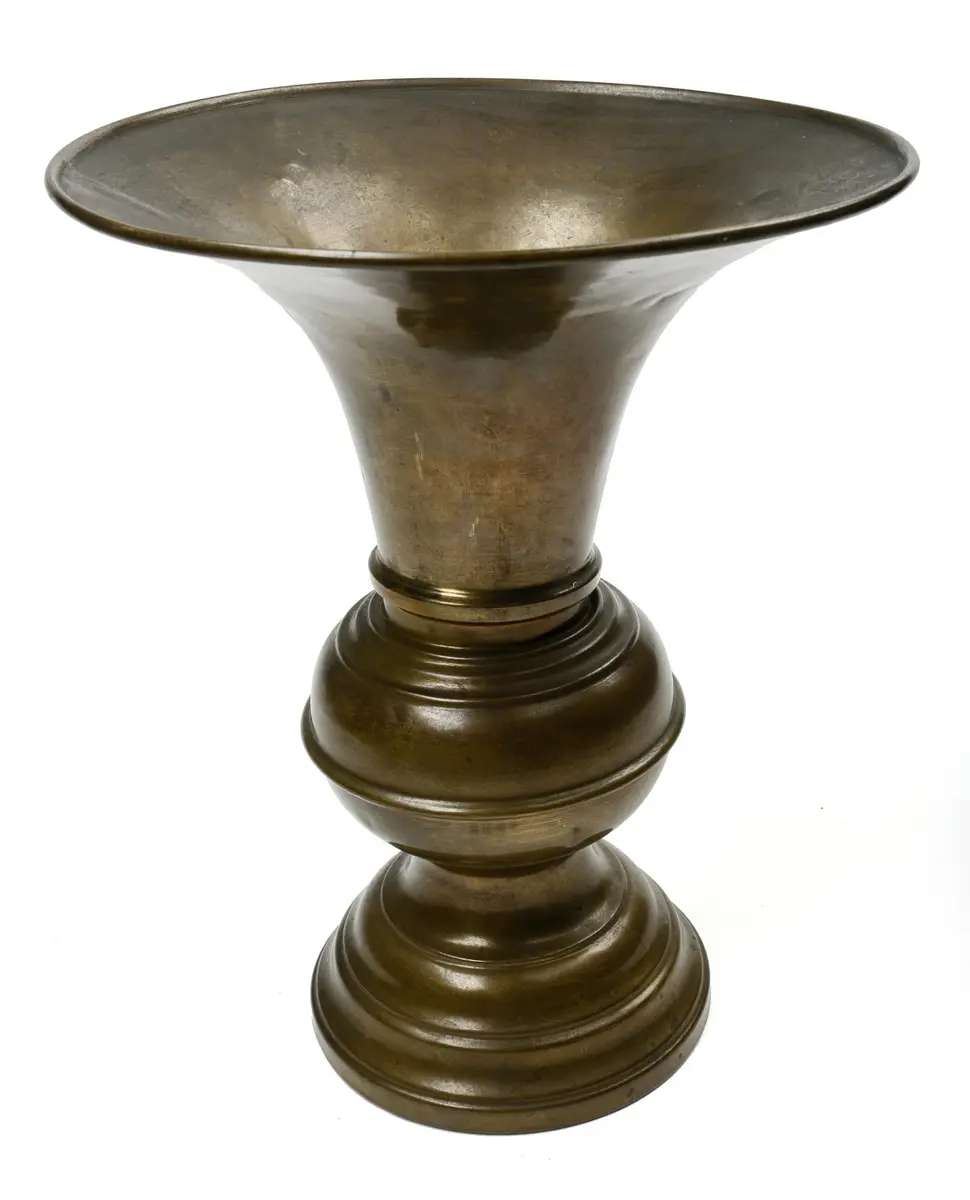
Note: The following text is taken from a 19th-century collection catalog and, in its language and perspective, partially reflects colonial thought patterns. We present the text in its original version to make the collection's history transparent and promote a critical examination of the colonial legacy. Certain terms and formulations may be perceived as problematic today. A 2009 research project concluded that most descriptions are factually correct and still usable; only a few details were found to be inaccurate or incorrect. The results of this project were published in the following collection catalog: khm-wmw-tm-library.on.worldcat.org/oclc/1457155265"132. SpittoonIt is known that all the natives in the Indian Archipelago, not excluding the women, use a strong saliva-causing substance as a stimulus for the mouth cavity, something which is for them an indispensable pleasure. This stimulus substance consists of the fresh leaves of the betel plant, the thickened juice of the areca palm (Areca catechu), the crushed nut of this palm and lime. These ingredients are mixed together and formed into a ball and shoved between the teeth and the cheek. When the areca palm juice comes into contact with lime and saliva, a red color develops which colors the saliva which has been stimulated and this in turn also results in constantly dark red lips and teeth, something considered beautiful by the natives; dazzling white teeth are seen to be animalistic. Since large amounts of red-colored saliva need to be spit out at any time, all the rooms of the bamboo or wooden houses of the natives would be covered with this red color. Thus everywhere in the entire archipelago - in the homes of princes and the common man - there are these spittoons, which are always close to those who are chewing betel. Privileged persons use spittoons of precious metals which are often impressively finished and carried by slaves. When visitors come, the first thing that is brought to the guest, and set at his side, is such a spittoon. The material from which these containers are made differs depending on rank and riches. Very simple ones can be found of coconut, up to the most valuable examples of heavy, chased gold."Translation of: Czurda, F. A. J. (1883). Catalog mit Erklärungen der Etnografischen Privatsammlung des Dr. F. A. J. Czurda in Postelberg (Böhmen). (p. 31-32). Wien, Wilhelm Braumüller
Collector:
František A. J. Czurda (1844 Pisek - 1886 Cirebon) DNB
Entry Date:
1883
Object Name
Spitoon
Culture
Aceh
Material/technology:
Brass; chased
Copyright
Weltmuseum Wien
Collection area
Insular Southeast Asia
Invs.
18066