Tshangpa Karpo
19th century | Hans Leder
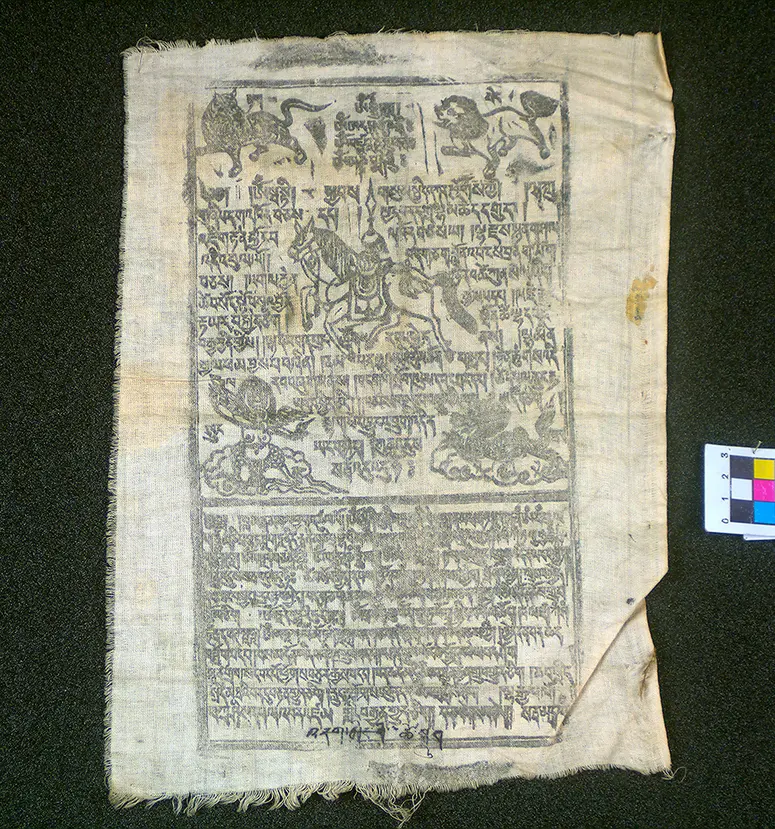
If the sacred mountains are depicted as war deities, they are equipped with bow and arrow, and wear suits of armour. At the upper edge of the canvas, we find gods and high lamas of erudite Buddhism as reference to the integration of these originally pre-Buddhist deities into the divine world of Buddhism. The lower edge shows offerings for the deity at the centre of the painting, and figures from his entourage. Engulfed in a sea of flames, the sacred mountain is presented in typical garb for such paintings, riding his horse. The raised sword in his right hand, as well as his bow and quiver with arrows, emphasise his belligerent character.
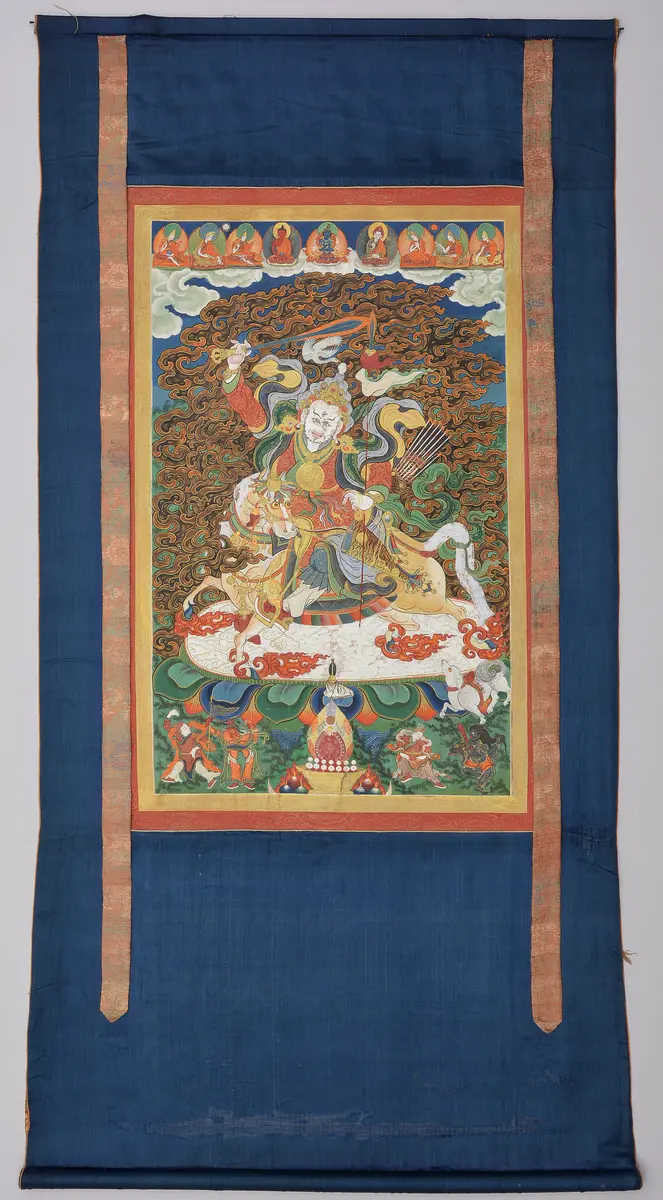
If the sacred mountains are depicted as war deities, they are equipped with bow and arrow, and wear suits of armour. At the upper edge of the canvas, we find gods and high lamas of erudite Buddhism as reference to the integration of these originally pre-Buddhist deities into the divine world of Buddhism. The lower edge shows offerings for the deity at the centre of the painting, and figures from his entourage. Engulfed in a sea of flames, the sacred mountain is presented in typical garb for such paintings, riding his horse. The raised sword in his right hand, as well as his bow and quiver with arrows, emphasise his belligerent character.
Collection:
Hans Leder DNB
Time:
19th century
Entry Date:
1906
Object Name
Tshangpa Karpo
Culture
Mongolei
Material/technology:
Mineral colour on canvas
Copyright
Weltmuseum Wien
Collection area
South Asia, Southeast Asia, Himalayas
Geography
Zentralasien/Mongolei
Invs.
74987
Browse more Similar items you might be interested in
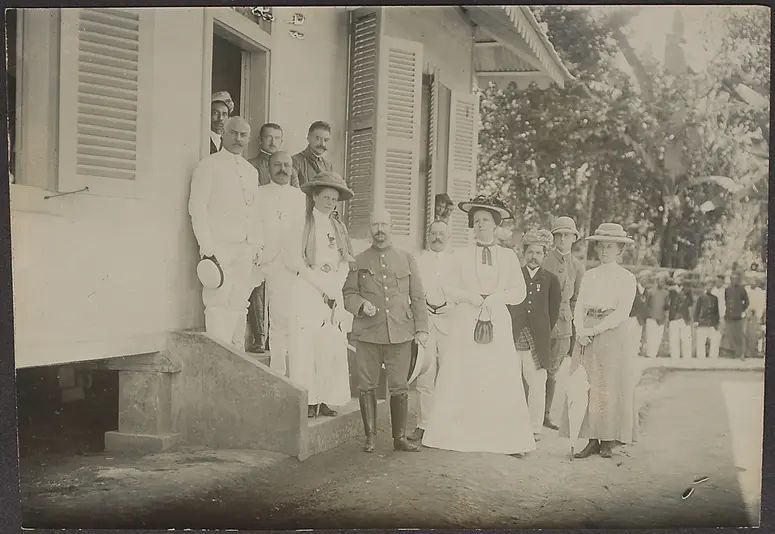
Consul Johann Schild with two civil servants in front of a house Johann Schild ca. 1900
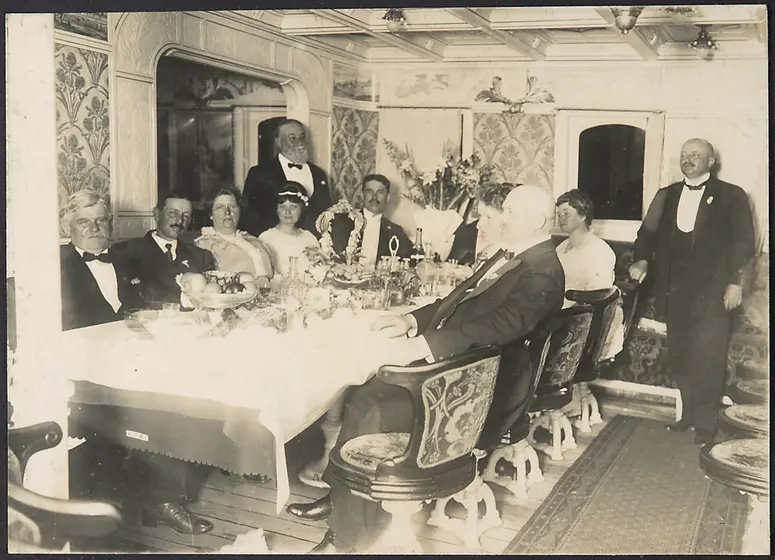
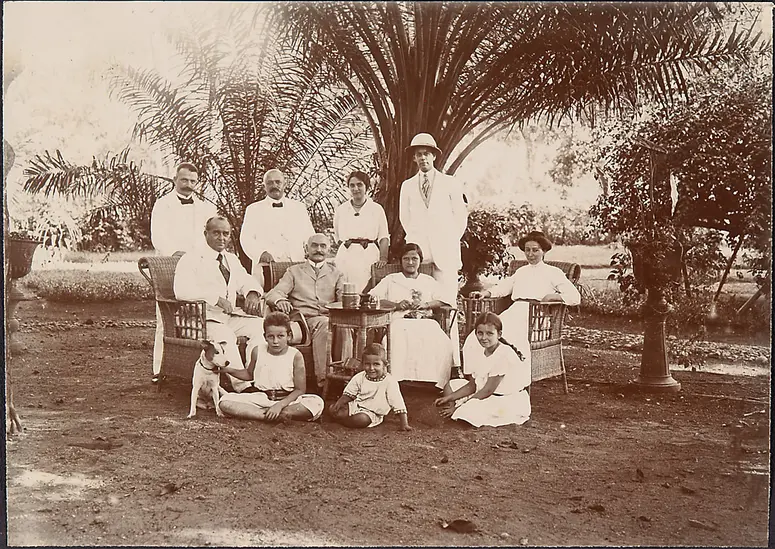
Johann Schild with his guests; some of them are probably musicians from the group Neumann Boom Johann Schild ca. 1900