Cloth, Batik
Hiasan dinding
mid-19th century | František A. J. Czurda
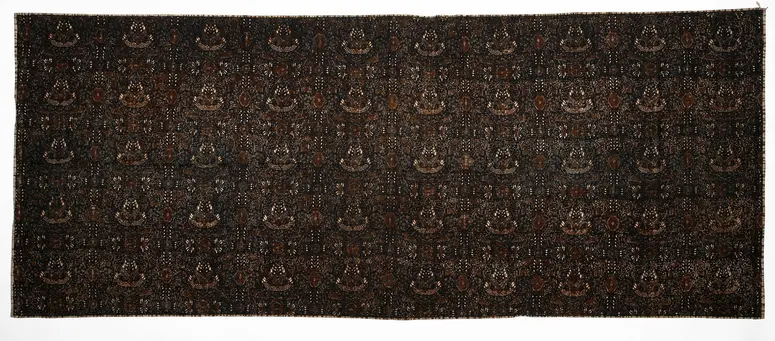
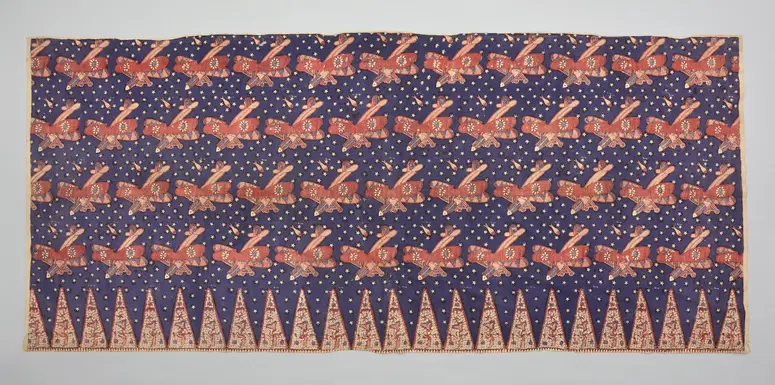
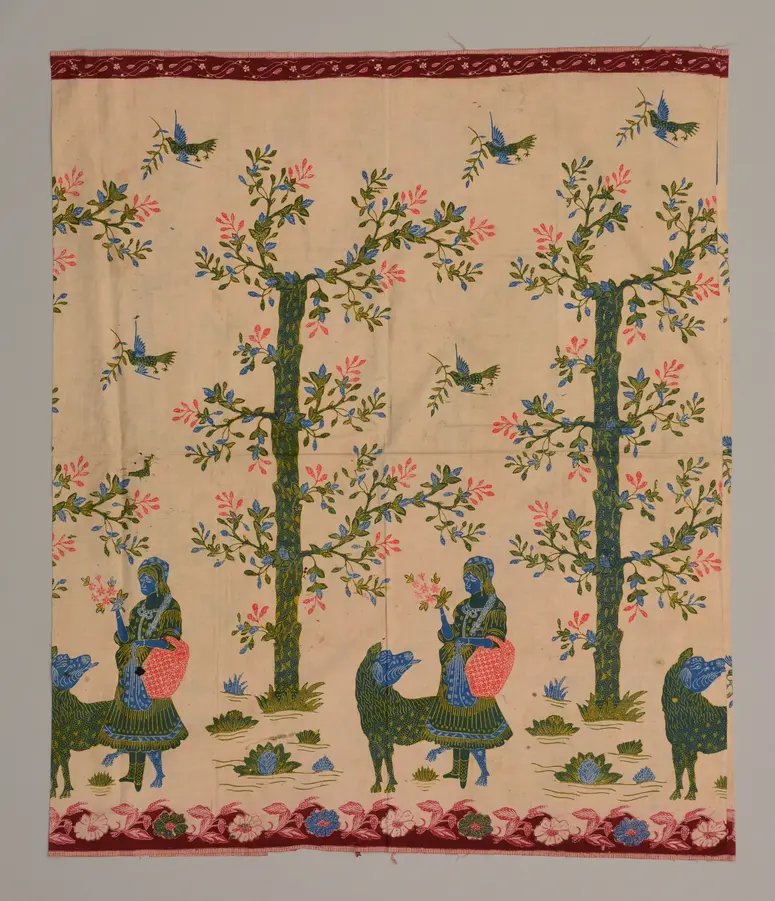
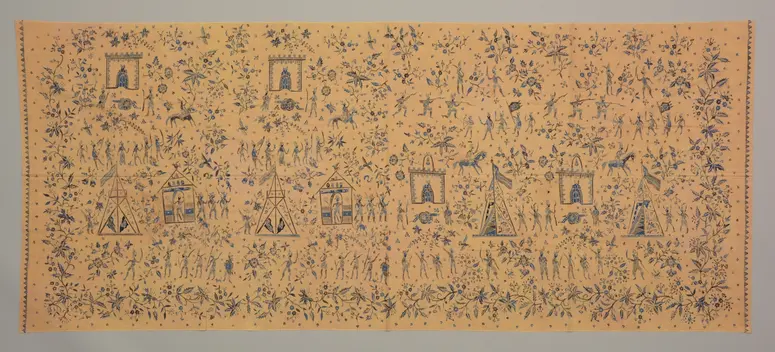
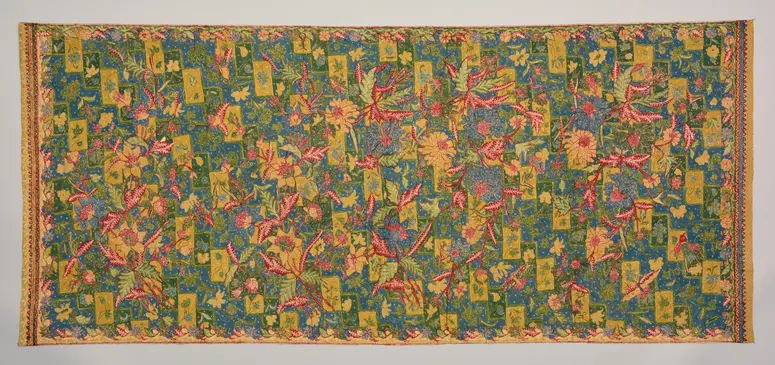
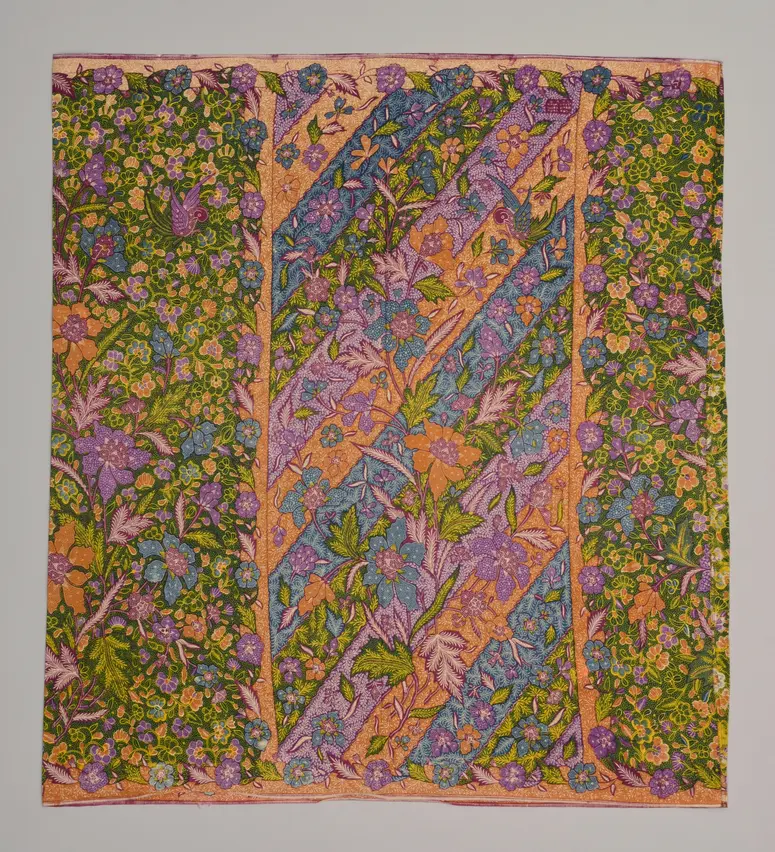
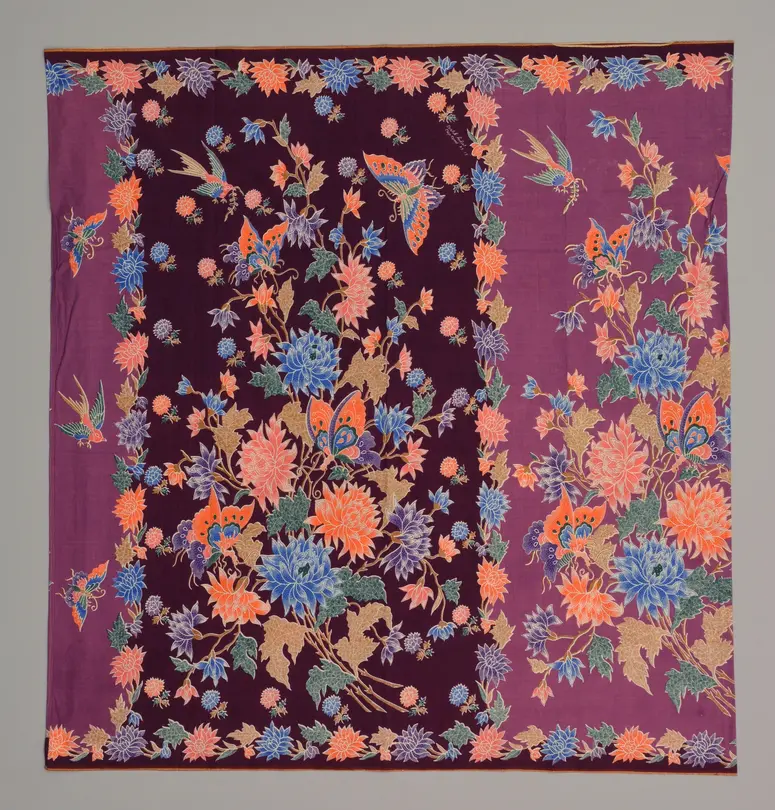
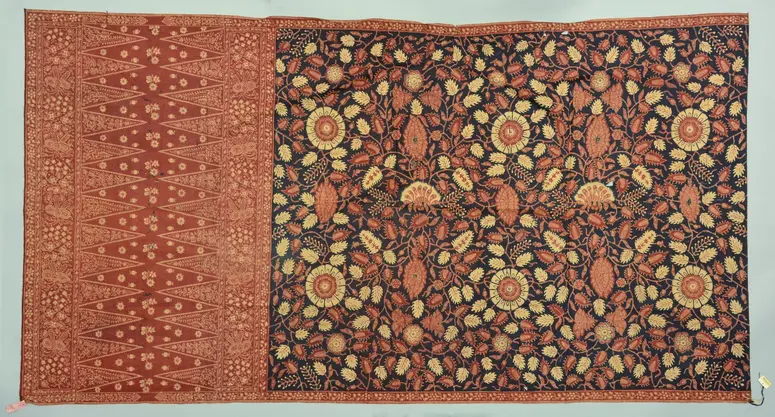
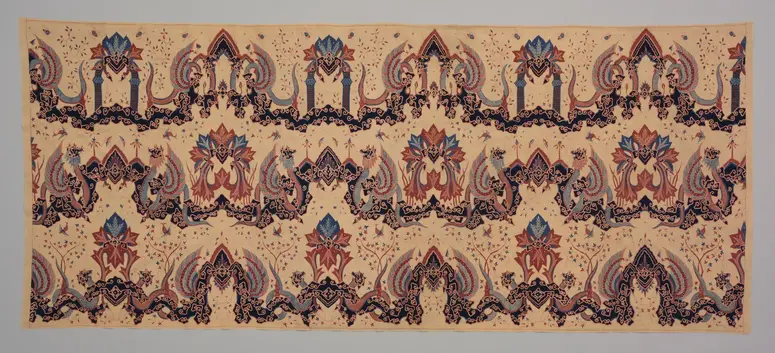
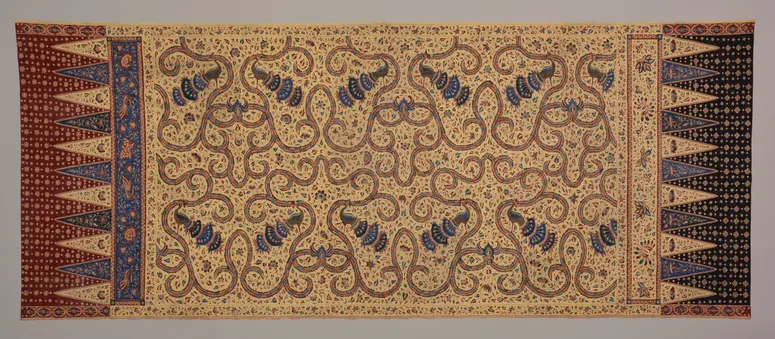
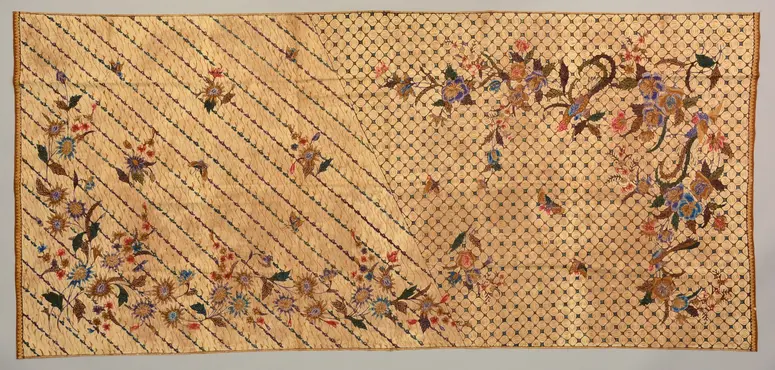
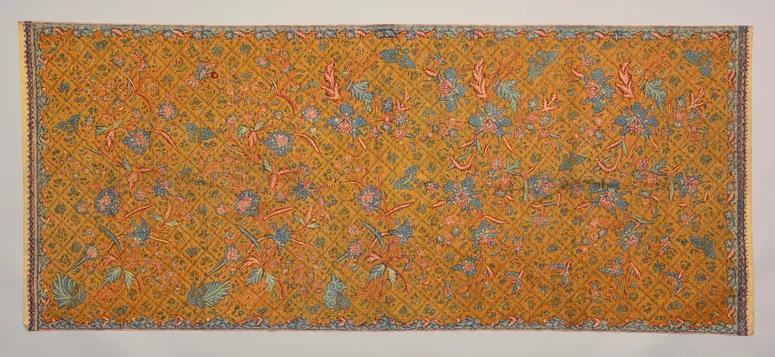
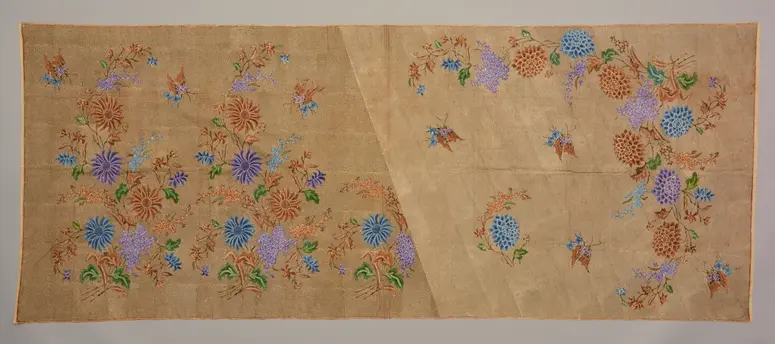
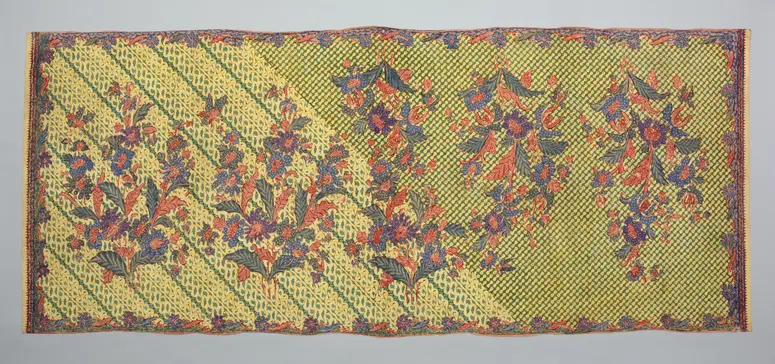
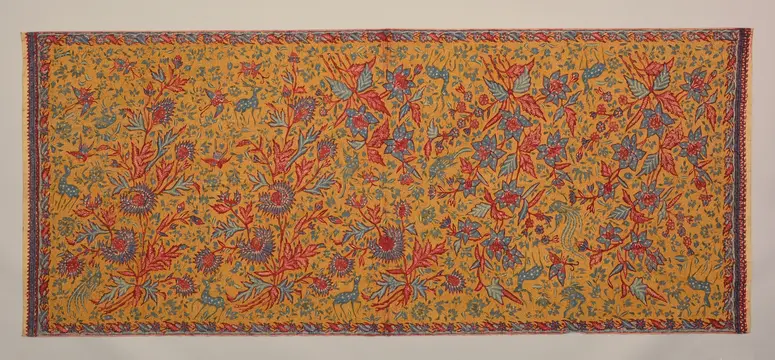
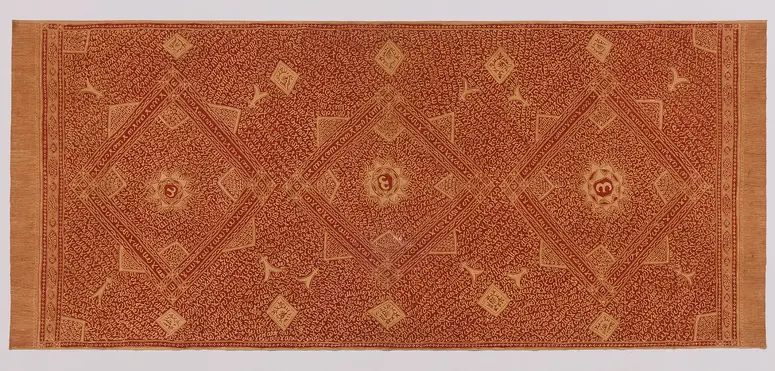
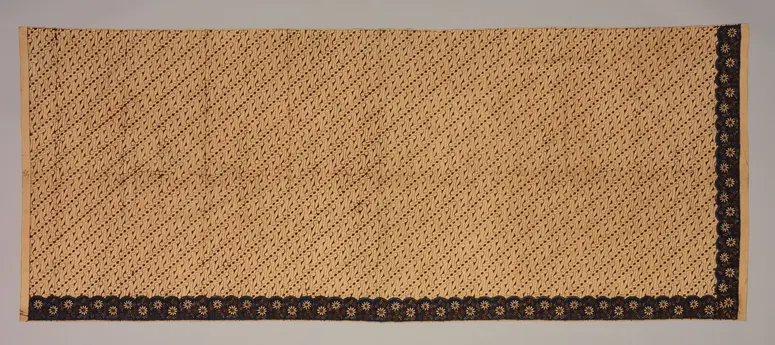
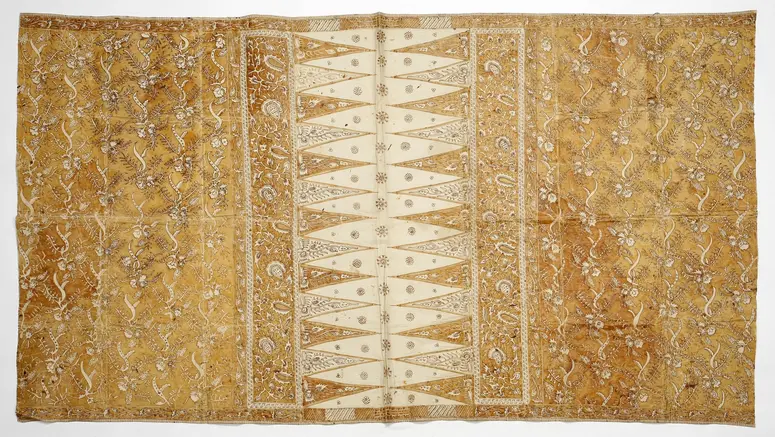
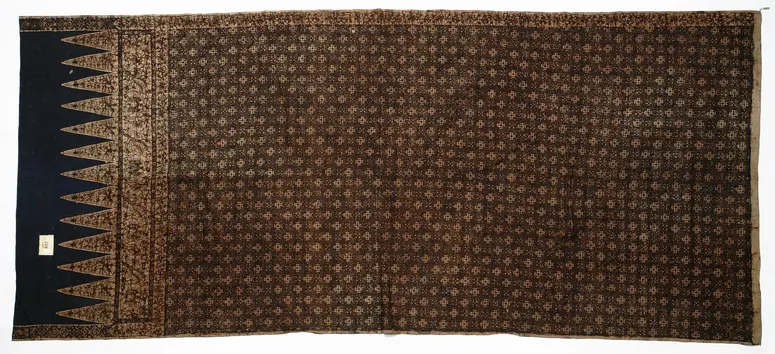
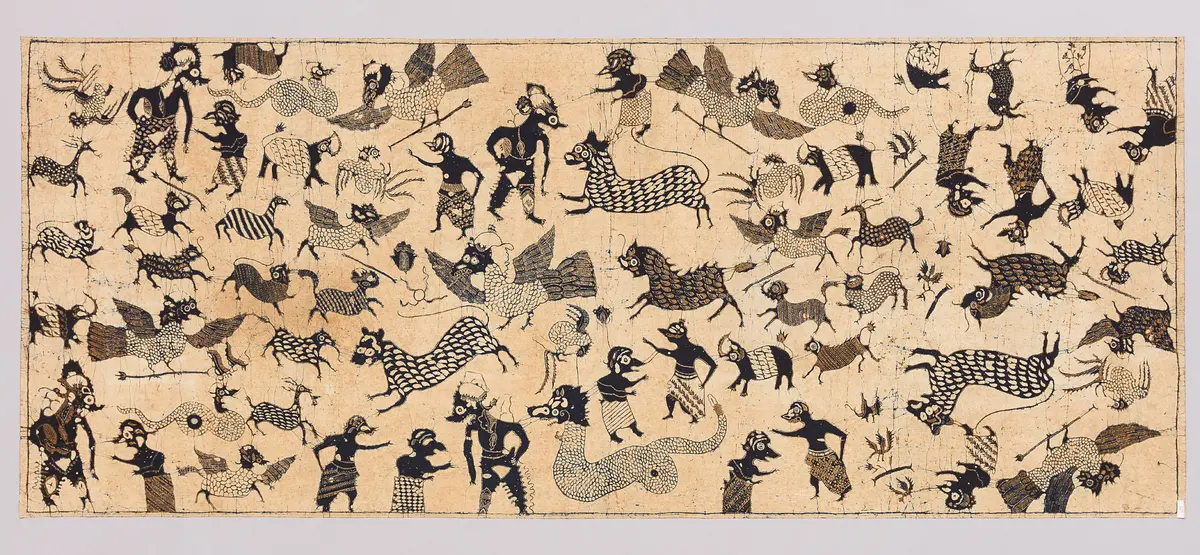
Batik is art. Instead of using a canvas, the artwork is created on fabric. When synthetic colours were first introduced in Indonesia from Europe at the end of the 19th century, many artists felt encouraged to play with the new colours and develop new motifs. Chinese, Dutch and Arab immigrants established new batik workshops at the seaports along the north coast of Java. The patterns were influenced and adapted according to their cultural heritage, leading to new motifs, new regionally typical colour combinations, and new dyeing methods. The names of these batik designs correspond to where they were made, such as Pekalongan, Kedungwuni, Lasem and Cirebon. Batik is always changing. There is no limit to creativity. Many motifs even show European influence as a result of European magazines or postcards. Another novelty was the signature of batik makers on finished cloths. The “pesisiran style” was born in contrast to the traditional “kraton style” (palace style) from the country’s interior regions. Note: The following text is taken from a 19th-century collection catalog and, in its language and perspective, partially reflects colonial thought patterns. We present the text in its original version to make the collection's history transparent and promote a critical examination of the colonial legacy. Certain terms and formulations may be perceived as problematic today. A 2009 research project concluded that most descriptions are factually correct and still usable; only a few details were found to be inaccurate or incorrect. The results of this project were published in the following collection catalog: https://khm-wmw-tm-library.on.worldcat.org/oclc/1457155265 "608 - 610. Cloth - "Beled" Three "keins", just as large as the previous ones and also dyed in the same manner. The designs are different, and characteristic for the place where they were made. They come from the main city in East Java, Surabaya, where entire districts of town are occupied with the dying of these keins. The patterns, in which the un-dyed white background dominate, show nicely executed, blue and brown flowers or very naively drawn animals and people, and extended human hands, probably taken from living originals, directly traced onto the cloth." Translation of: Czurda, F. A. J. (1883). Catalog mit Erklärungen der Etnografischen Privatsammlung des Dr. F. A. J. Czurda in Postelberg (Böhmen). (p. 153-154). Wien, Wilhelm Braumüller

Batik is art. Instead of using a canvas, the artwork is created on fabric. When synthetic colours were first introduced in Indonesia from Europe at the end of the 19th century, many artists felt encouraged to play with the new colours and develop new motifs. Chinese, Dutch and Arab immigrants established new batik workshops at the seaports along the north coast of Java. The patterns were influenced and adapted according to their cultural heritage, leading to new motifs, new regionally typical colour combinations, and new dyeing methods. The names of these batik designs correspond to where they were made, such as Pekalongan, Kedungwuni, Lasem and Cirebon. Batik is always changing. There is no limit to creativity. Many motifs even show European influence as a result of European magazines or postcards. Another novelty was the signature of batik makers on finished cloths. The “pesisiran style” was born in contrast to the traditional “kraton style” (palace style) from the country’s interior regions. Note: The following text is taken from a 19th-century collection catalog and, in its language and perspective, partially reflects colonial thought patterns. We present the text in its original version to make the collection's history transparent and promote a critical examination of the colonial legacy. Certain terms and formulations may be perceived as problematic today. A 2009 research project concluded that most descriptions are factually correct and still usable; only a few details were found to be inaccurate or incorrect. The results of this project were published in the following collection catalog: https://khm-wmw-tm-library.on.worldcat.org/oclc/1457155265 "608 - 610. Cloth - "Beled" Three "keins", just as large as the previous ones and also dyed in the same manner. The designs are different, and characteristic for the place where they were made. They come from the main city in East Java, Surabaya, where entire districts of town are occupied with the dying of these keins. The patterns, in which the un-dyed white background dominate, show nicely executed, blue and brown flowers or very naively drawn animals and people, and extended human hands, probably taken from living originals, directly traced onto the cloth." Translation of: Czurda, F. A. J. (1883). Catalog mit Erklärungen der Etnografischen Privatsammlung des Dr. F. A. J. Czurda in Postelberg (Böhmen). (p. 153-154). Wien, Wilhelm Braumüller
Collection:
František A. J. Czurda (1844 Pisek - 1886 Cirebon) DNB
Time:
mid-19th century
Entry Date:
1883
Object Name
Cloth, Batik
Culture
Nordküste Javas / Cirebon
Material/technology:
Cotton, natural colours, hand batik
Copyright
Weltmuseum Wien
Collection area
Insular Southeast Asia
Invs.
17985