Cloth, Batik
Kain Panjang
mid-19th century | František A. J. Czurda
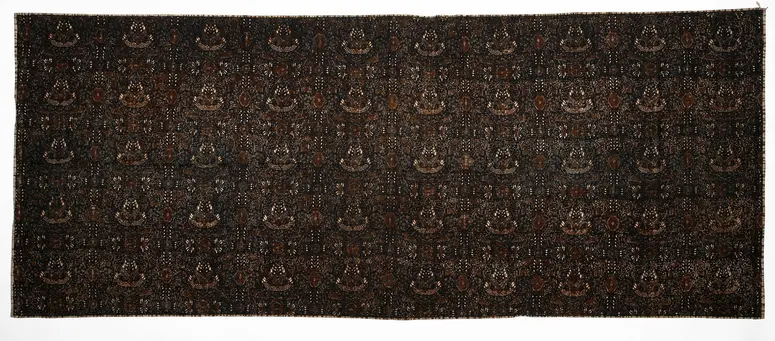
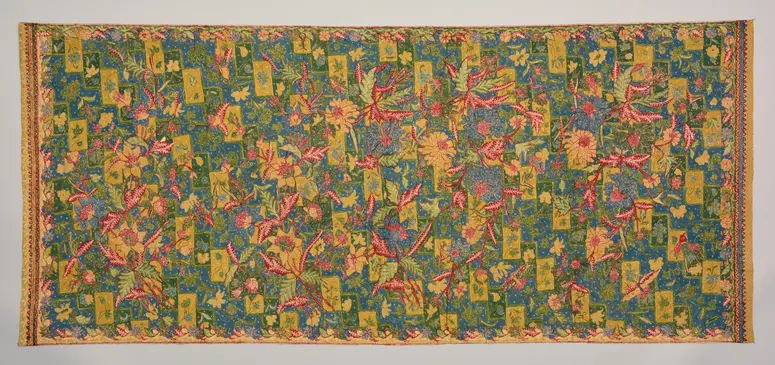
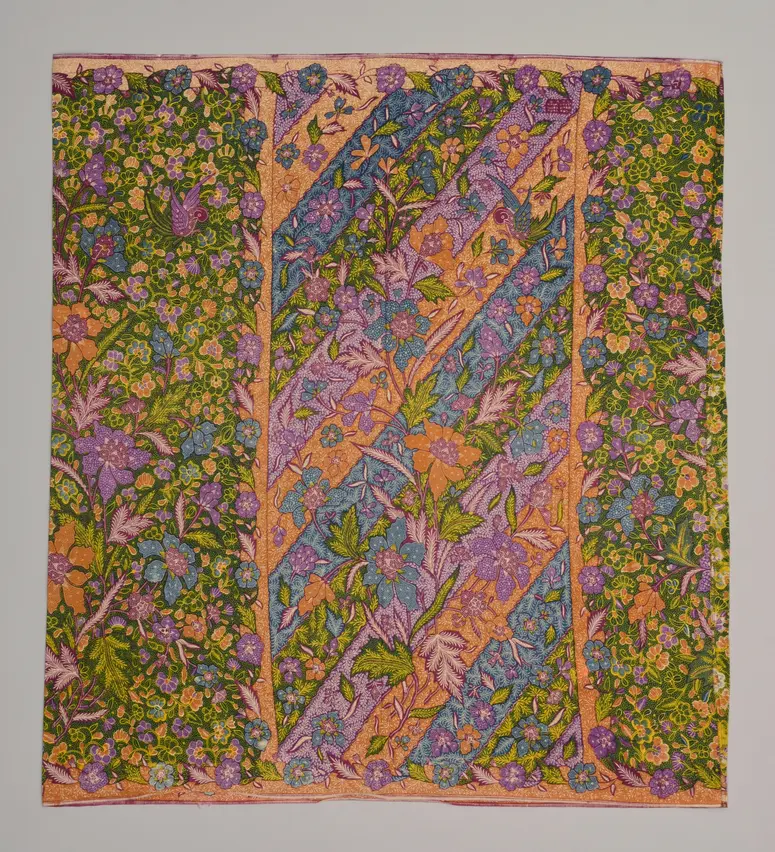
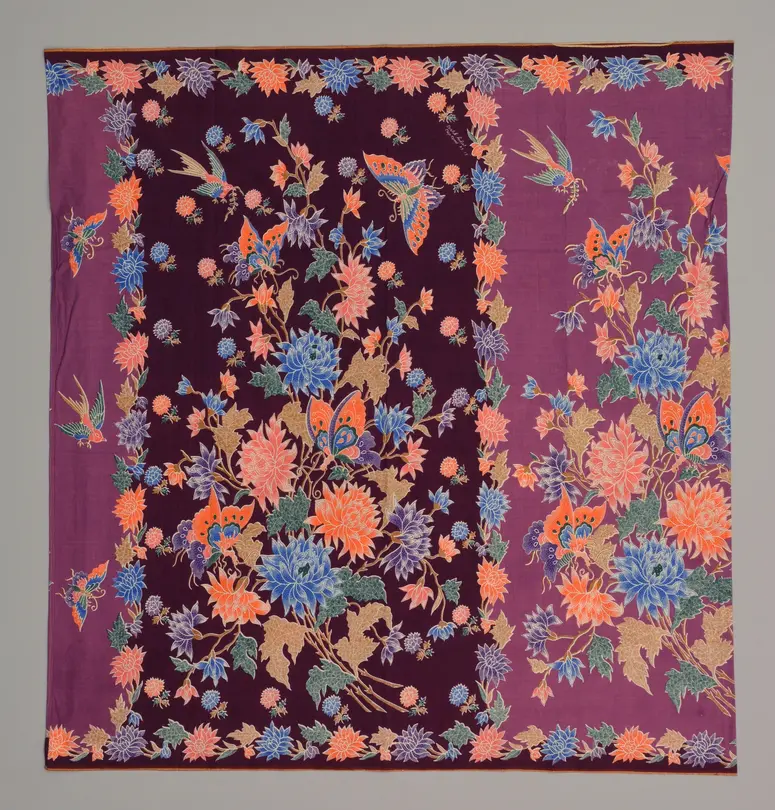
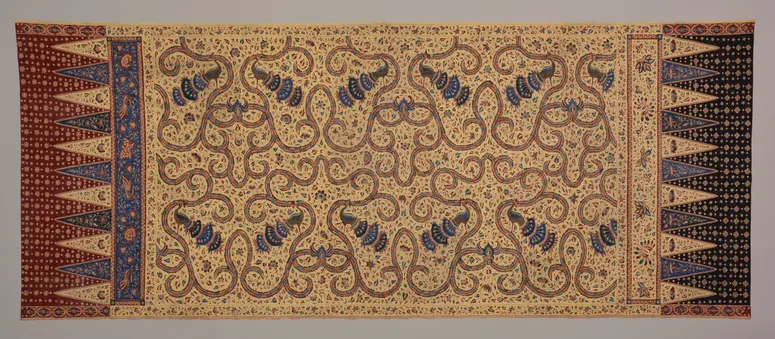
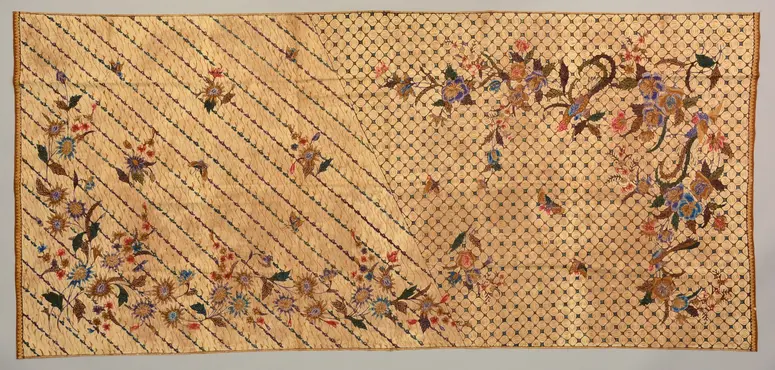
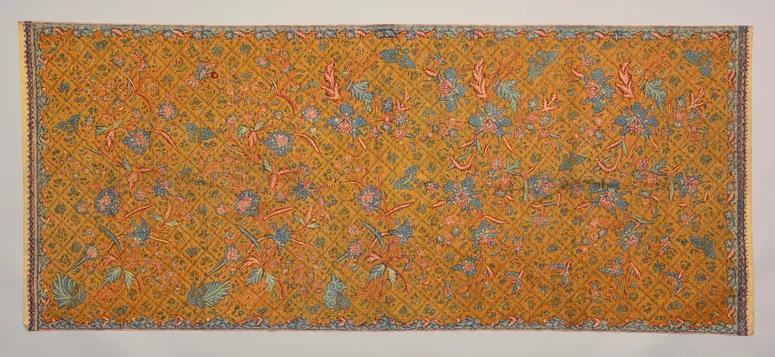
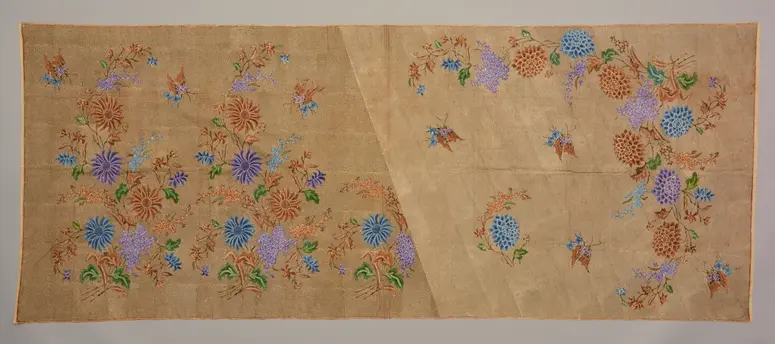
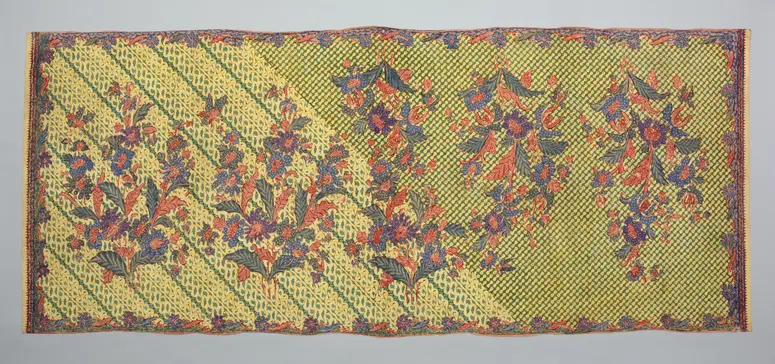
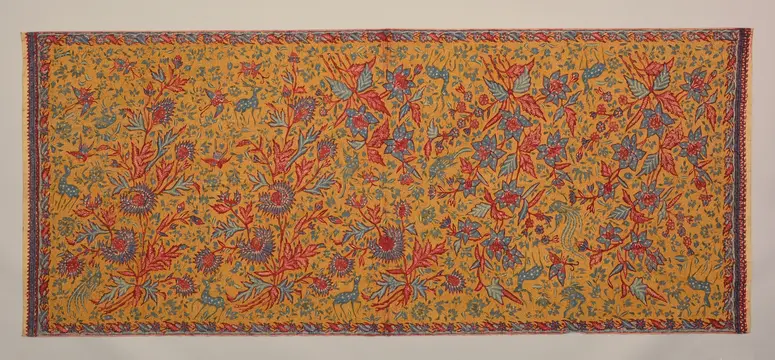
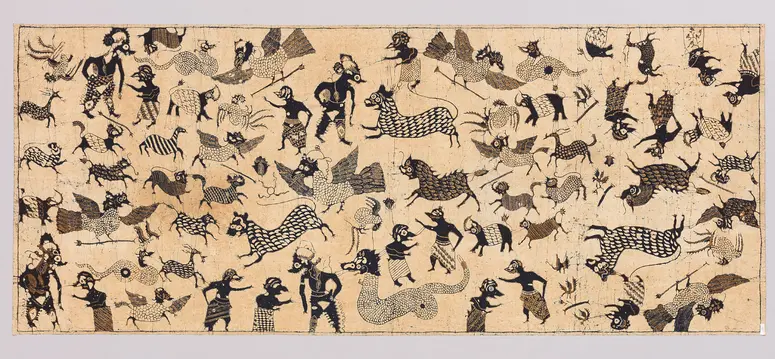
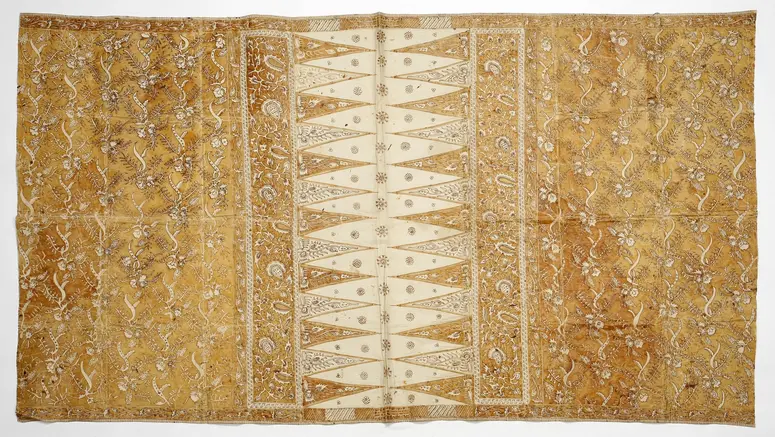
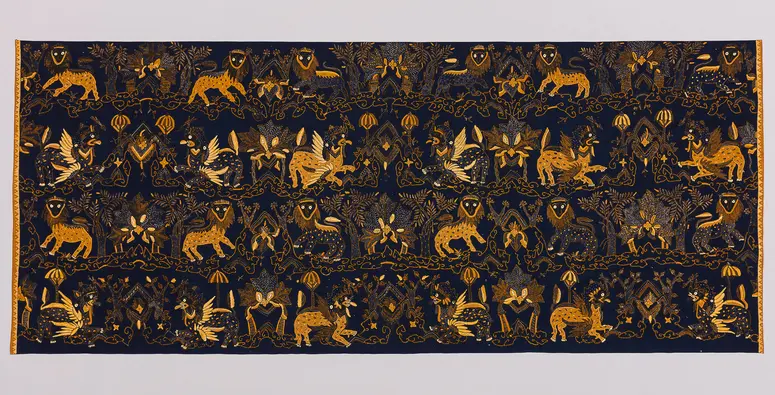
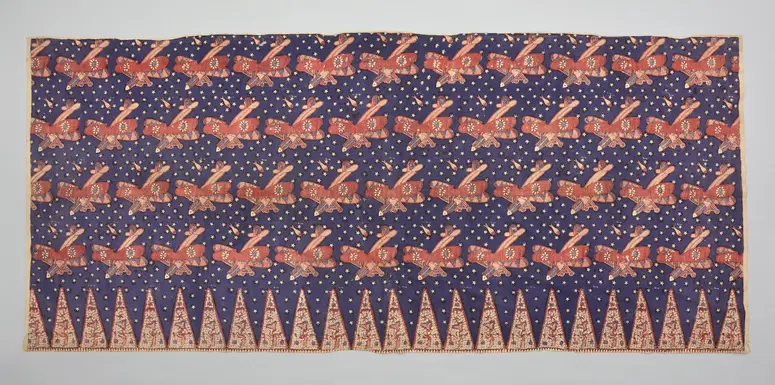
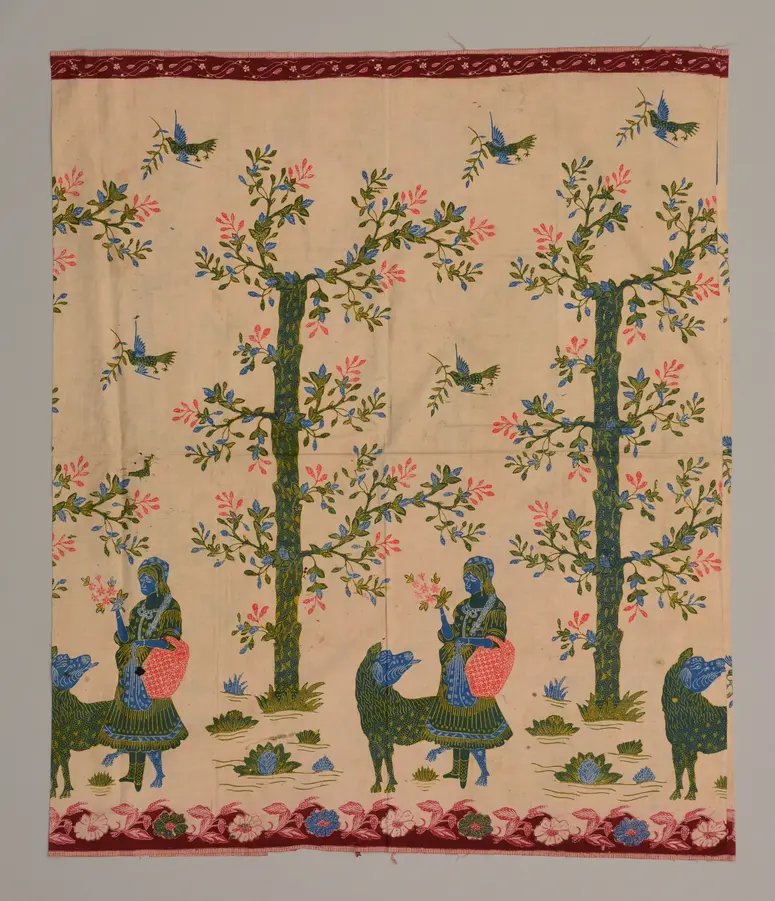
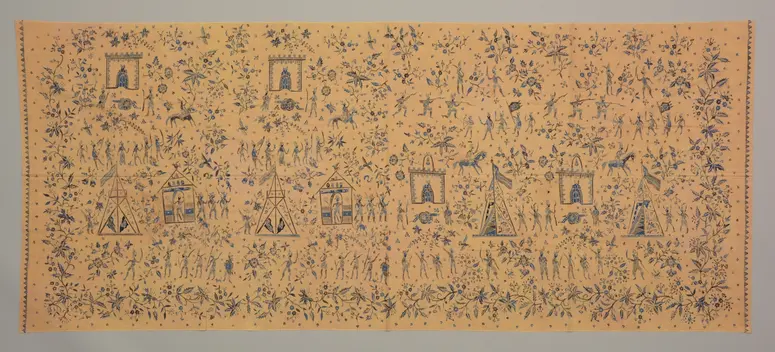
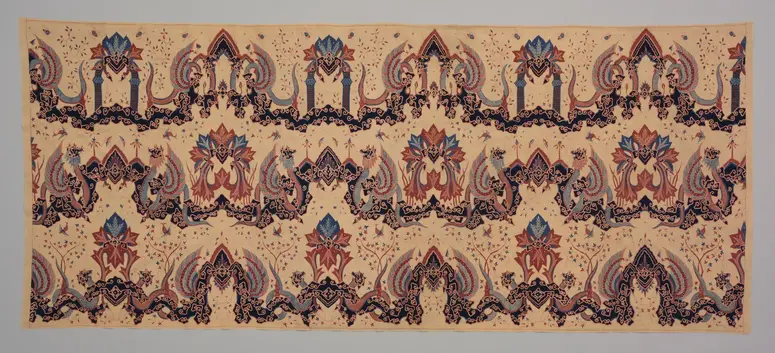
Note: The following text is taken from a 19th-century collection catalog and, in its language and perspective, partially reflects colonial thought patterns. We present the text in its original version to make the collection's history transparent and promote a critical examination of the colonial legacy. Certain terms and formulations may be perceived as problematic today. A 2009 research project concluded that most descriptions are factually correct and still usable; only a few details were found to be inaccurate or incorrect. The results of this project were published in the following collection catalog: https://khm-wmw-tm-library.on.worldcat.org/oclc/1457155265 "611 - 613. Skirts - "Sarongs" The Javanese sarongs are very narrow, have few folds when they are worn, lay close to the body. They are all dyed in the manner described above (batik) and exhibit more or less fine designs. They are popular house dresses for all European women in India, who spend their whole lives, so to speak, in such clothes. They sleep in them and wear them at home and even go out in them to do their shopping. Only in the evenings in large towns and places, where visits are made and received, are European clothes worn. On the steam ships, in the hotels, everywhere one sees the women only in these clothes. It is a very cool and comfortable costume but also unattractive, since it covers the body like a sack. Above the sarong the European women wear a long cotton jacket, more or less elegantly embroidered. Sarong and "kabaja" - that is the name of the jacket - are the only components of this house dress. The Javanese sarongs also have a simple, large surface which has a uniform pattern, then the head part, "kapala", which is quite different and unique in its design, of horizontal zigzag pattern which is variously colored and rich with flowers and arabesque decorations. These examples have very fine designs, two come from Surukarta, blue, brown and yellow, the third from Surabaya - a very finely executed two-color design in red and yellow." Translation of: Czurda, F. A. J. (1883). Catalog mit Erklärungen der Etnografischen Privatsammlung des Dr. F. A. J. Czurda in Postelberg (Böhmen). (p. 154-155). Wien, Wilhelm Braumüller
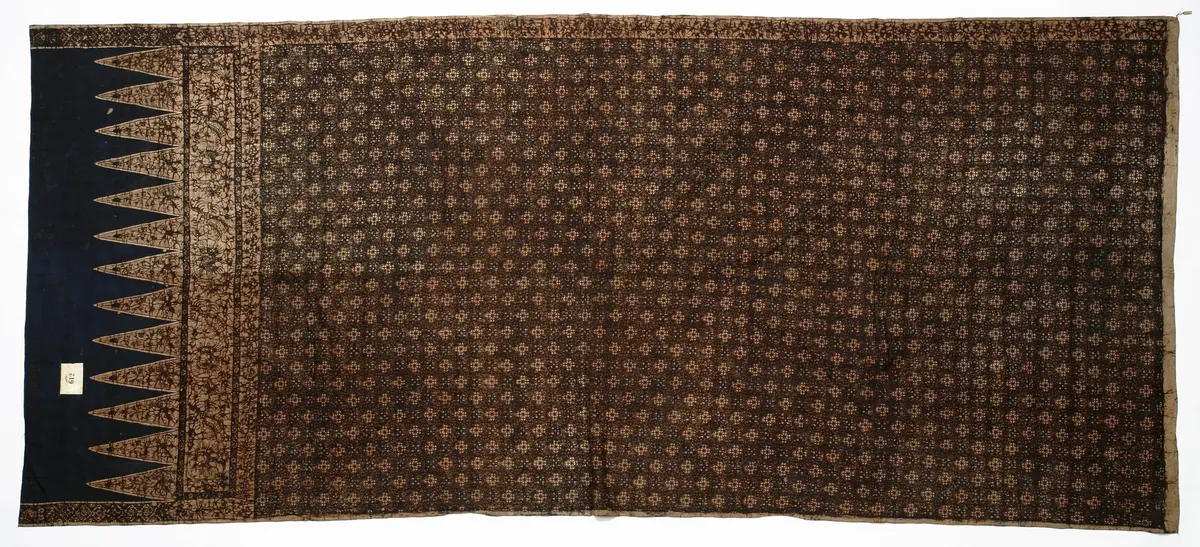
Note: The following text is taken from a 19th-century collection catalog and, in its language and perspective, partially reflects colonial thought patterns. We present the text in its original version to make the collection's history transparent and promote a critical examination of the colonial legacy. Certain terms and formulations may be perceived as problematic today. A 2009 research project concluded that most descriptions are factually correct and still usable; only a few details were found to be inaccurate or incorrect. The results of this project were published in the following collection catalog: https://khm-wmw-tm-library.on.worldcat.org/oclc/1457155265 "611 - 613. Skirts - "Sarongs" The Javanese sarongs are very narrow, have few folds when they are worn, lay close to the body. They are all dyed in the manner described above (batik) and exhibit more or less fine designs. They are popular house dresses for all European women in India, who spend their whole lives, so to speak, in such clothes. They sleep in them and wear them at home and even go out in them to do their shopping. Only in the evenings in large towns and places, where visits are made and received, are European clothes worn. On the steam ships, in the hotels, everywhere one sees the women only in these clothes. It is a very cool and comfortable costume but also unattractive, since it covers the body like a sack. Above the sarong the European women wear a long cotton jacket, more or less elegantly embroidered. Sarong and "kabaja" - that is the name of the jacket - are the only components of this house dress. The Javanese sarongs also have a simple, large surface which has a uniform pattern, then the head part, "kapala", which is quite different and unique in its design, of horizontal zigzag pattern which is variously colored and rich with flowers and arabesque decorations. These examples have very fine designs, two come from Surukarta, blue, brown and yellow, the third from Surabaya - a very finely executed two-color design in red and yellow." Translation of: Czurda, F. A. J. (1883). Catalog mit Erklärungen der Etnografischen Privatsammlung des Dr. F. A. J. Czurda in Postelberg (Böhmen). (p. 154-155). Wien, Wilhelm Braumüller
Collection:
František A. J. Czurda (1844 Pisek - 1886 Cirebon) DNB
Time:
mid-19th century
Entry Date:
1883
Object Name
Cloth, Batik
Culture
Westjava / Indramayu
Material/technology:
Cotton, natural colours, hand and cap batik
Copyright
Weltmuseum Wien
Collection area
Insular Southeast Asia
Invs.
17986