Finger bowl
Cinibokang
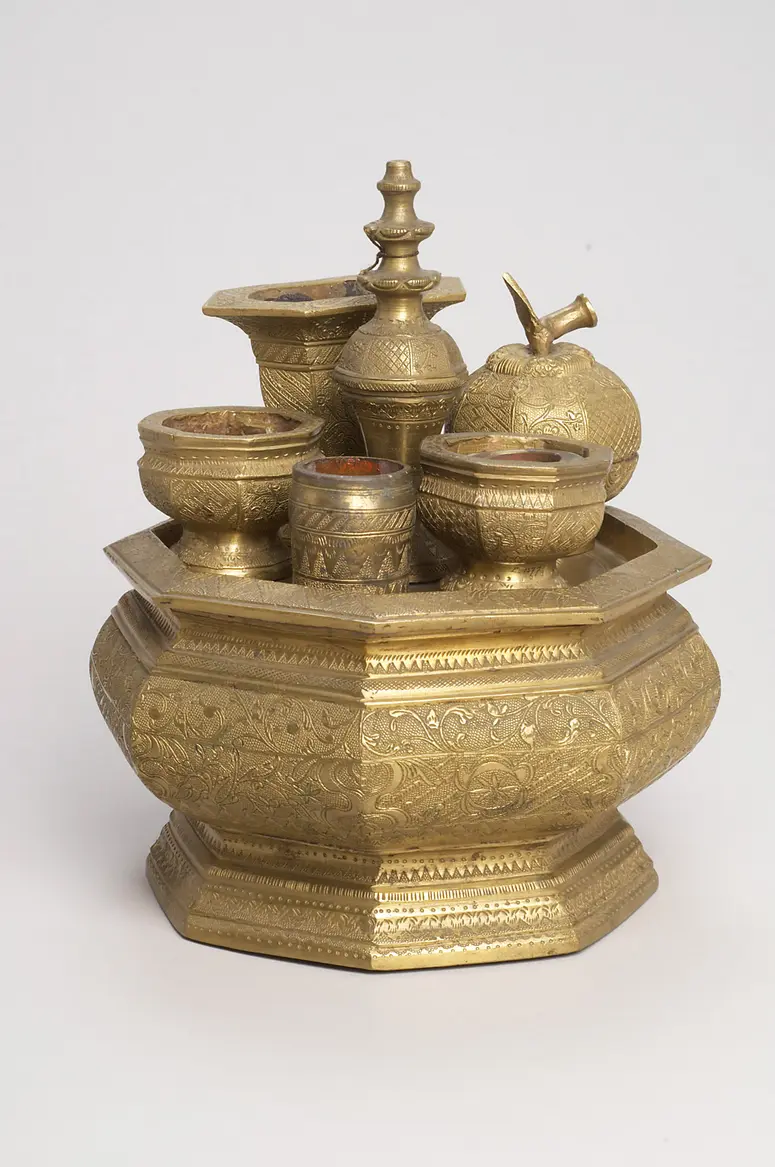
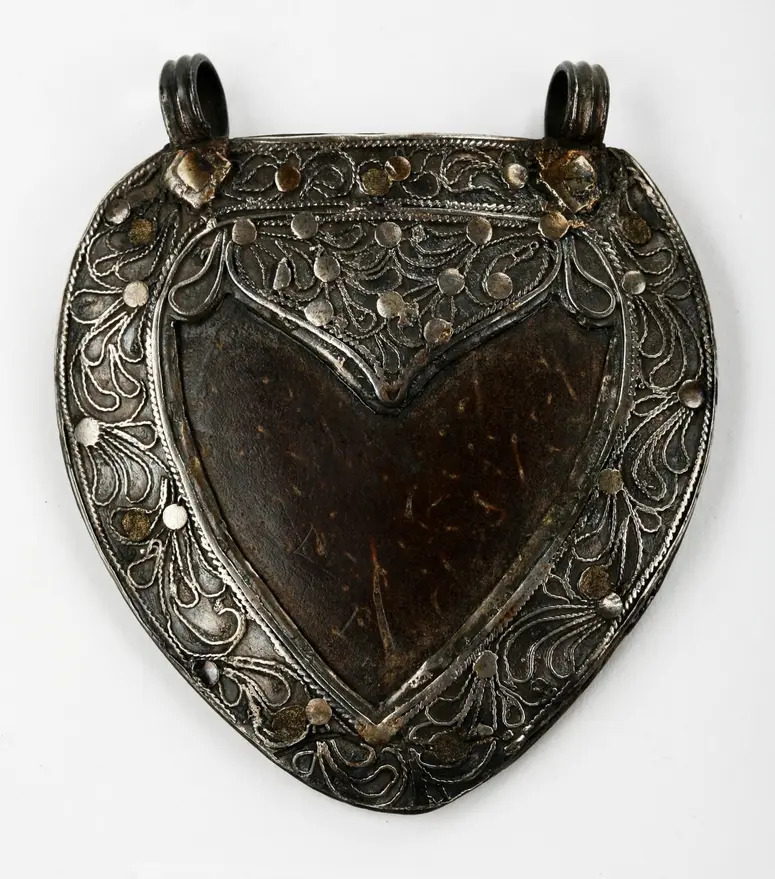
Note: The following text is taken from a 19th-century collection catalog and, in its language and perspective, partially reflects colonial thought patterns. We present the text in its original version to make the collection's history transparent and promote a critical examination of the colonial legacy. Certain terms and formulations may be perceived as problematic today. A 2009 research project concluded that most descriptions are factually correct and still usable; only a few details were found to be inaccurate or incorrect. The results of this project were published in the following collection catalog: khm-wmw-tm-library.on.worldcat.org/oclc/1457155265"149 - 150. Fingerbowl - "Tjinibokang"This vessel is also found among all the natives of the Indian Archipelago, not only here on South Celebes. It is filled with water and is used to wash one's fingers while eating. All the natives of the Indian Archipelago use their hands to take their food, which is usually of a firm consistency, since the fork and spoon are unknown to them. The liquid dishes are simply drunk. The foods of the natives are usually rice dishes, simply cooked rice: cooked and fried maize, dried, fried fish, dried, fried meat of buffalo, venison, chicken, duck and goose; there are various cakes and sweets of every kind and, finally, fruits. When the native sits, legs crossed, on the floor of his room to eat, there is always such a finger bowl at his right side in which he washes his fingers after every dish, and with which he also rinses his mouth with water. These finger bowls are made of very different materials depending on wealth and rank. They can be simple coconut bowls or bowls of clay, brass or precious metals. Also at the tables of the Europeans living in India, who also eat many Indian dishes and all fruits only with their fingers, such finger bowls are found to the right of the person eating. Europeans usually have finger bowls of colored glass or porcelain. The two present finger bowls are also very roughly worked."Translation of: Czurda, F. A. J. (1883). Catalog mit Erklärungen der Etnografischen Privatsammlung des Dr. F. A. J. Czurda in Postelberg (Böhmen). (p. 35-36). Wien, Wilhelm Braumüller

Note: The following text is taken from a 19th-century collection catalog and, in its language and perspective, partially reflects colonial thought patterns. We present the text in its original version to make the collection's history transparent and promote a critical examination of the colonial legacy. Certain terms and formulations may be perceived as problematic today. A 2009 research project concluded that most descriptions are factually correct and still usable; only a few details were found to be inaccurate or incorrect. The results of this project were published in the following collection catalog: khm-wmw-tm-library.on.worldcat.org/oclc/1457155265"149 - 150. Fingerbowl - "Tjinibokang"This vessel is also found among all the natives of the Indian Archipelago, not only here on South Celebes. It is filled with water and is used to wash one's fingers while eating. All the natives of the Indian Archipelago use their hands to take their food, which is usually of a firm consistency, since the fork and spoon are unknown to them. The liquid dishes are simply drunk. The foods of the natives are usually rice dishes, simply cooked rice: cooked and fried maize, dried, fried fish, dried, fried meat of buffalo, venison, chicken, duck and goose; there are various cakes and sweets of every kind and, finally, fruits. When the native sits, legs crossed, on the floor of his room to eat, there is always such a finger bowl at his right side in which he washes his fingers after every dish, and with which he also rinses his mouth with water. These finger bowls are made of very different materials depending on wealth and rank. They can be simple coconut bowls or bowls of clay, brass or precious metals. Also at the tables of the Europeans living in India, who also eat many Indian dishes and all fruits only with their fingers, such finger bowls are found to the right of the person eating. Europeans usually have finger bowls of colored glass or porcelain. The two present finger bowls are also very roughly worked."Translation of: Czurda, F. A. J. (1883). Catalog mit Erklärungen der Etnografischen Privatsammlung des Dr. F. A. J. Czurda in Postelberg (Böhmen). (p. 35-36). Wien, Wilhelm Braumüller
Collector:
František A. J. Czurda (1844 Pisek - 1886 Cirebon) DNB
Entry Date:
1883
Object Name
Finger bowl
Culture
Süd-Sulawesi
Material/technology:
Copper alloy; cast
Copyright
Weltmuseum Wien
Collection area
Insular Southeast Asia
Geography
Insulares Südostasien/Indonesien/Java
Invs.
17865
Browse more Similar items you might be interested in


Der Alltag auf Nikobaren: : Fischreuse, Körbchen, Zählholz, Fächer, Scheidewand Edward Horace Man 1888