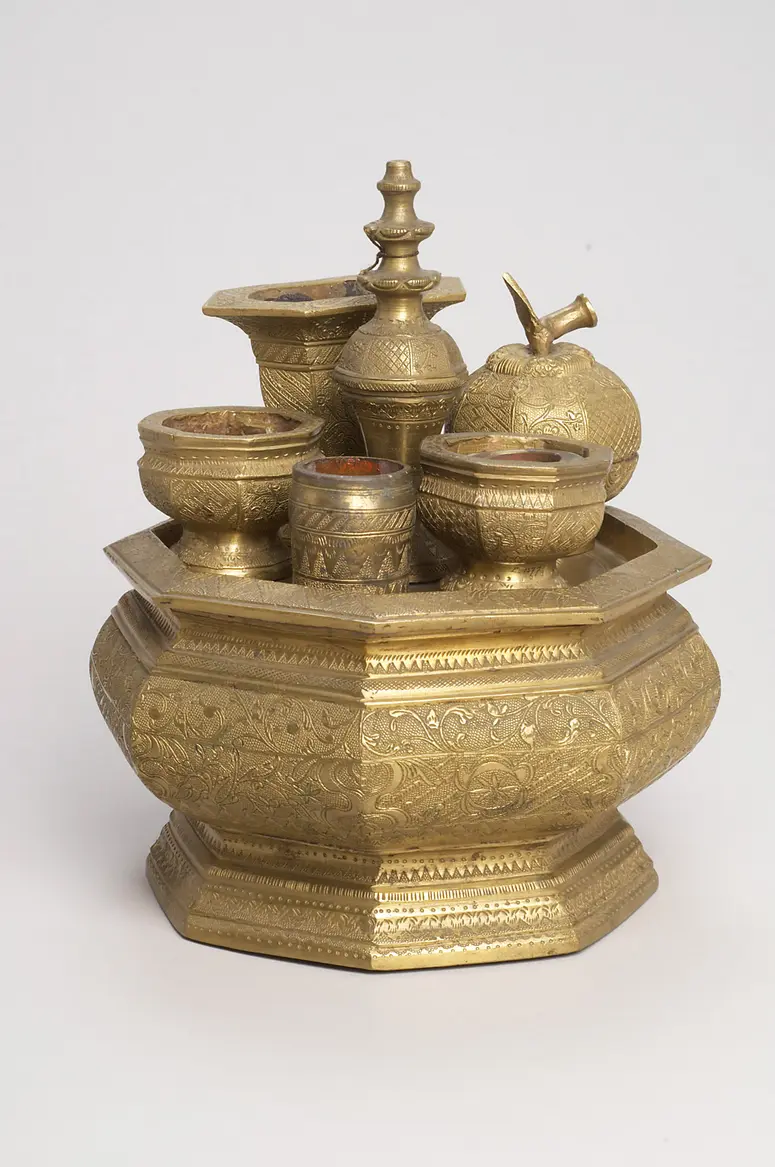
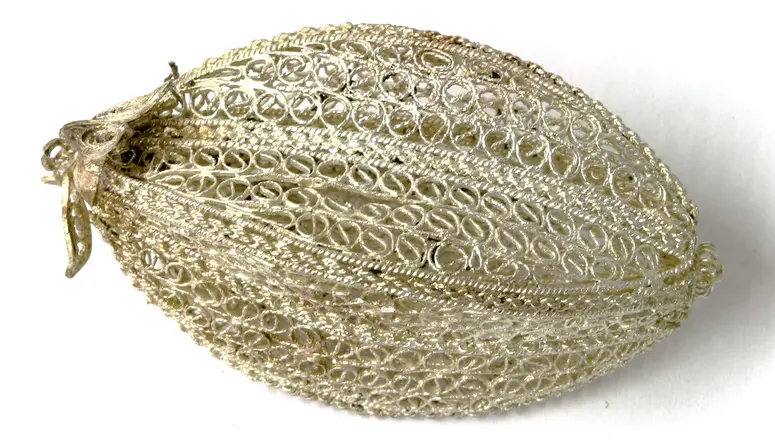
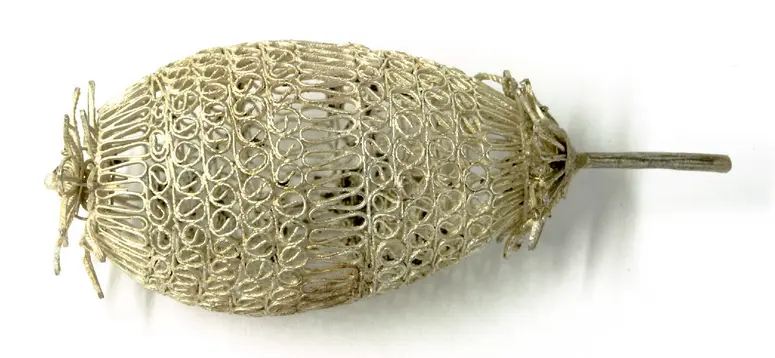
Lime container
late 19th century | F. R. A. Hellwig
East Indonesia’s abundance of spices turned it into a destination of international trade routes early on. When the Dutch monopolised the trade in the region as of the 18th century, glass beads became widely accepted as currency.Beads are highly popular in East Indonesia and passed down through families as heirlooms. Among the most popular beads are the orange-red mutisalah (“false pearls”) from Arikamedu, India. Wedding brides may exchange them for gold for buffalos.
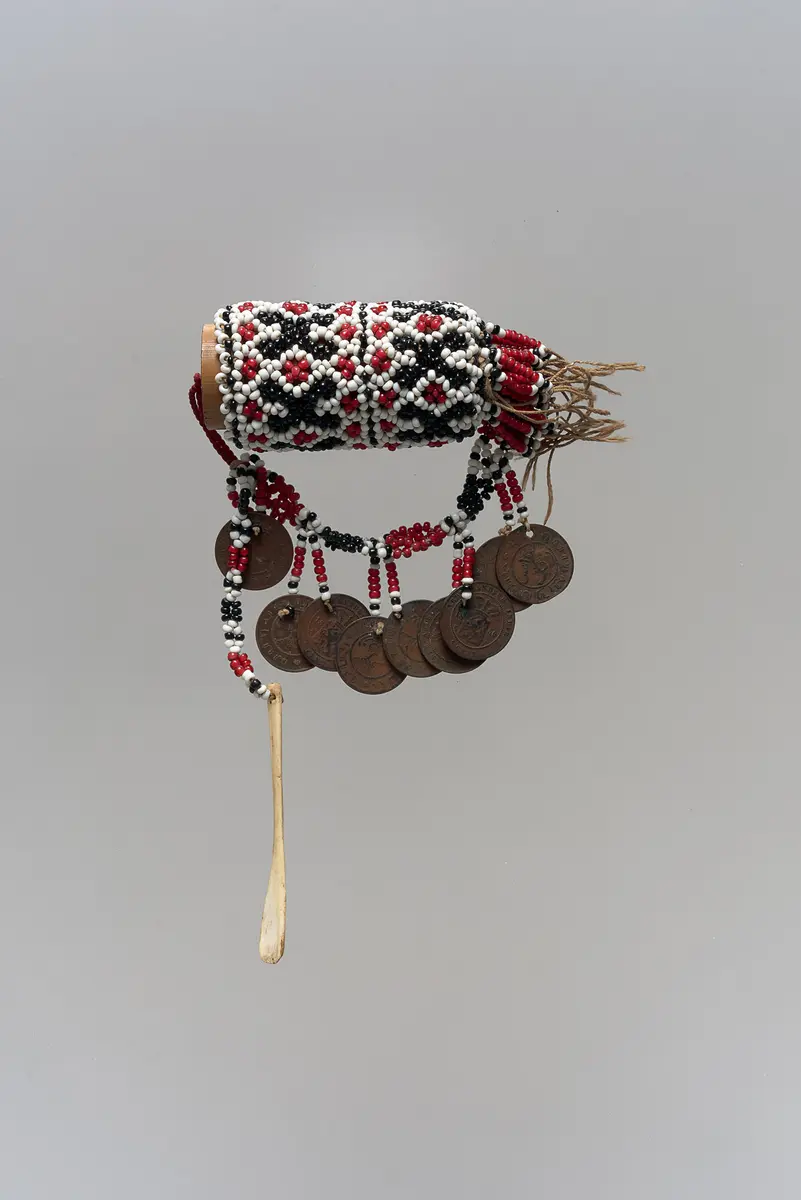
East Indonesia’s abundance of spices turned it into a destination of international trade routes early on. When the Dutch monopolised the trade in the region as of the 18th century, glass beads became widely accepted as currency.Beads are highly popular in East Indonesia and passed down through families as heirlooms. Among the most popular beads are the orange-red mutisalah (“false pearls”) from Arikamedu, India. Wedding brides may exchange them for gold for buffalos.
Collection:
F. R. A. Hellwig
Acquired by:
Barbara Rippel
Time:
late 19th century
Entry Date:
1908
Object Name
Lime container
Culture
Timor
Material/technology:
Bamboo, studded with glass beads, coins
Copyright
Weltmuseum Wien
Collection area
Insular Southeast Asia
Invs.
83288
Browse more Similar items you might be interested in



Der Alltag auf Nikobaren: : Fischreuse, Körbchen, Zählholz, Fächer, Scheidewand Edward Horace Man 1888