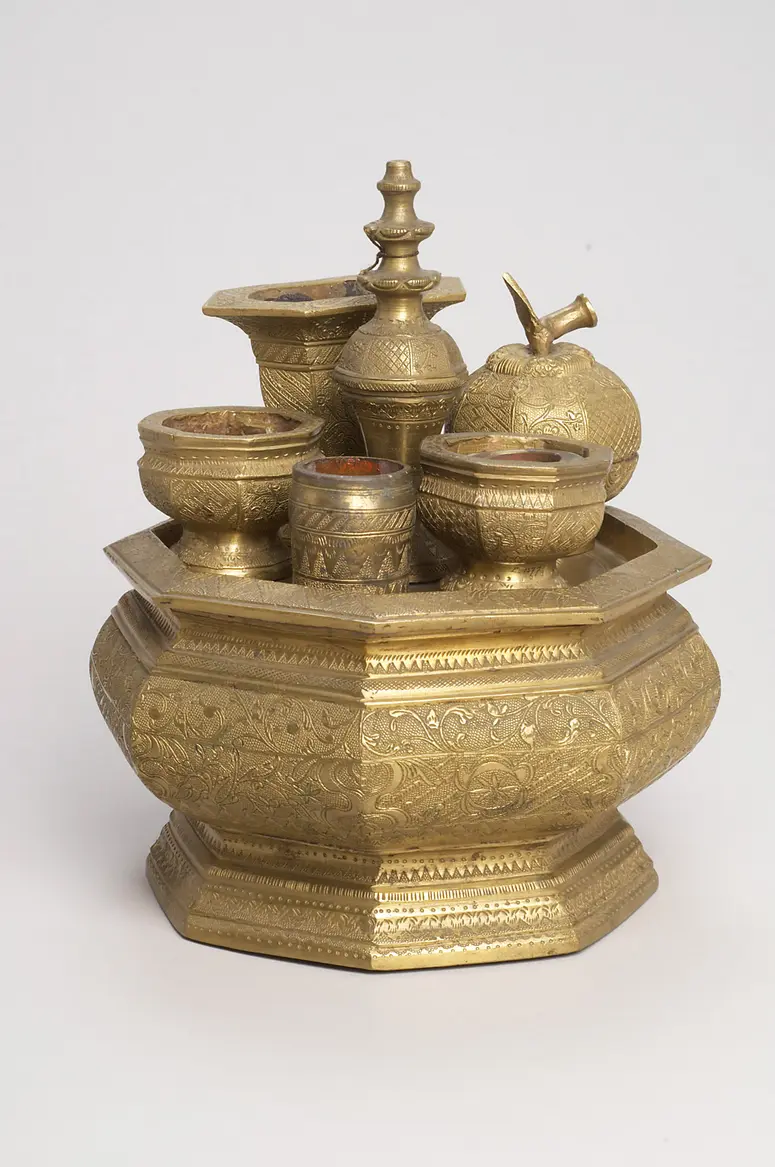
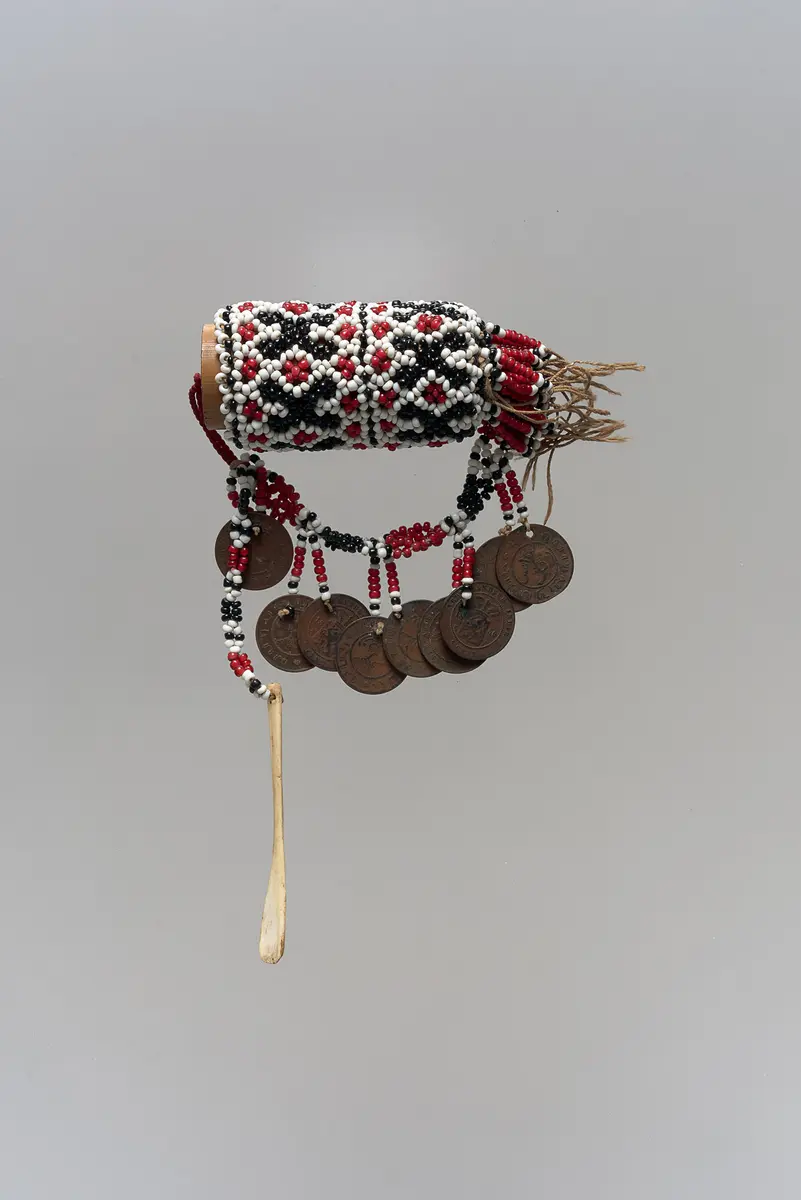
Kalkbehälter
Ende des 19. Jahrhunderts | F. R. A. Hellwig
Dank des Gewürzreichtums entwickelte sich Ostindonesien früh zu einer Destination internationaler Handelsrouten. Ab dem 18. Jahrhundert monopolisierten die Holländer den Handel in der Region. Glasperlen wurden eine weitverbreitete Währung.
In Ostindonesien sind die Perlen sehr beliebt und werden in Familien als Erbstücke weitergegeben. Zu den beliebtesten zählen die indischen orangeroten mutisalah („falsche Perlen“) aus Arikamedu. Bei der Hochzeit kann die Braut sie gegen Gold und Büffel tauschen.
Sammlung:
F. R. A. Hellwig
erworben von:
Barbara Rippel
Zeit:
Ende des 19. Jahrhunderts
Zugangsdatum:
1908
Objektbezeichnung
Kalkbehälter
Kultur
Timor
Material/Technik:
Bambus mit Glasperlen besetzt; Münzen
Bildrecht
Weltmuseum Wien
Sammlungsbereich
Insulares Südostasien
Inv. Nr.
83288
Weiterstöbern Ähnliche Stücke, die Sie interessieren könnten



Der Alltag auf Nikobaren: : Fischreuse, Körbchen, Zählholz, Fächer, Scheidewand Edward Horace Man 1888