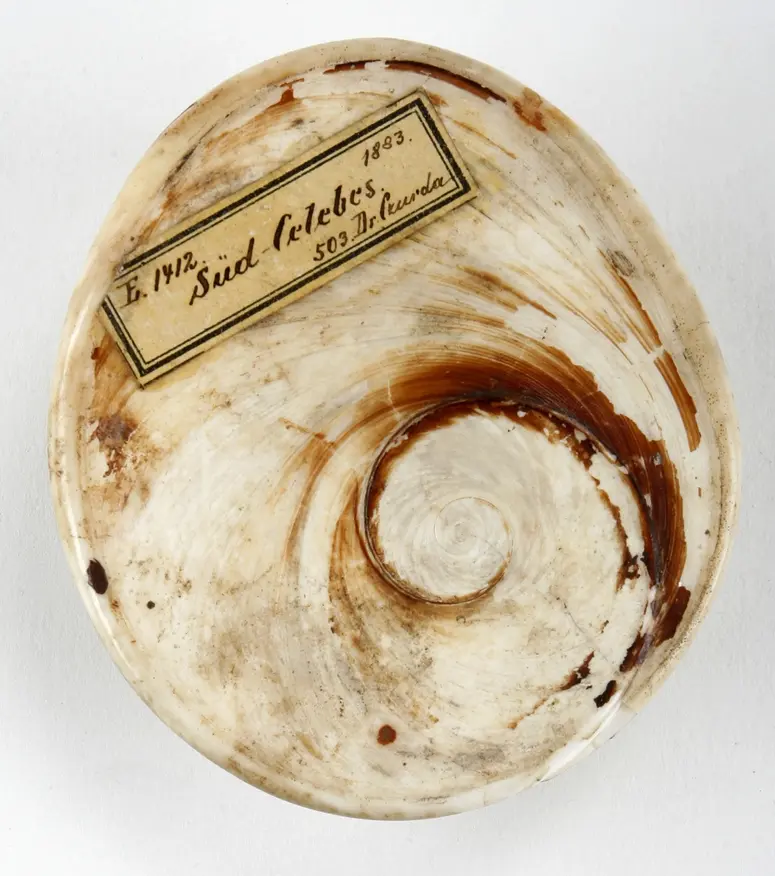
Model of a fishing boat
Padewakang
Note: The following text is taken from a 19th-century collection catalog and, in its language and perspective, partially reflects colonial thought patterns. We present the text in its original version to make the collection's history transparent and promote a critical examination of the colonial legacy. Certain terms and formulations may be perceived as problematic today. A 2009 research project concluded that most descriptions are factually correct and still usable; only a few details were found to be inaccurate or incorrect. The results of this project were published in the following collection catalog: khm-wmw-tm-library.on.worldcat.org/oclc/1457155265"525. Fishing boat - "Padewakang"More than a vessel for trading, extremely solid and sea-worthy, with which the natives sail in all the waters of the Indian Archipelago from China to Hindustan, where they trade everywhere or spend weeks or months on the high seas fishing for pearls and "Trepang", sea cucumbers. The Buginese are known for their good ships, they understand well how to build good and lasting ships. All Buginese are daring seamen and dangerous pirates who trouble the Dutch fleet which patrol the waters of the archipelago all year long. The pirates only attack small vessels of the natives or Chinese, or they land at some coast where they attack the villagers and take prisoner all the suitable individuals for selling later as slaves. The Buginese man is a good trader because of his extensive sailing and is always in lively trading contact with the peoples of the Asian continent. One is astounded at the assuredness with which these small boats are commanded in the worst weather, without compass, without nautical knowledge, only by means of a healthy understanding and courage. Of course each year there are many such boats which sink, something which does not frighten this brave people in their lust for adventure."Translation of: Czurda, F. A. J. (1883). Catalog mit Erklärungen der Etnografischen Privatsammlung des Dr. F. A. J. Czurda in Postelberg (Böhmen). (p. 132-133). Wien, Wilhelm Braumüller
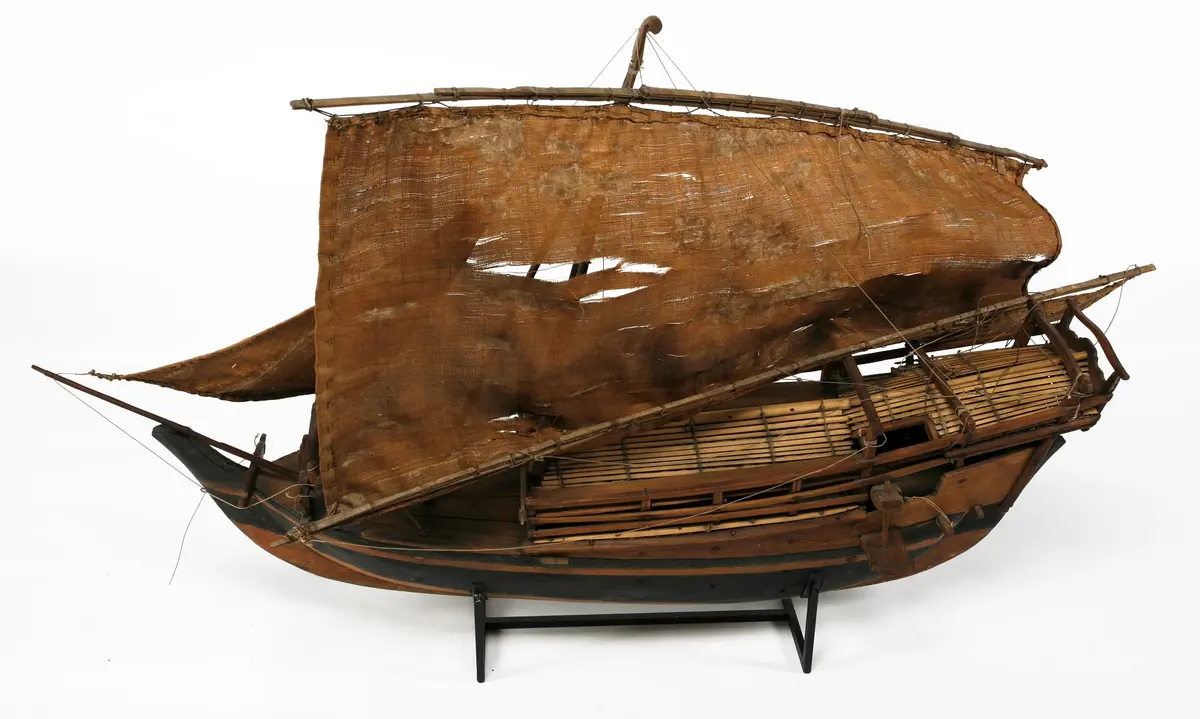
Note: The following text is taken from a 19th-century collection catalog and, in its language and perspective, partially reflects colonial thought patterns. We present the text in its original version to make the collection's history transparent and promote a critical examination of the colonial legacy. Certain terms and formulations may be perceived as problematic today. A 2009 research project concluded that most descriptions are factually correct and still usable; only a few details were found to be inaccurate or incorrect. The results of this project were published in the following collection catalog: khm-wmw-tm-library.on.worldcat.org/oclc/1457155265"525. Fishing boat - "Padewakang"More than a vessel for trading, extremely solid and sea-worthy, with which the natives sail in all the waters of the Indian Archipelago from China to Hindustan, where they trade everywhere or spend weeks or months on the high seas fishing for pearls and "Trepang", sea cucumbers. The Buginese are known for their good ships, they understand well how to build good and lasting ships. All Buginese are daring seamen and dangerous pirates who trouble the Dutch fleet which patrol the waters of the archipelago all year long. The pirates only attack small vessels of the natives or Chinese, or they land at some coast where they attack the villagers and take prisoner all the suitable individuals for selling later as slaves. The Buginese man is a good trader because of his extensive sailing and is always in lively trading contact with the peoples of the Asian continent. One is astounded at the assuredness with which these small boats are commanded in the worst weather, without compass, without nautical knowledge, only by means of a healthy understanding and courage. Of course each year there are many such boats which sink, something which does not frighten this brave people in their lust for adventure."Translation of: Czurda, F. A. J. (1883). Catalog mit Erklärungen der Etnografischen Privatsammlung des Dr. F. A. J. Czurda in Postelberg (Böhmen). (p. 132-133). Wien, Wilhelm Braumüller
Collector:
František A. J. Czurda (1844 Pisek - 1886 Cirebon) DNB
Entry Date:
1883
Object Name
Model of a fishing boat
Culture
Bugis
Material/technology:
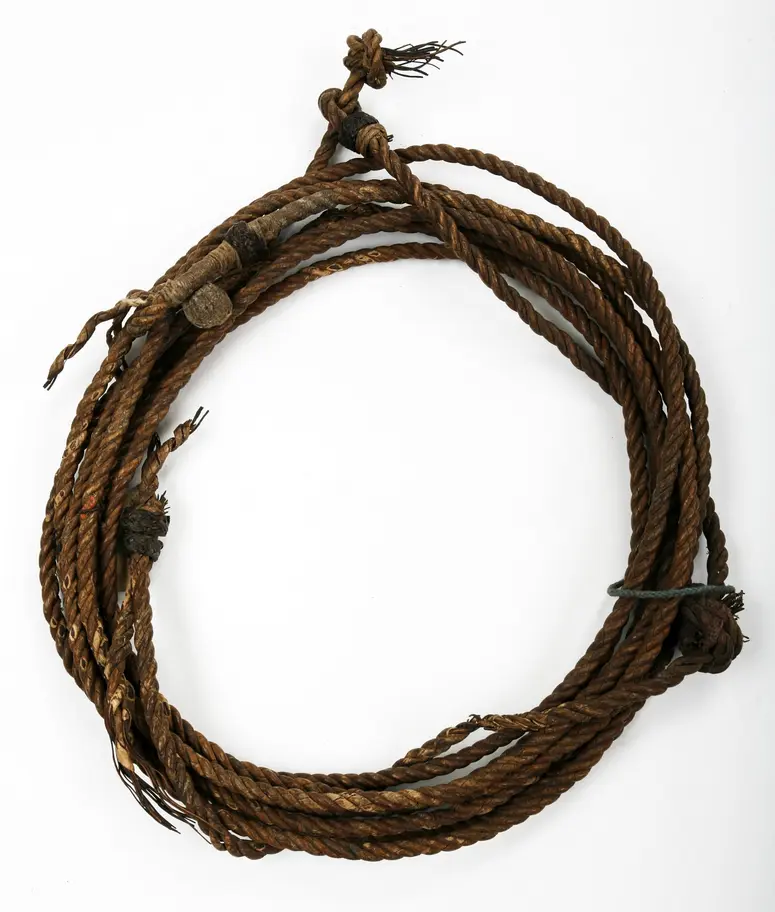
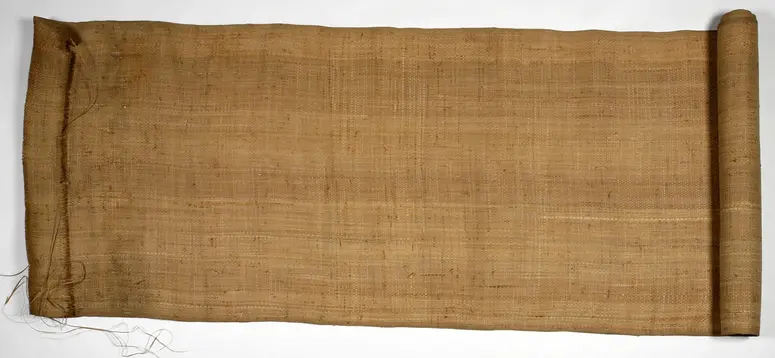
Wood, bamboo, rattan, cloth, thread
Copyright
Weltmuseum Wien
Collection area
Insular Southeast Asia
Invs.
17755