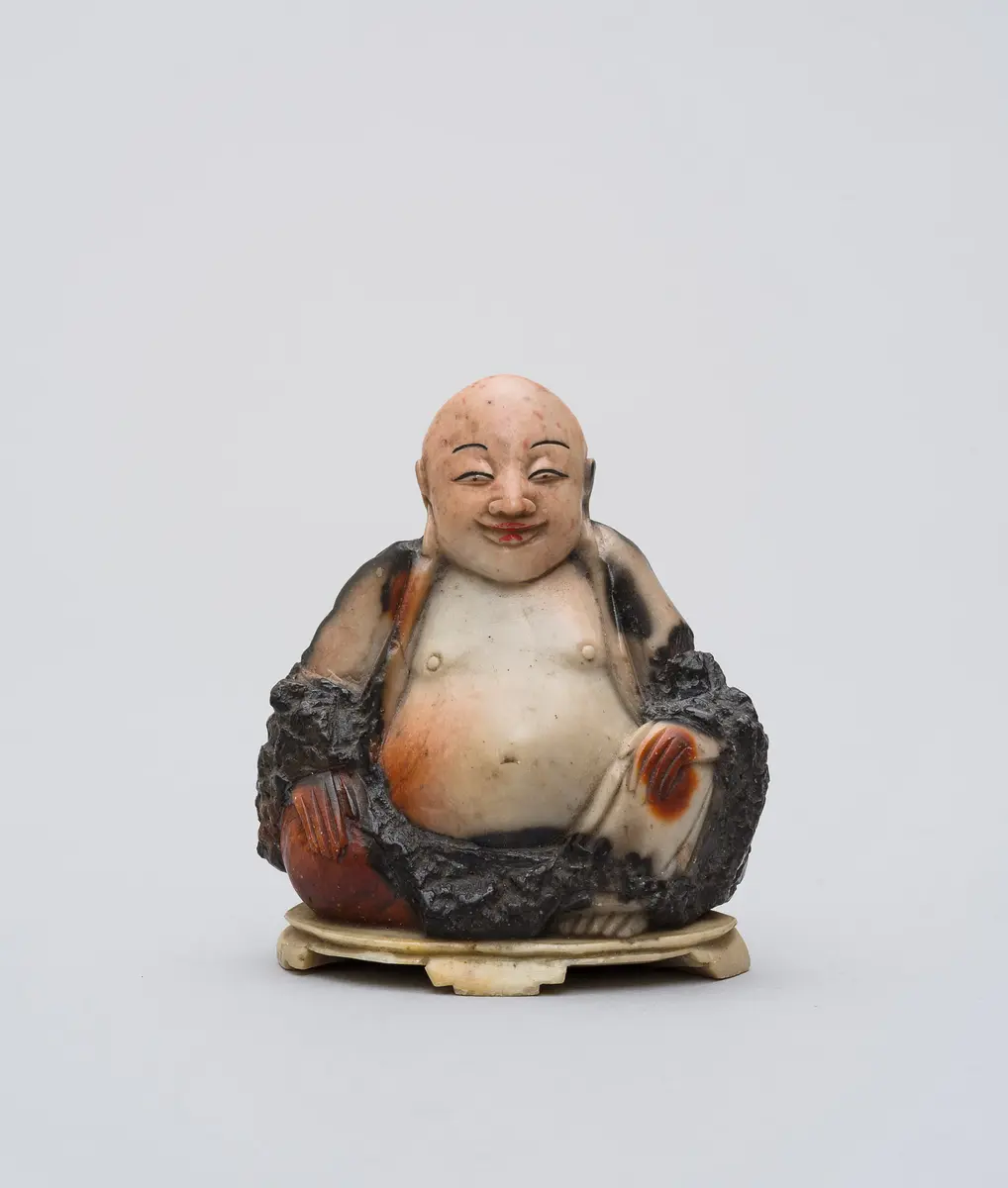
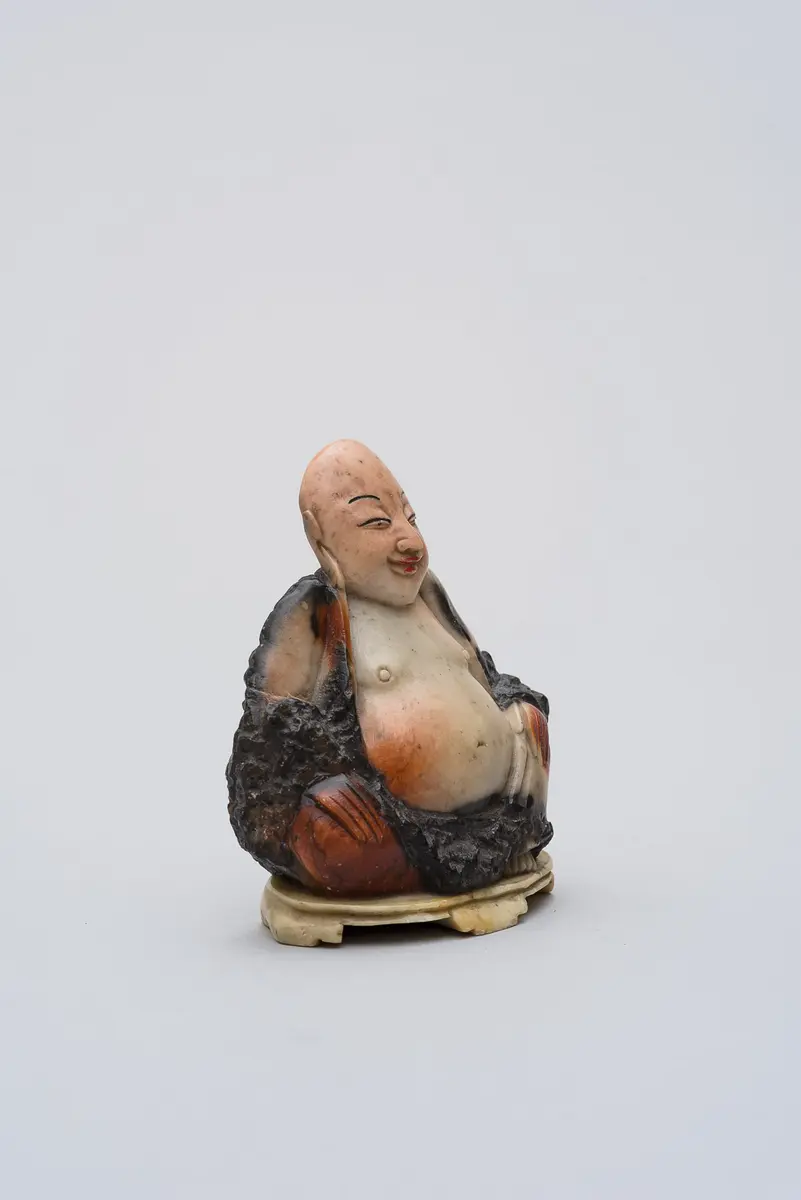
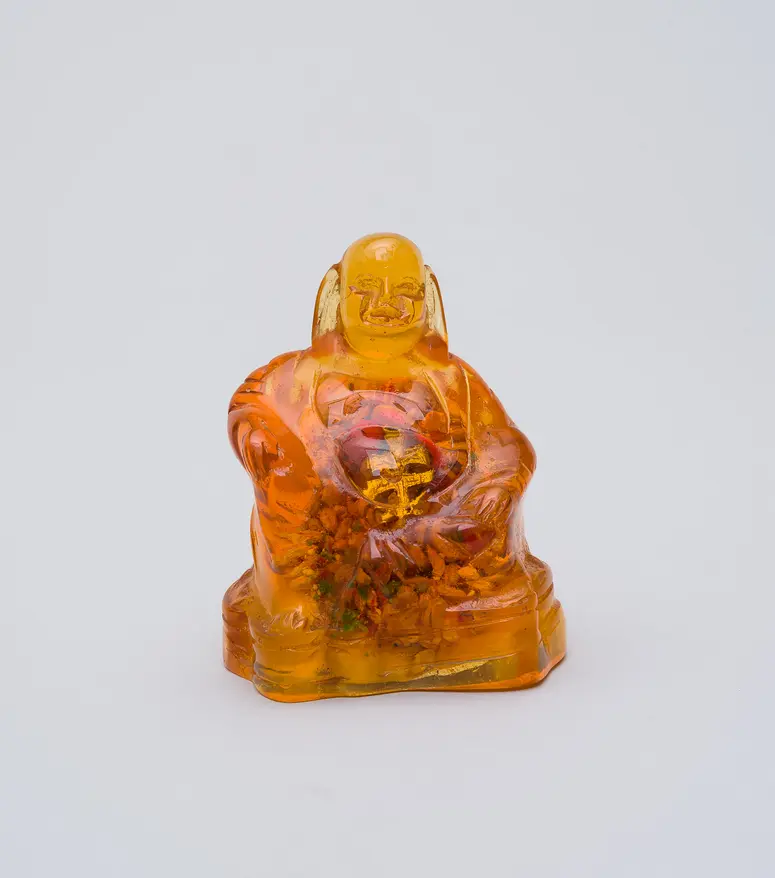
Lachender Buddha
2. Hälfte 19. Jahrhundert | Louis von Ende
Die Figur geht zurück auf den Bettelmönch Ho Tai, der Ende des 10. Jahrhundert im chinesischen Fenghua gelebt hat. Der Überlieferung nach gilt diese Gestalt des Mönchs als Inkarnation des zukünftigen Buddha Maitreya. Er wird meist sitzend, mit aufgestelltem rechten Bein, dicken nacktem Bauch und breit lachend dargestellt. Die Figur verkörpert einige chinesische Lebensideale: Der dicke Bauch symbolisiert Reichtum; sein Lachen und die lockere Sitzhaltung weisen auf seine Gelassenheit und Zufriedenheit mit sich und der Welt hin.
Vom asiatischen Festland kommend, entwickelte sich der Buddhismus in Java ab dem 7. Jahrhundert zur dominanten Religion und blieb dies bis zum Ende des 10. Jahrhunderts. Auch im hindu-buddhistischen Reich – die Bezeichnung verrät es bereits – spielte er eine wichtige Rolle, wurde dann aber im 16. Jahrhundert durch das islamische Reich mehr und mehr verdrängt. Heute praktizieren in Indonesien, zumindest prozentuell gesehen, nur mehr wenige Menschen die buddhistische Religion.
Sammlung:
Louis von Ende
Zeit:
2. Hälfte 19. Jahrhundert
Zugangsdatum:
1885
Objektbezeichnung
Figur, Buddha
Kultur
Java / Chinesen
Material/Technik:
Speckstein
Bildrecht
Weltmuseum Wien
Sammlungsbereich
Insulares Südostasien
Geographie
Insulares Südostasien/Indonesien/Java
Inv. Nr.
22349
Weiterstöbern Ähnliche Stücke, die Sie interessieren könnten
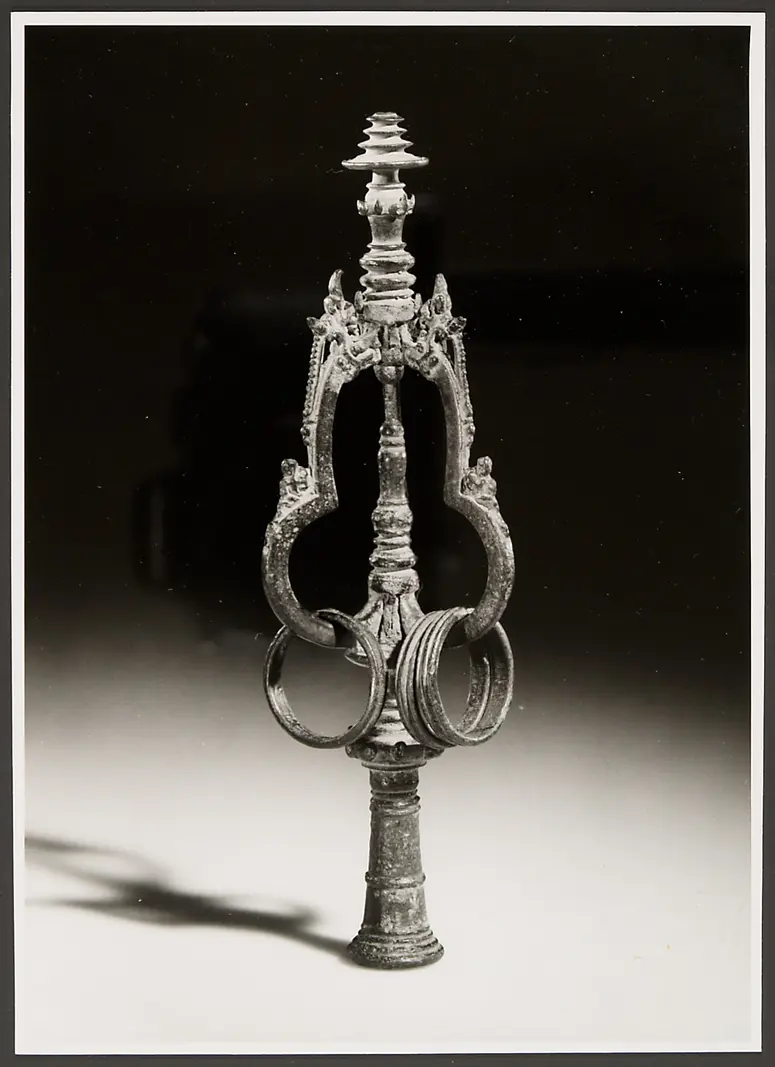
Spitze eines Stabs für buddhistische Mönche k. k. Münz- und Antikenkabinett 9. - 10. Jahrhundert



Der Alltag auf Nikobaren: : Fischreuse, Körbchen, Zählholz, Fächer, Scheidewand Edward Horace Man 1888