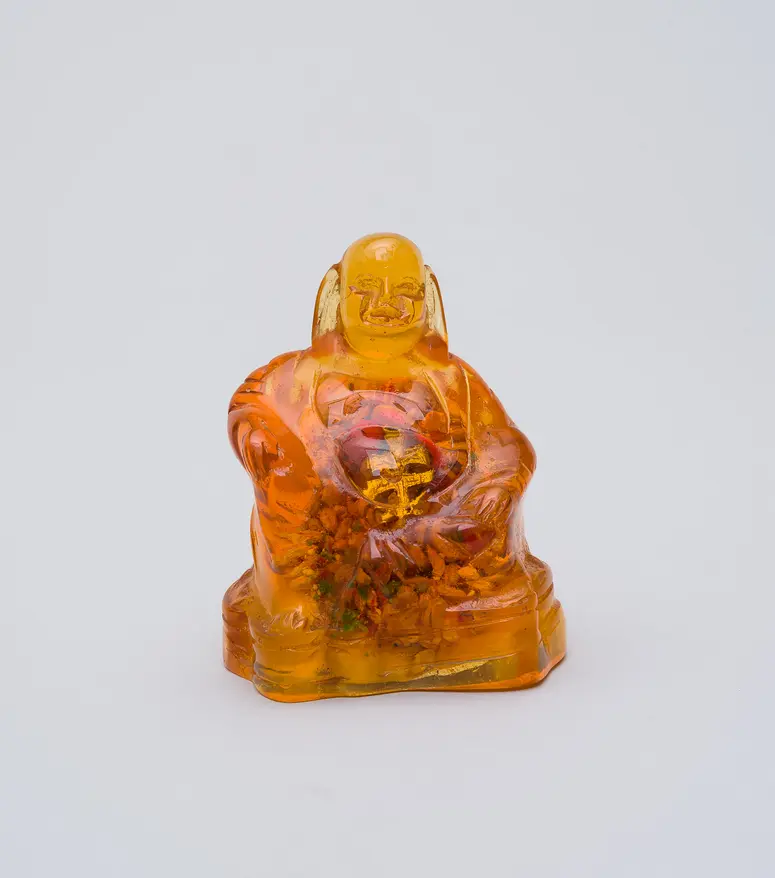
Laughing Buddha
2nd half of the 19th century | Louis von Ende
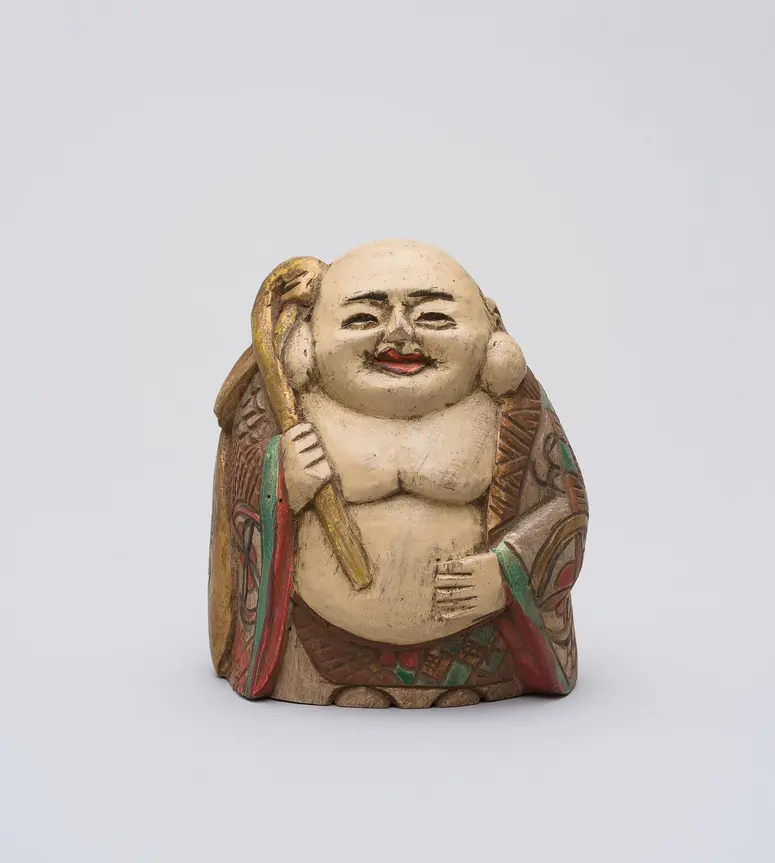
This figure can be traced back to the mendicant monk Ho Tai who lived in Fenghua, China in the 10th century. According to tradition, this monk came to be regarded as an incarnation of Maitreya, the Buddha of the Future. He is usually portrayed sitting with his right leg cocked, showing his vast spreading stomach and a wide smile. The figure embodies various Chinese ideals of life: the big belly is a symbol of prosperity; his smile and casual posture refer to his serenity and content with himself and the world.Originating in the Asian mainland, Buddhism was the dominant religion of Java between the 7th century and the late 10th century. It also played a vital role in the Hindu-Buddhist Empire – as the name already suggests – but was increasingly driven out by the Islamic Empire in the 16th century. At least in terms of percentages, only very few people practise the Buddhist religion in today’s Indonesia.
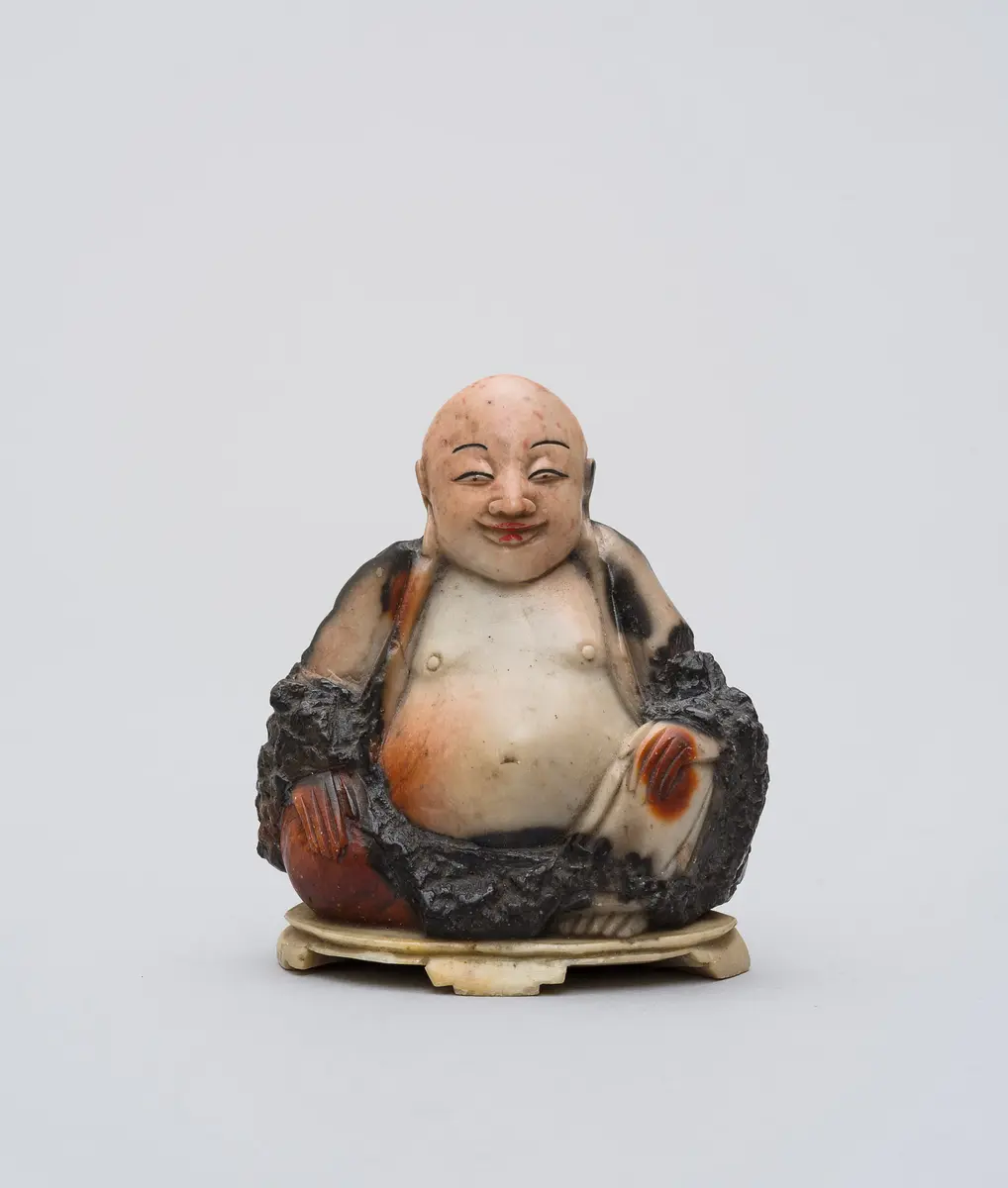
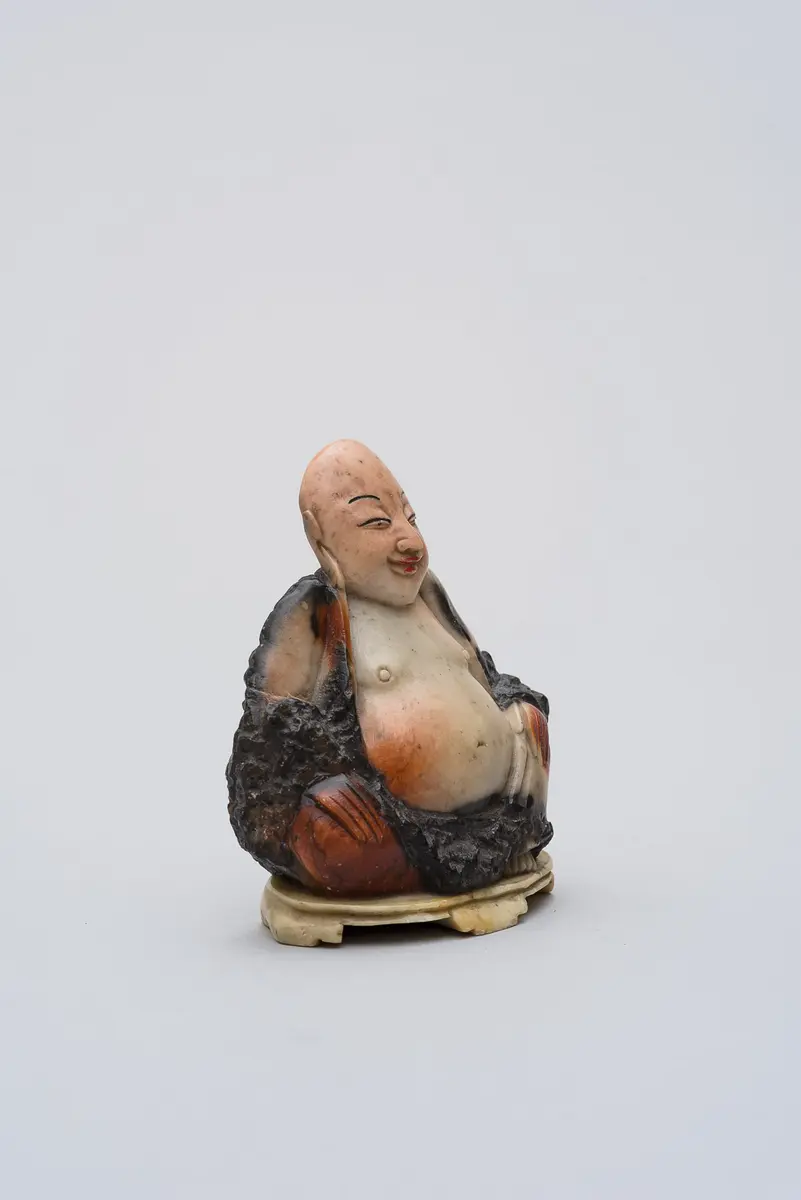
This figure can be traced back to the mendicant monk Ho Tai who lived in Fenghua, China in the 10th century. According to tradition, this monk came to be regarded as an incarnation of Maitreya, the Buddha of the Future. He is usually portrayed sitting with his right leg cocked, showing his vast spreading stomach and a wide smile. The figure embodies various Chinese ideals of life: the big belly is a symbol of prosperity; his smile and casual posture refer to his serenity and content with himself and the world.Originating in the Asian mainland, Buddhism was the dominant religion of Java between the 7th century and the late 10th century. It also played a vital role in the Hindu-Buddhist Empire – as the name already suggests – but was increasingly driven out by the Islamic Empire in the 16th century. At least in terms of percentages, only very few people practise the Buddhist religion in today’s Indonesia.
Collection:
Louis von Ende
Time:
2nd half of the 19th century
Entry Date:
1885
Object Name
Sculpture, Buddha
Culture
Java / Chinesen
Material/technology:
Soapstone
Copyright
Weltmuseum Wien
Collection area
Insular Southeast Asia
Geography
Insulares Südostasien/Indonesien/Java
Invs.
22349
Browse more Similar items you might be interested in
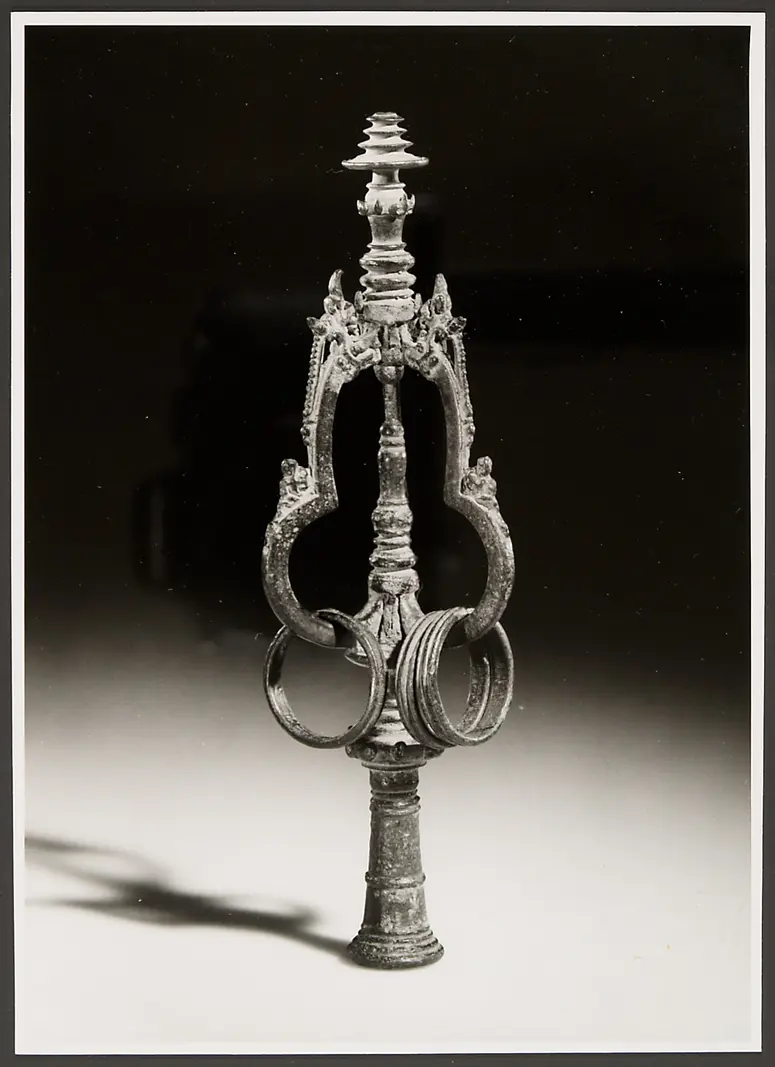
Spitze eines Stabs für buddhistische Mönche k. k. Münz- und Antikenkabinett 9. - 10. Jahrhundert



Der Alltag auf Nikobaren: : Fischreuse, Körbchen, Zählholz, Fächer, Scheidewand Edward Horace Man 1888