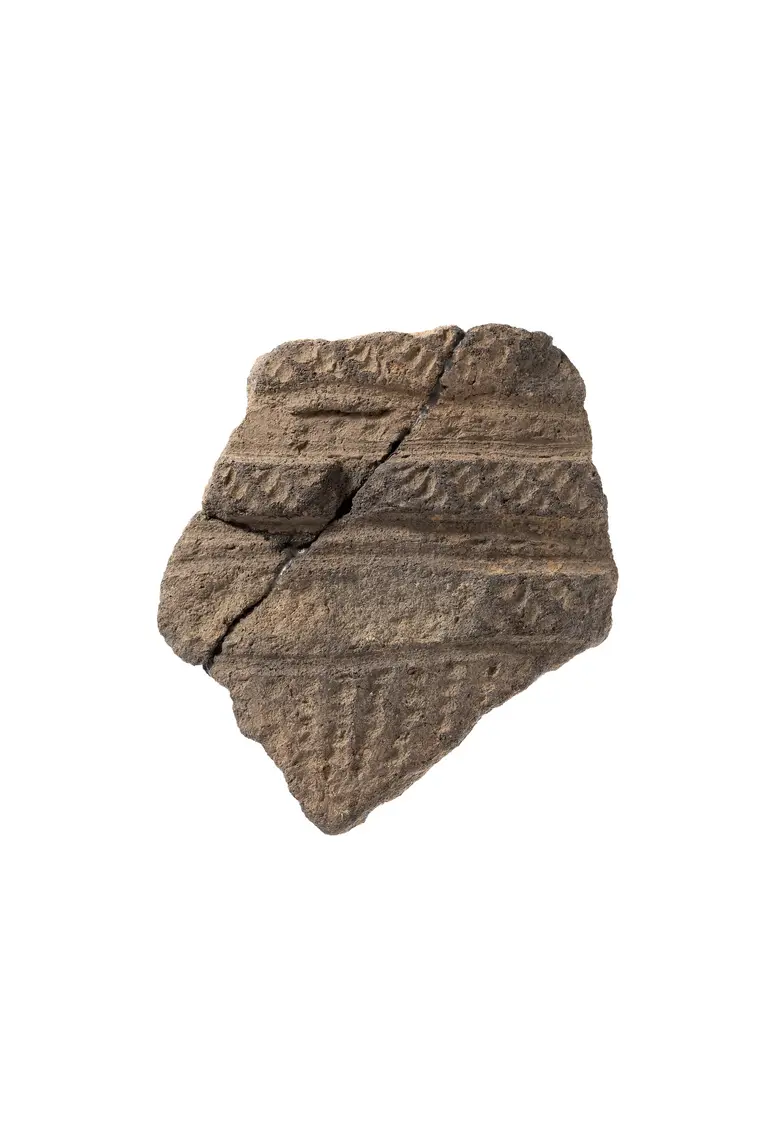
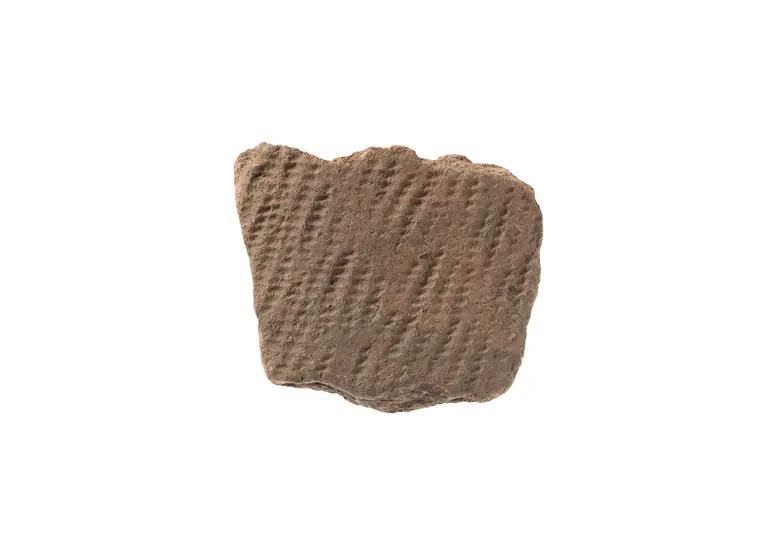
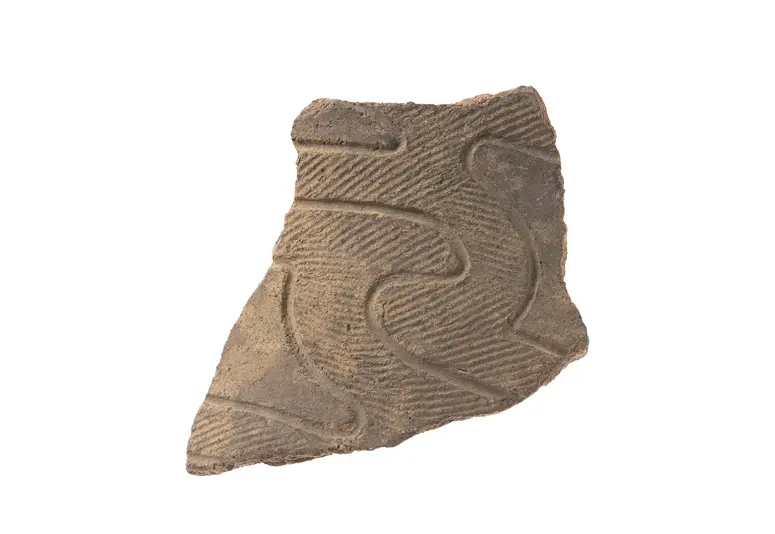
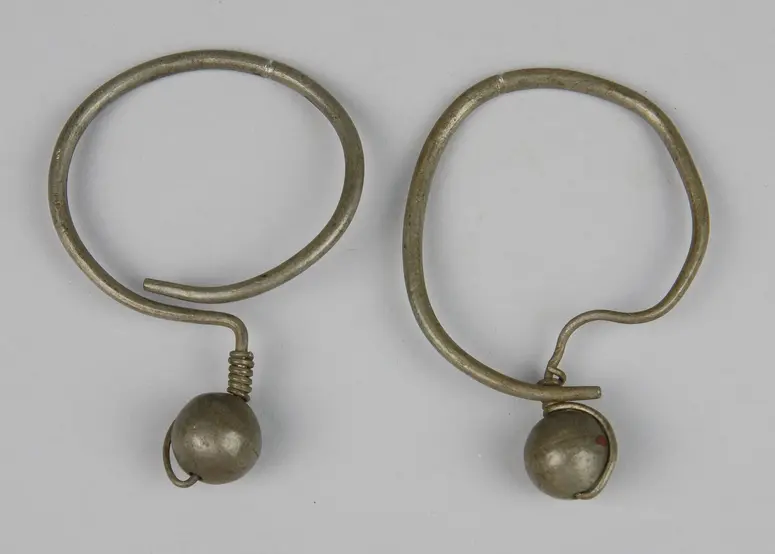
Haniwa are variously shaped clay figures that were lined up on burial mounds (kofun) where rulers were buried. They were made in a variety of shapes: vessel stands, pots, cylinders, houses, animals, and so on. One also finds human haniwa in the latter half of the Kofun period. This piece is a head of one such figure. Heinrich was interested in Japan's burial mounds. In his 1879 Notes on Japanese Archaeology with Especial Reference to the Stone Age, one of the eight chapters is entitled “Japanese Graves.” Therein he explains the characteristics of burial mounds and graves dug into the sides of hills (called yokoanabo), funerary goods, as well as views regarding burial mounds’ time periods. Also, in the “Tsuchi Ningio, or Clay Figures” chapter, he presents explanations regarding haniwa and stories about their origins. However, the three human haniwa in this book are different from the item here. Heinrich also carried out surveys of burial mounds around Takakasaki (Gunma prefecture), Kabuto (present-day Higashimatsuya city in Saitama prefecture), Ōtani village (present-day Kumagaya city in Saitama prefecture), and elsewhere. The book states that ten human figure haniwa were excavated in Ōtani village. However, it is unclear from which burial mound this item came from. Yuichiro KUDO

Haniwa are variously shaped clay figures that were lined up on burial mounds (kofun) where rulers were buried. They were made in a variety of shapes: vessel stands, pots, cylinders, houses, animals, and so on. One also finds human haniwa in the latter half of the Kofun period. This piece is a head of one such figure. Heinrich was interested in Japan's burial mounds. In his 1879 Notes on Japanese Archaeology with Especial Reference to the Stone Age, one of the eight chapters is entitled “Japanese Graves.” Therein he explains the characteristics of burial mounds and graves dug into the sides of hills (called yokoanabo), funerary goods, as well as views regarding burial mounds’ time periods. Also, in the “Tsuchi Ningio, or Clay Figures” chapter, he presents explanations regarding haniwa and stories about their origins. However, the three human haniwa in this book are different from the item here. Heinrich also carried out surveys of burial mounds around Takakasaki (Gunma prefecture), Kabuto (present-day Higashimatsuya city in Saitama prefecture), Ōtani village (present-day Kumagaya city in Saitama prefecture), and elsewhere. The book states that ten human figure haniwa were excavated in Ōtani village. However, it is unclear from which burial mound this item came from. Yuichiro KUDO
Collector:
Heinrich von Siebold (1852 St. Martin/Boppard - 1908 Schloss Freudenstein/Bozen) DNB
Material/technology:
Terracotta
Copyright
Weltmuseum Wien
Collection area
East Asia: China, Korea, Japan
Geography
Ostasien/Japan
Period
Kofun-Periode, 4.-7. Jh.
Invs.
37230