Buddha, Exit from the palace
2nd/3rd century | A. K. Süß-Lindert
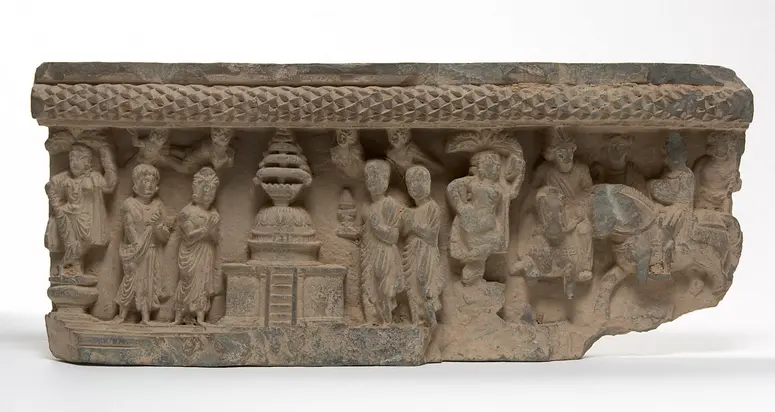
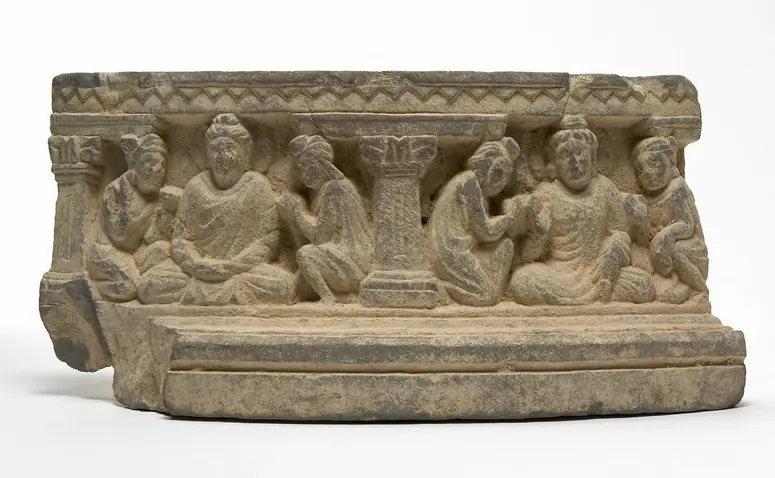
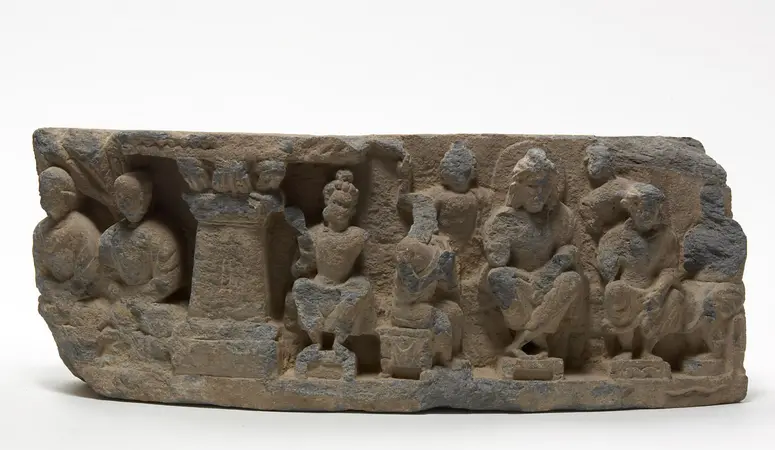
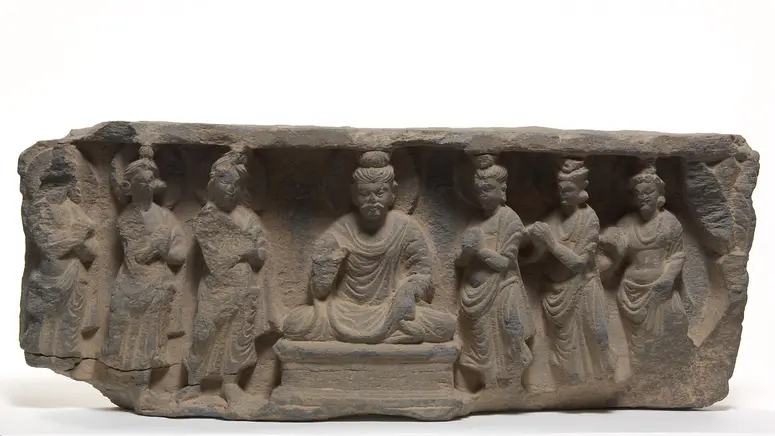
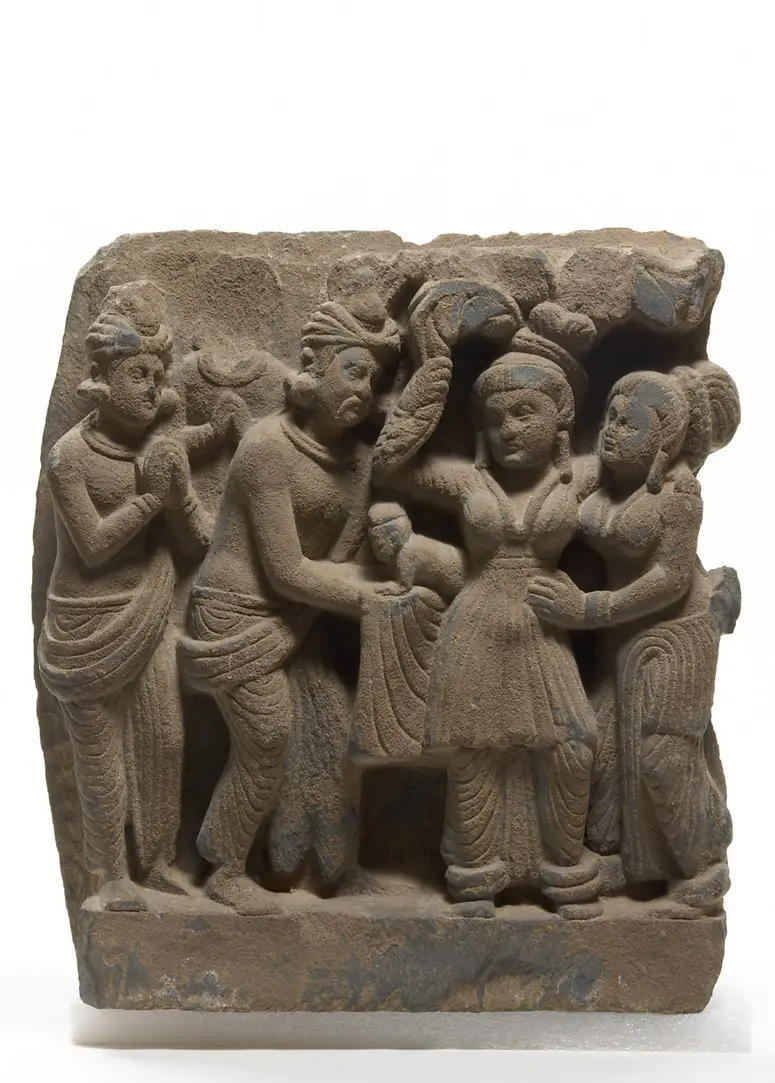
Three scenes from the life story of the historical Buddha are depicted one above the other in chronological order. He was born a prince in a small kingdom in northern India, and even at birth miraculous events characterised the boy as a saint. At a young age, he realised that the religious teachings of his time could not free him from the cycle of rebirths that was part of the common understanding of human destiny in India at the time. He broke with his princely life and from then on led an existence as a travelling monk. After a long period of meditative contemplation, he attained the enlightenment that showed the way out of the cycle of existences. Until the end of his life, he instructed a rapidly growing number of followers. It was not until many centuries later that his teachings were recorded in writing.At the top is the miraculous birth of the Buddha, in which he emerges from the side of his mother Maya and is received by the Indian god Indra. The centre scene shows him between two servants in the posture of "royal serenity" at the moment of his decision to renounce worldly life. In the lowest scene, Buddha leaves the palace on his favourite horse Kanthaka to strive for escape from the cycle of rebirths. He is accompanied by a servant with a bow and the bodhisattva Vajrapani.
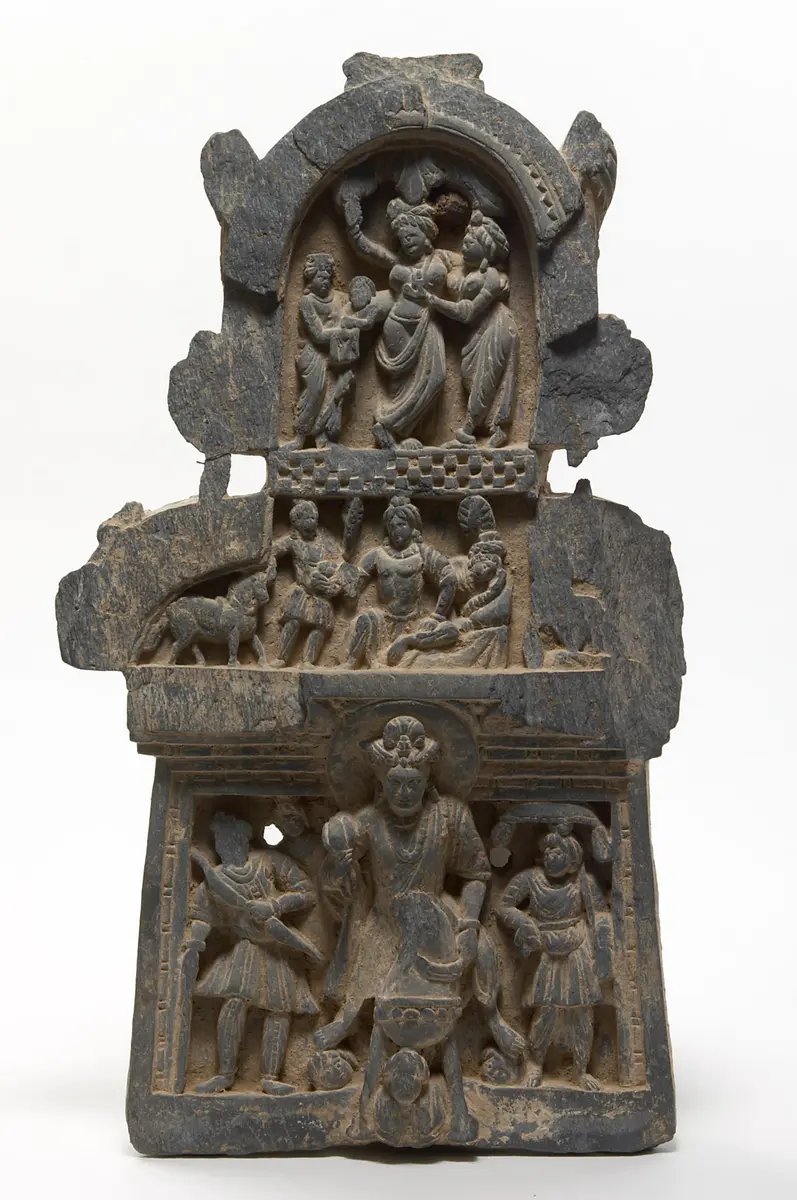
Three scenes from the life story of the historical Buddha are depicted one above the other in chronological order. He was born a prince in a small kingdom in northern India, and even at birth miraculous events characterised the boy as a saint. At a young age, he realised that the religious teachings of his time could not free him from the cycle of rebirths that was part of the common understanding of human destiny in India at the time. He broke with his princely life and from then on led an existence as a travelling monk. After a long period of meditative contemplation, he attained the enlightenment that showed the way out of the cycle of existences. Until the end of his life, he instructed a rapidly growing number of followers. It was not until many centuries later that his teachings were recorded in writing.At the top is the miraculous birth of the Buddha, in which he emerges from the side of his mother Maya and is received by the Indian god Indra. The centre scene shows him between two servants in the posture of "royal serenity" at the moment of his decision to renounce worldly life. In the lowest scene, Buddha leaves the palace on his favourite horse Kanthaka to strive for escape from the cycle of rebirths. He is accompanied by a servant with a bow and the bodhisattva Vajrapani.
Collection:
A. K. Süß-Lindert
Time:
2nd/3rd century
Entry Date:
1985
Object Name
Relief
Culture
Gandhara / Pakistan
Material/technology:
slate
Copyright
Weltmuseum Wien
Collection area
South Asia, Southeast Asia, Himalayas
Invs.
166642