Ritual arrow
19. Jahrhundert | René Nebesky-Wojkowitz
In Tibetan rituals, the shaft of the arrow symbolizes the body of a deity, a shell attached to it symbolizes their speech and the mirror symbolizes the spirit. The syllable on the metal plate is the seed syllable of a Buddha, with which he can be summoned from his heaven. In the context of a wedding, the bride is integrated into her husband's household when the bridegroom's mother places the arrow in the bride's collar. As a male symbol, the arrow stands for the possession of the bride by her husband. As the bridegroom's mother performs this ritual act, it can also refer to the mother-in-law's authority over her son's wife.
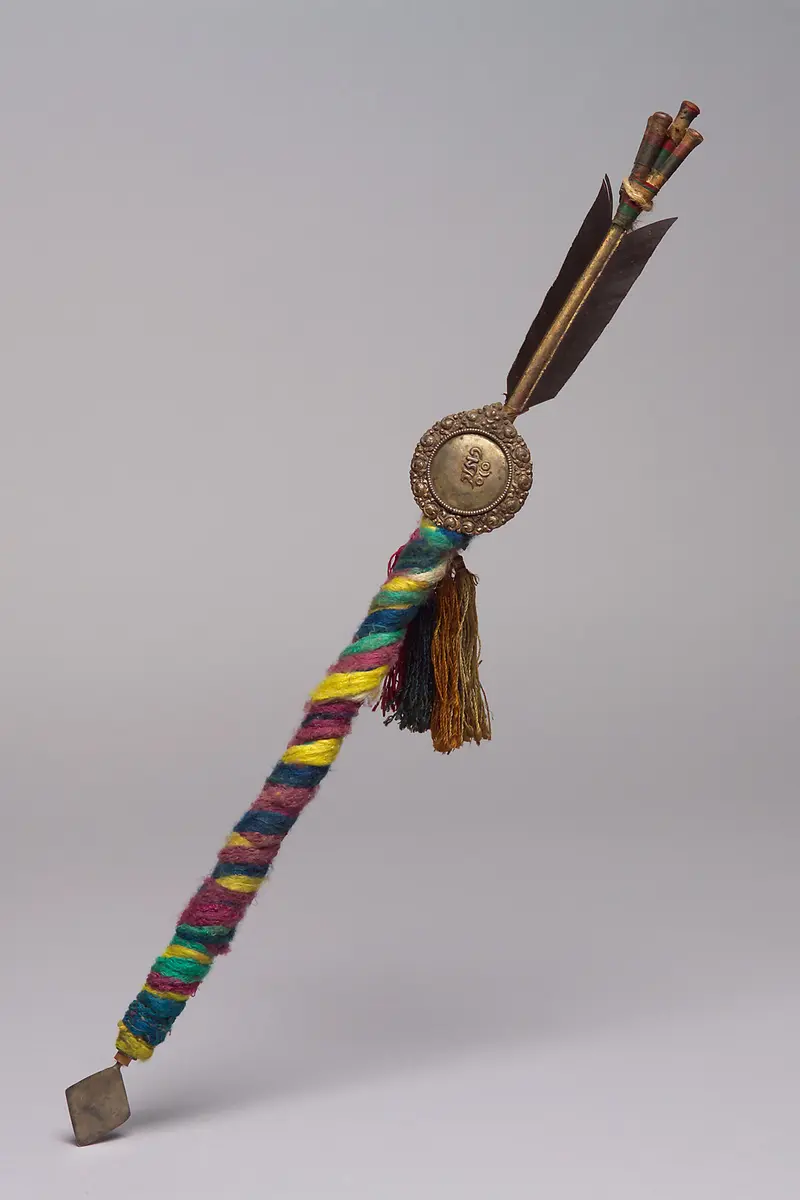
In Tibetan rituals, the shaft of the arrow symbolizes the body of a deity, a shell attached to it symbolizes their speech and the mirror symbolizes the spirit. The syllable on the metal plate is the seed syllable of a Buddha, with which he can be summoned from his heaven. In the context of a wedding, the bride is integrated into her husband's household when the bridegroom's mother places the arrow in the bride's collar. As a male symbol, the arrow stands for the possession of the bride by her husband. As the bridegroom's mother performs this ritual act, it can also refer to the mother-in-law's authority over her son's wife.
Collector:
René Nebesky-Wojkowitz (1923 Groß-Hoschütz - 1959 Wien) DNB
Time:
19. Jahrhundert
Object Name
Glückspfeil (tib. g.yang `dar)
Culture
Nepal / Sherpa
Material/technology:
Holz, Metall, Wolle, Federn
Copyright
Weltmuseum Wien
Collection area
South Asia, Southeast Asia, Himalayas
Geography
Südasien/Himalaya/Nepal
Invs.
138693
Browse more Similar items you might be interested in
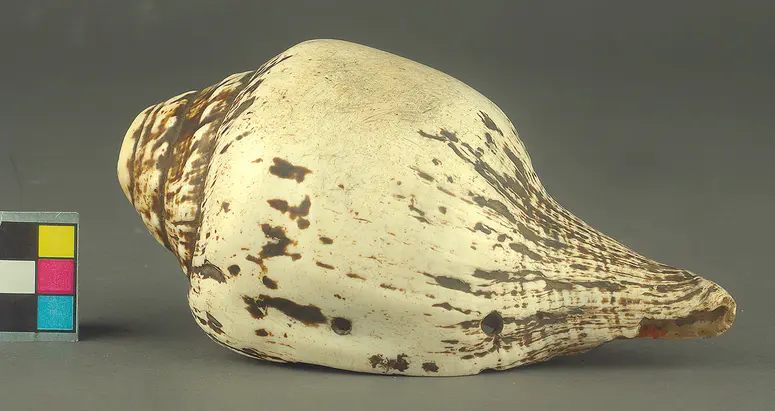
Snail trumpet (Tib. dung kar) Franz Ferdinand von Österreich-Este 1893 or earlier